The Shot I’ve Driven Past for Years, But Not Today!
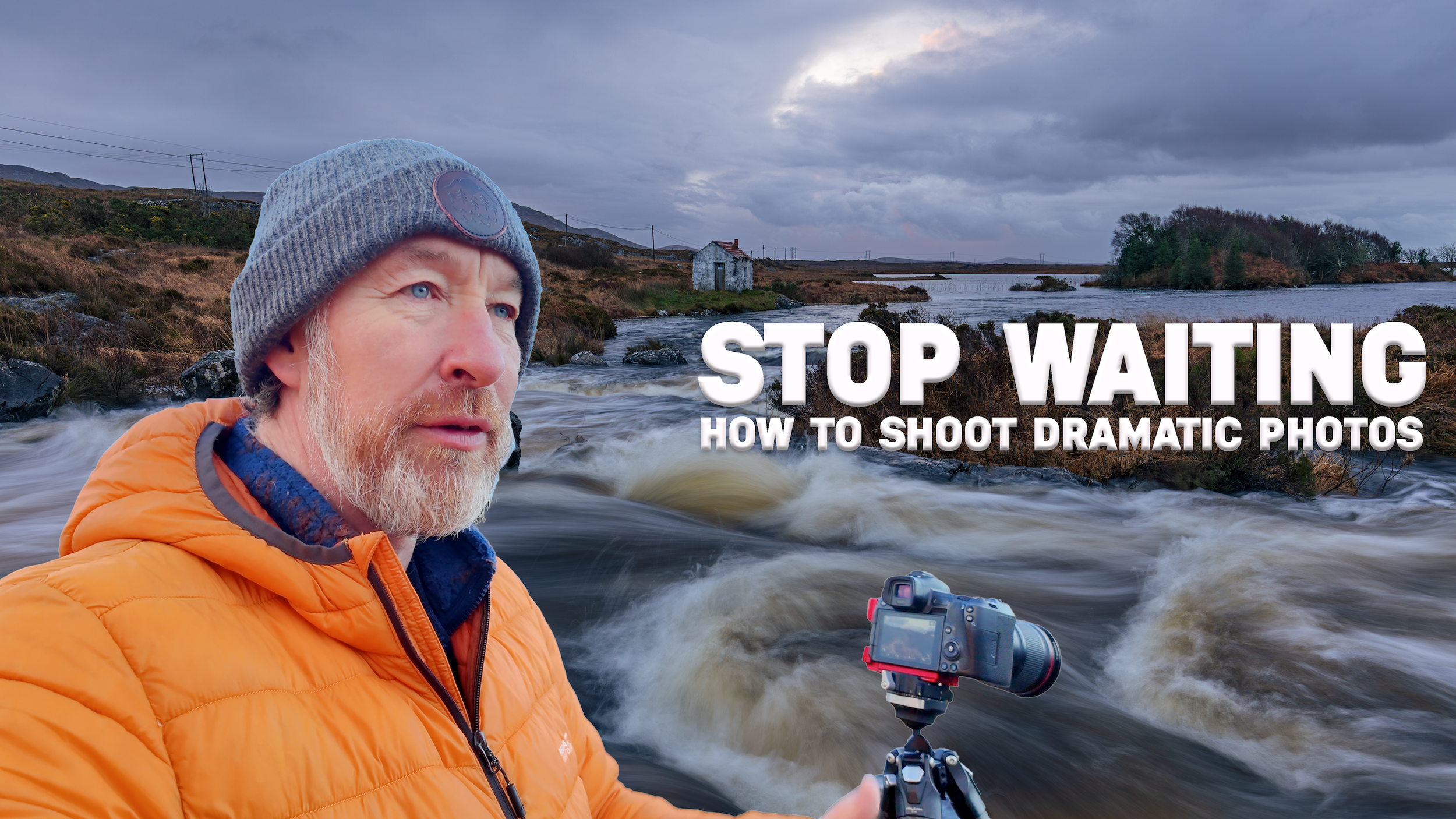
Every time I travel through Connemara, I come away with the same feeling. There is always more to explore, more to photograph, and more to learn. This trip was no different, but the focus of the shoot was a location I had passed for years without stopping. It sits along a quiet stretch of water, marked by a small fishing hut on the edge of a lake with a river feeding into it. I had seen it many times and told myself I would stop one day, yet I always kept driving. I never had the right light, the right flow, or the right conditions. At least, that was the excuse. This time, I made the decision that I would not drive past it again.
I was on my way to Donegal for upcoming workshops, and I had planned a brief stop with my friend Bernard, who lives about half an hour from some of the best shooting locations in Connemara. Bernard had photographed this hut recently and captured strong results. When he mentioned that the forecast looked poor, it only strengthened my motivation. My motto is simple: bad conditions do not exist. There is always a shot. This was another chance to put that belief into practice.
We left Bernard’s house at 7 a.m. and were joined by Johnny Evans, who I had not met before, and another photographer, Mike Flanagan, who agreed to meet us on location. It became clear very quickly that there would be no direct sunrise. The cloud cover was thick, the sky was flat, and the light was muted. Instead of giving up on the idea of a sunrise shoot, we took the short walk to the hut. The path was only around fifty metres, but it felt longer as the ground was saturated and soft. Wearing wellies was the only reason I stayed dry.
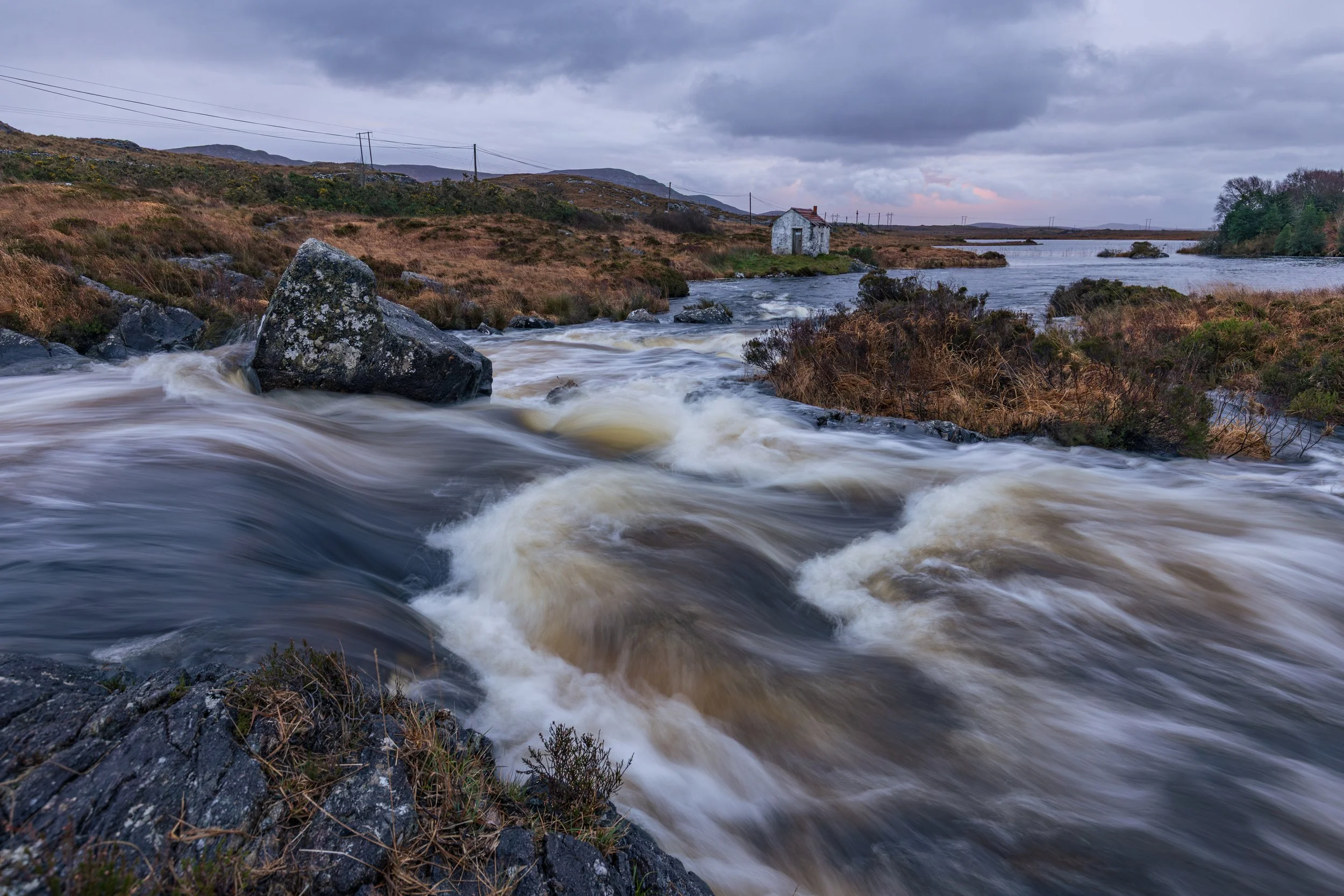
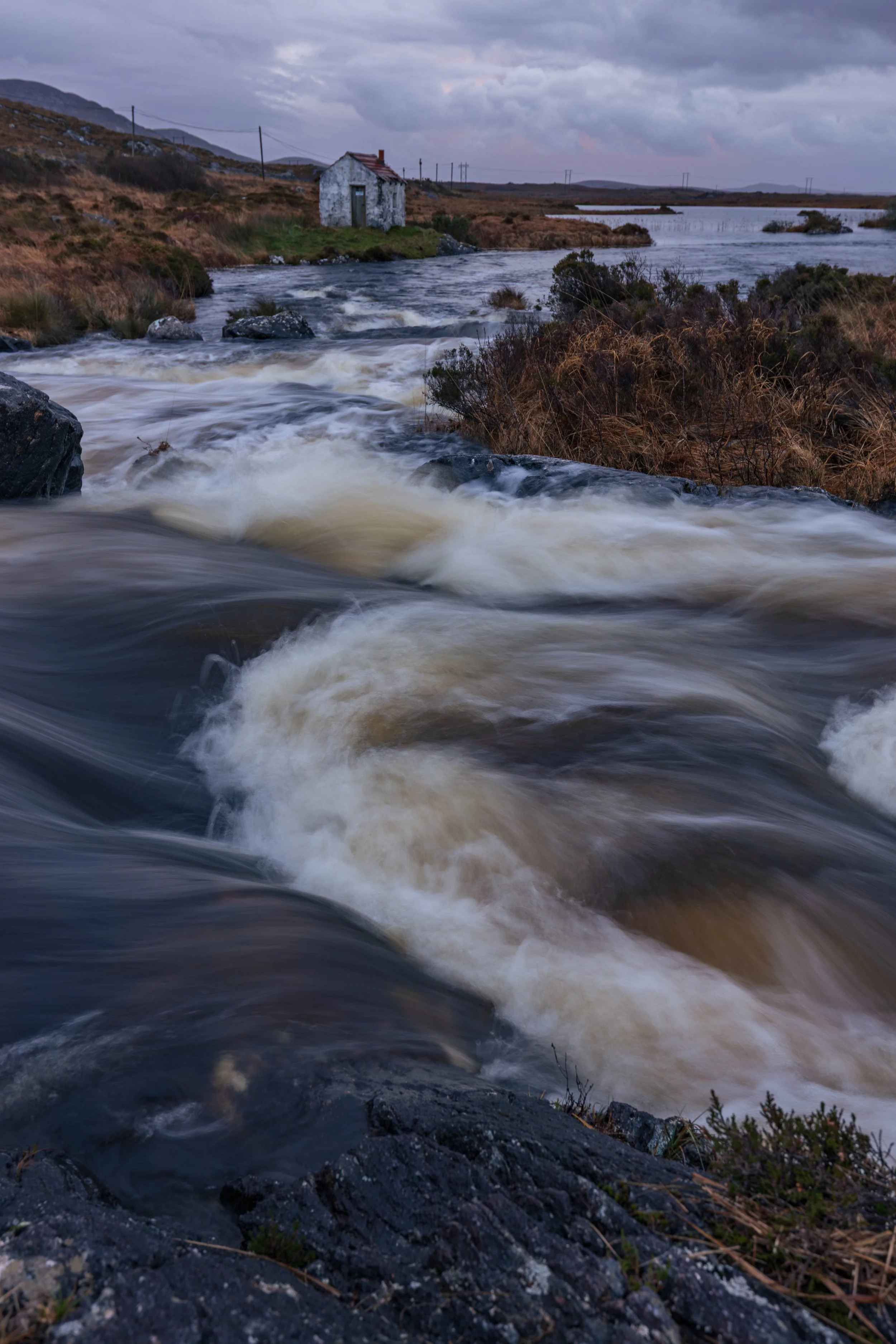
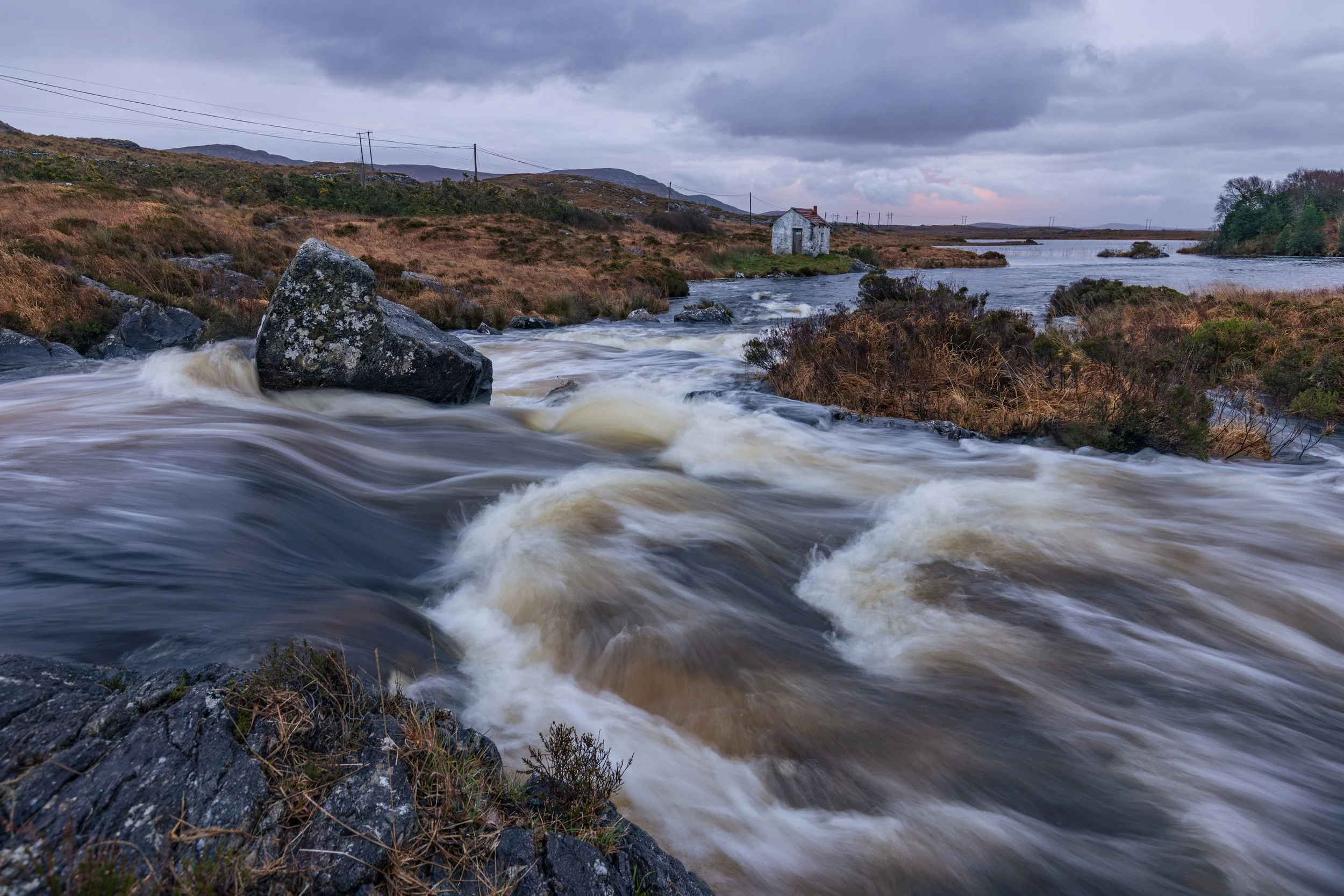
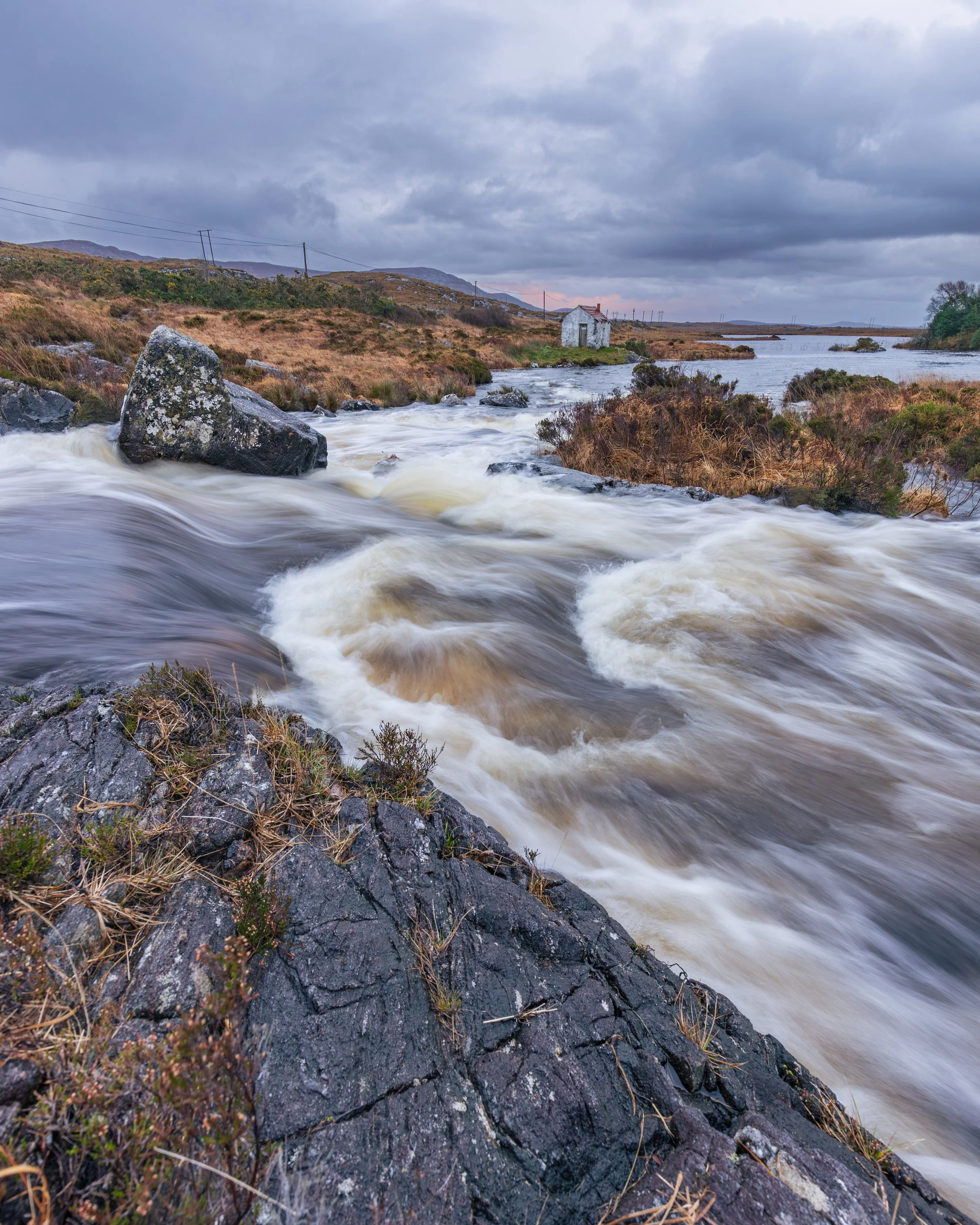
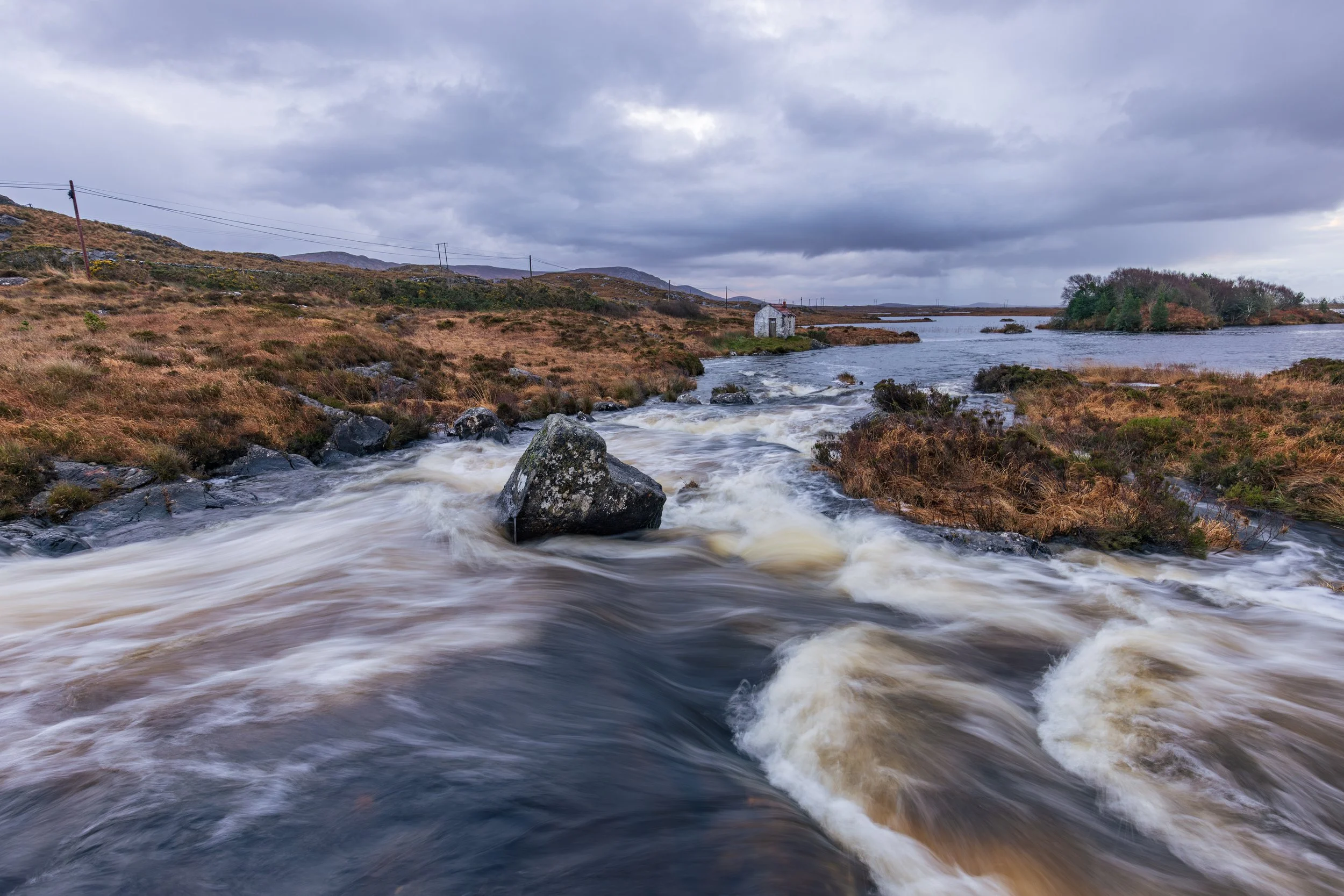
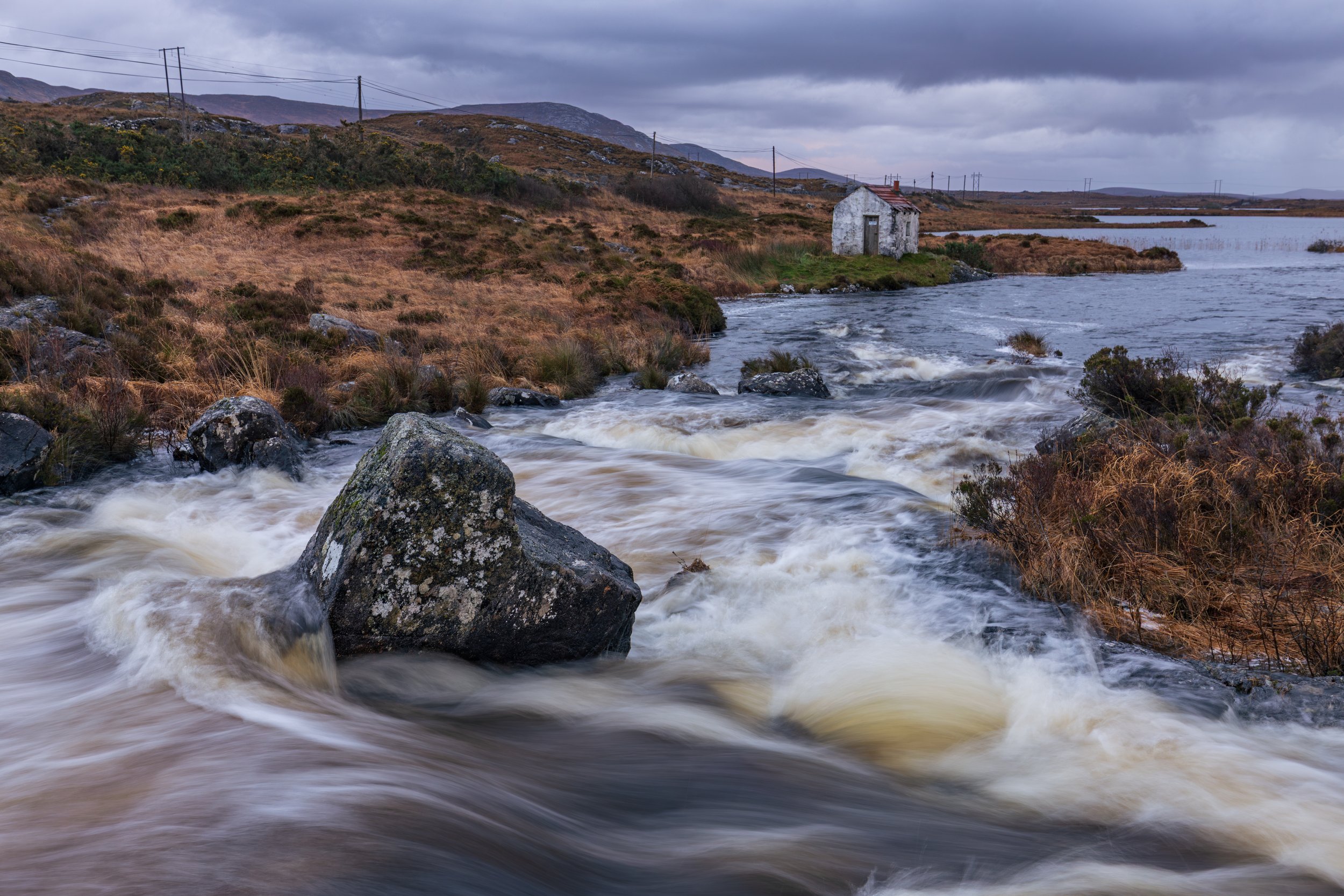
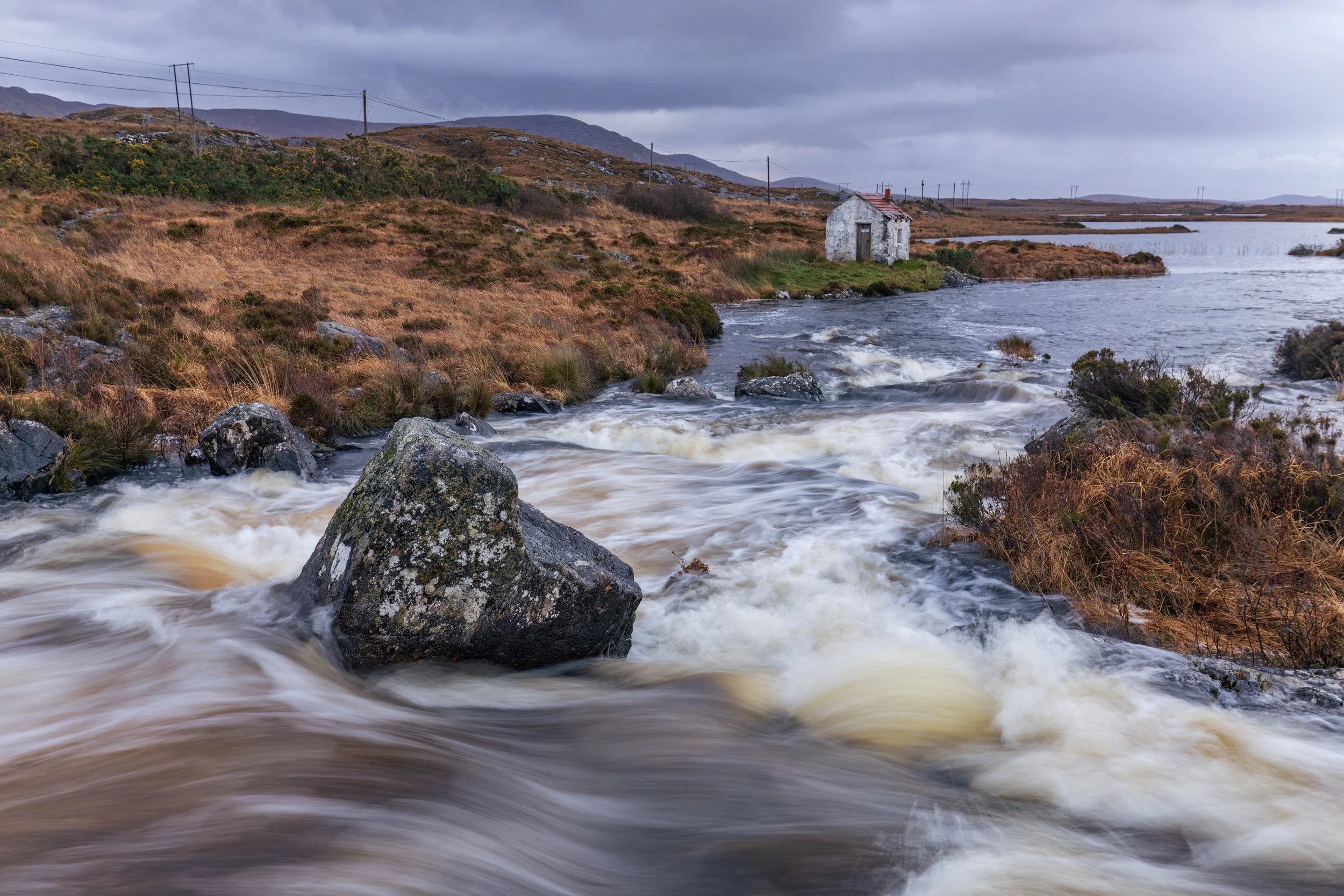
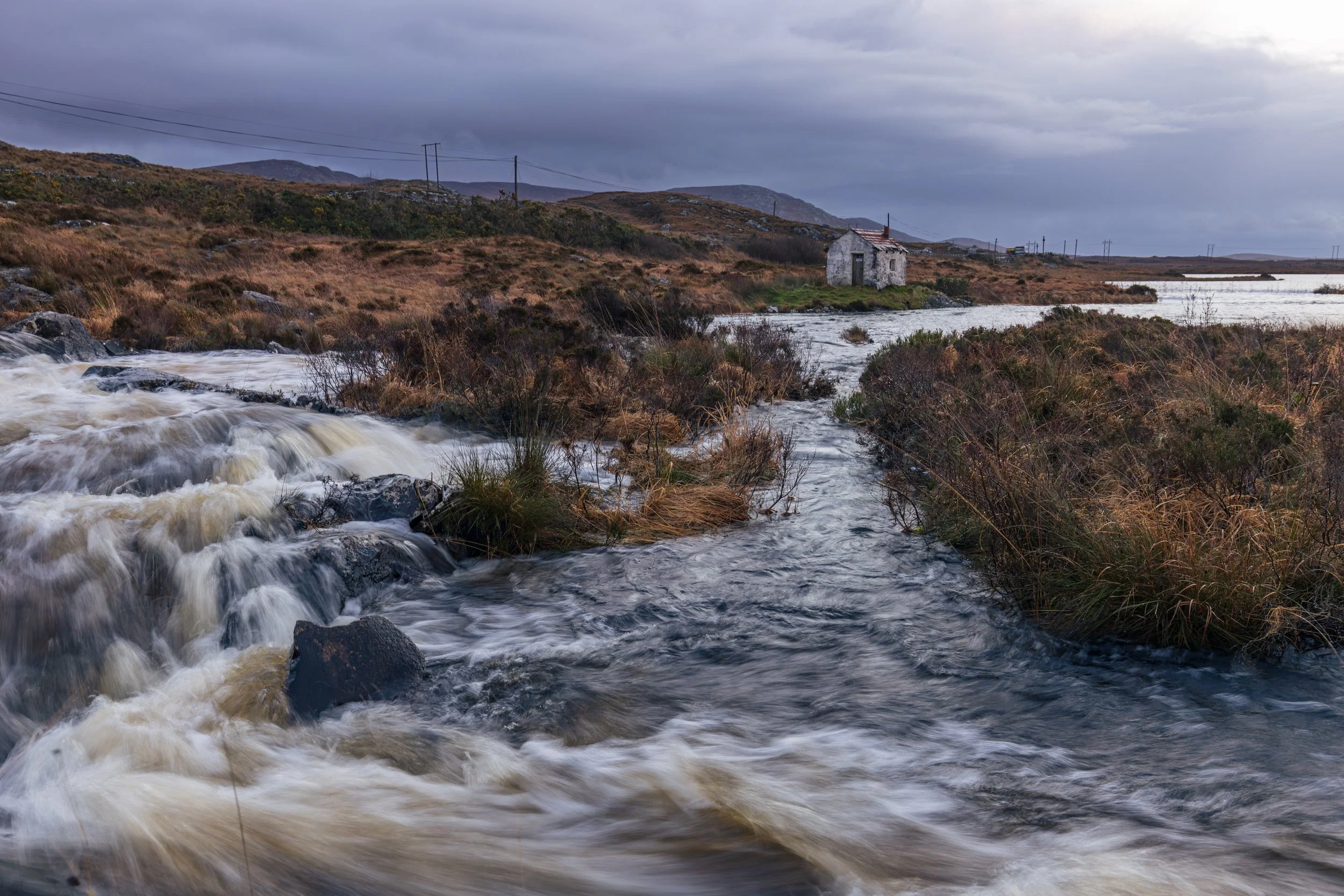
When we reached the water’s edge, the scene was exactly what I expected and remembered. The hut stood at the edge of the lake, and the river approached it from the left. Even before setting up the camera, I could see the potential. I knew the composition I wanted first: the hut near the top of the frame and the water flow acting as a leading line. With the low light levels, I could shoot at half a second without any filters. The longer exposure gave the moving water enough motion while keeping detail in the flow.
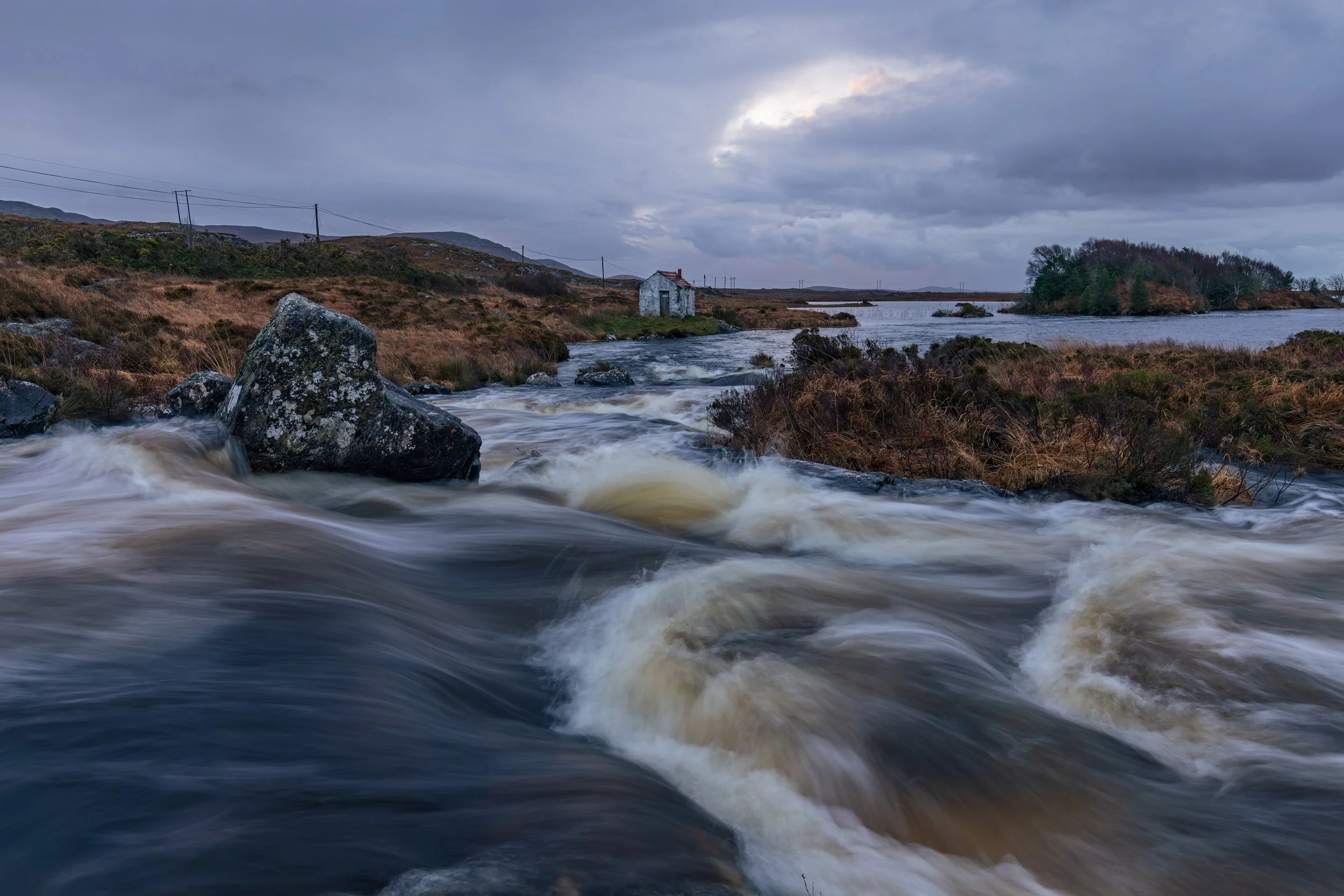
There was only a faint hint of colour in the sky, a small pink tone directly above the hut. It was not dramatic, and it did not need to be. Subtle colour can be more useful than a strong sky because it does not overpower the rest of the frame. That faint pink became a key anchor for the composition. It confirmed that even in flat conditions, there was still structure in the light.
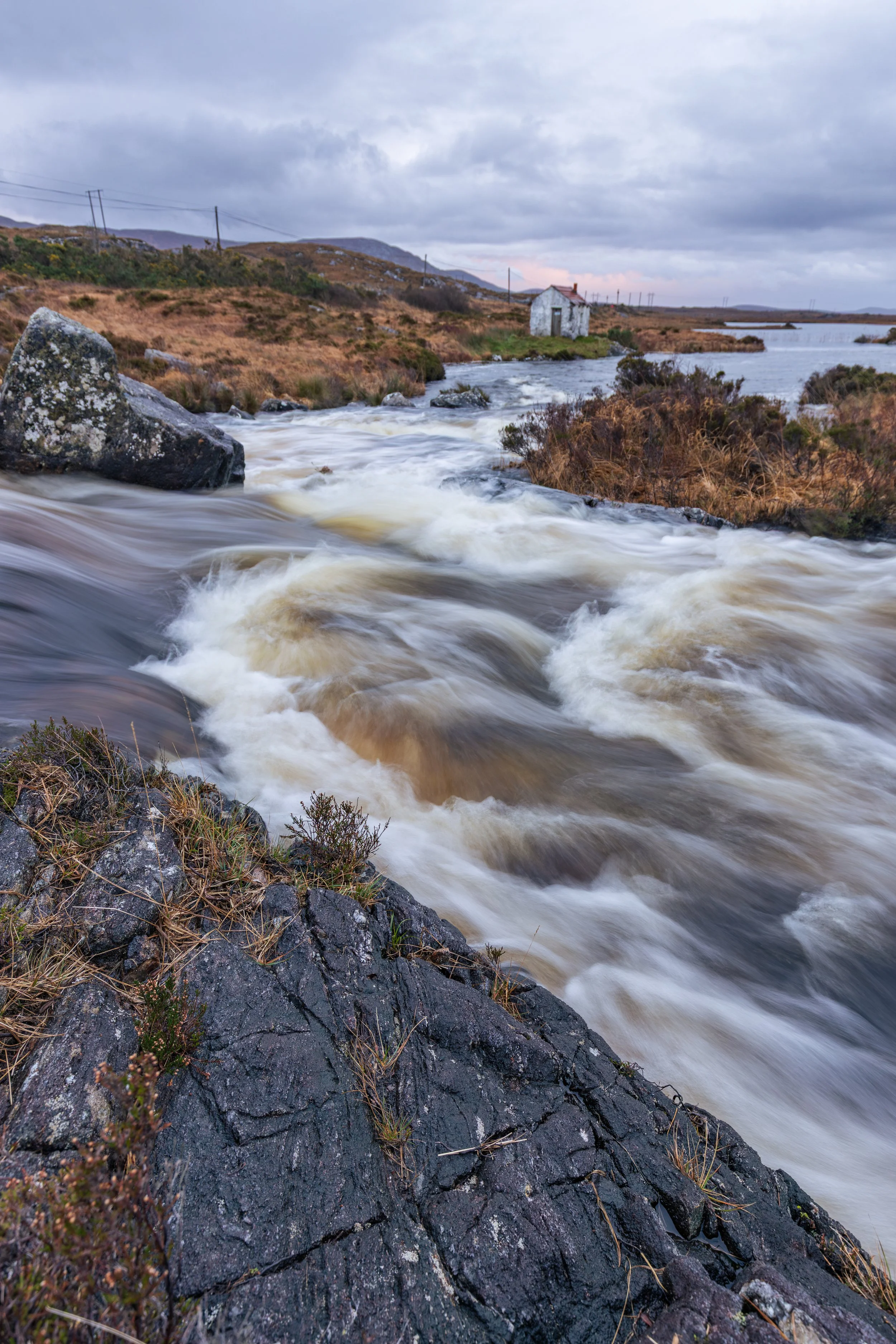
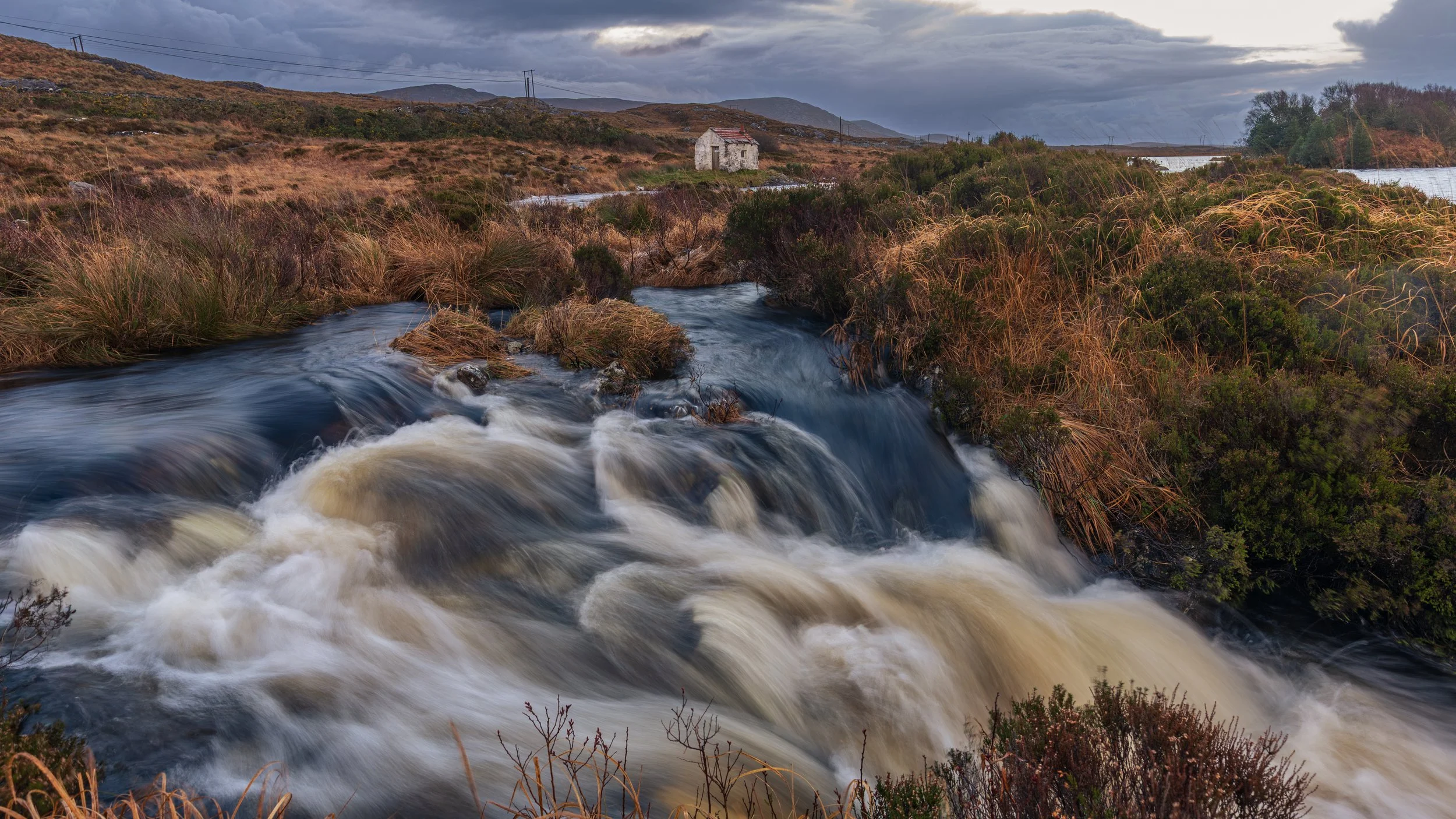
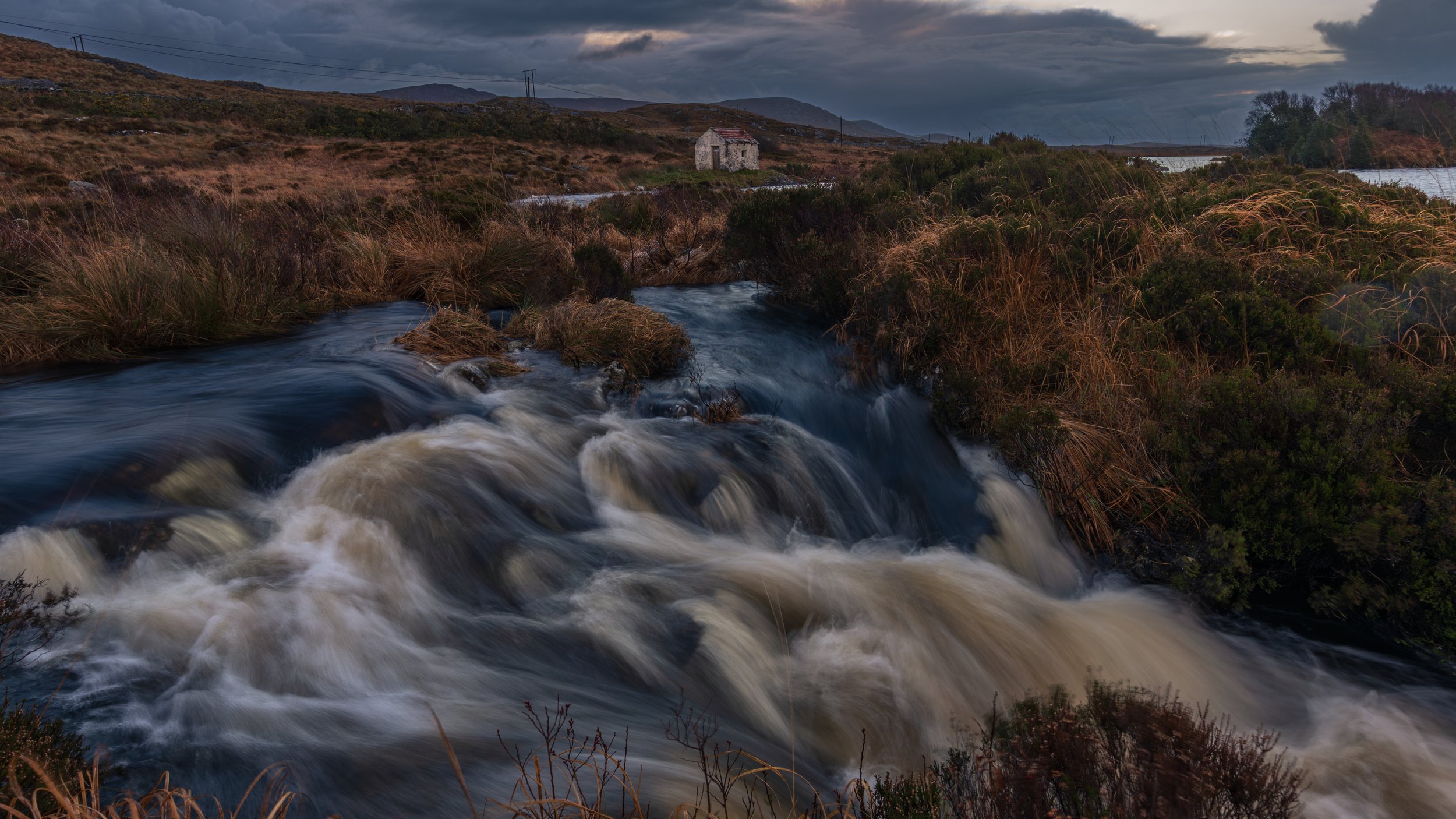
Once the first shot was taken, I moved along the narrow bank to explore other angles. This is one of the most important habits any photographer can develop: small adjustments can change the entire image. A shift of two or three feet alters the direction of the flow, the placement of rocks, and how the hut sits in the frame. Working with flowing water emphasises the importance of precision. The line of movement either strengthens the composition or weakens it.
The flow was ideal for shutter speeds between a quarter and half a second. At this length, I could retain detail in the water without turning it into a soft blur. Keeping texture helps maintain depth and gives the viewer a clear sense of movement. I focused on building each frame around a consistent structure: a strong foreground, a clear mid-point, and the hut as the subject. This approach ensures a dependable image, even when light is limited.
As we worked, the sky held its tone. No dramatic change, but enough variation to support the compositions. These are the conditions many photographers overlook. They drive past them or stay in the car because the sunrise is not what they hoped for. Yet these are the conditions that often deliver steady, dependable images. There is no pressure to chase colour or wait for a moment that may not happen. Instead, you focus on composition and technique.
One of the practical takeaways from this shoot was the benefit of shooting without filters. When the light is low, there is no need for neutral density or graduated filters. This removes extra steps and allows for quicker adjustments. It also encourages attention to shutter speed and movement rather than relying on equipment. Another takeaway was the importance of arriving with a flexible mindset. The goal is not to force a specific outcome but to work with what is available.
The shoot was short. The conditions were stable and not likely to change significantly. But the results were worth the effort. Each composition produced a slightly different interpretation of the same scene. The hut remained the anchor, but the foregrounds shifted. This variety is useful for building a complete set of images from a single location.
Driving away, I felt satisfied that I had finally stopped at a spot I had ignored for so long. The decision to shoot regardless of the forecast reinforced the same lesson I revisit again and again: the conditions we classify as poor are often the conditions that teach us the most. They force stronger composition, better use of what is available, and a more deliberate approach to building an image. The simple act of stopping made the shoot worthwhile.