
I Gambled on 10% Light… This Happened
It’s the 22nd of February 2026, and by this point, the weather across Ireland has been consistent in one way—rain. According to the available data, there had not been a single fully dry day since the start of the year. As a landscape photographer, that kind of pattern presents a challenge, but it also creates a decision point. Wait for better conditions, or go out and work with what is available.
I chose to go.
At around 1pm, I checked the forecasting apps I rely on. In recent weeks, I had been checking them more often than usual, looking for any break in the cloud cover. On this particular afternoon, there was a small window showing a potential gap in the clouds along the west coast, just in time for sunset. The probability was low, but it was enough.
Within a short space of time, I had packed the van and committed to the drive toward the Dingle Peninsula, a location I consider one of the most reliable in the country for strong coastal conditions. The decision itself is a key part of landscape photography. Waiting for certainty often means missing the opportunity entirely. Acting on partial information, supported by experience, tends to produce better outcomes over time.
The drive down was mixed. There were brief moments where the cloud cover broke, followed by heavy showers that reset expectations. It was inconsistent, and at times it felt like the forecast would not deliver. However, that is a common pattern on the west coast. Conditions change quickly, and localised weather systems can create short-lived opportunities that are not always reflected clearly in forecasts.
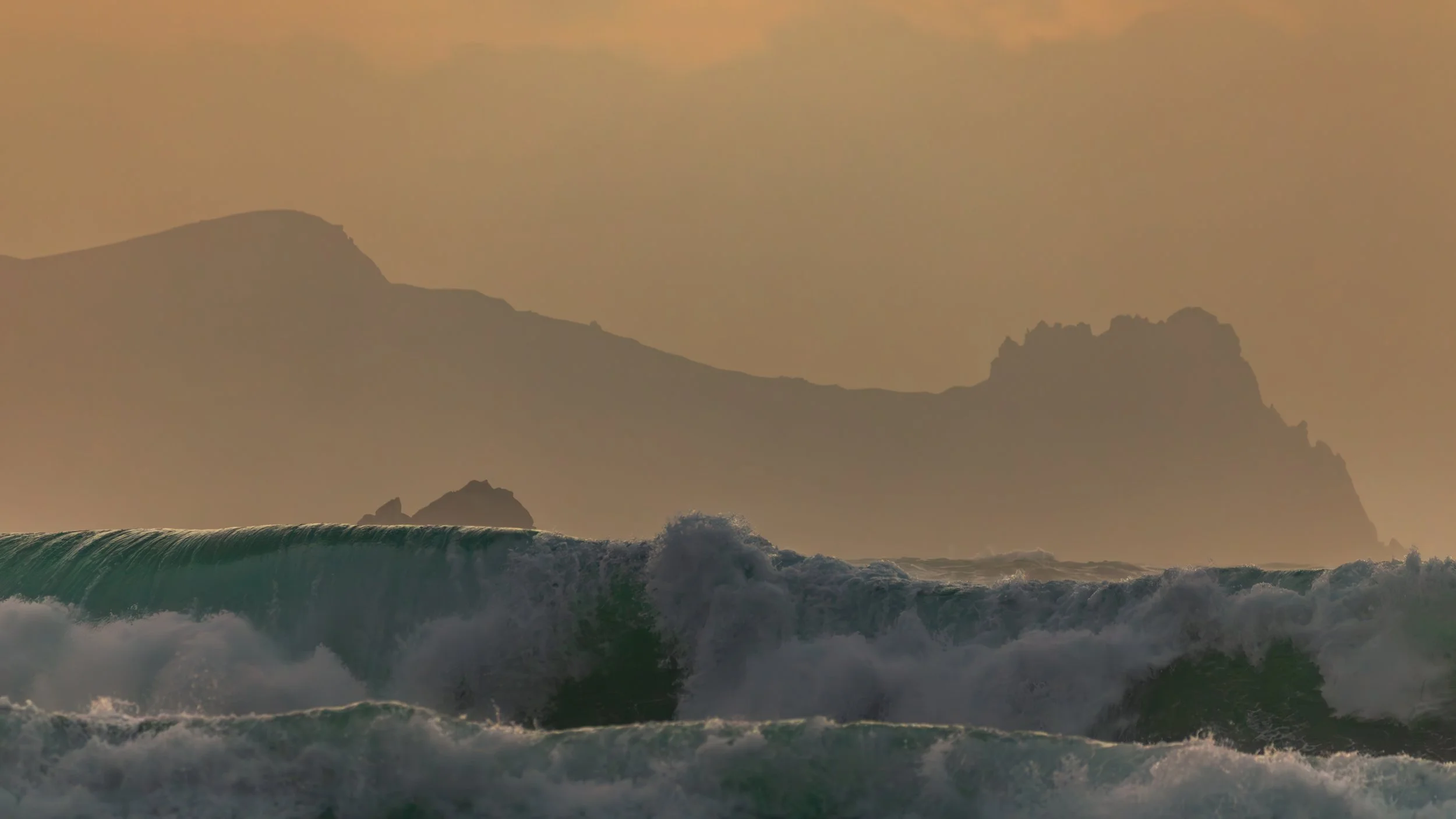
As I approached the coastline near Clogher Strand, there was a noticeable shift. The cloud began to thin, and for the first time in a while, direct sunlight came through. At the same time, the Atlantic was active. Strong waves were rolling in and breaking against an offshore rock formation that consistently produces impact when the swell is right.
This combination—light and movement—is where images start to come together.
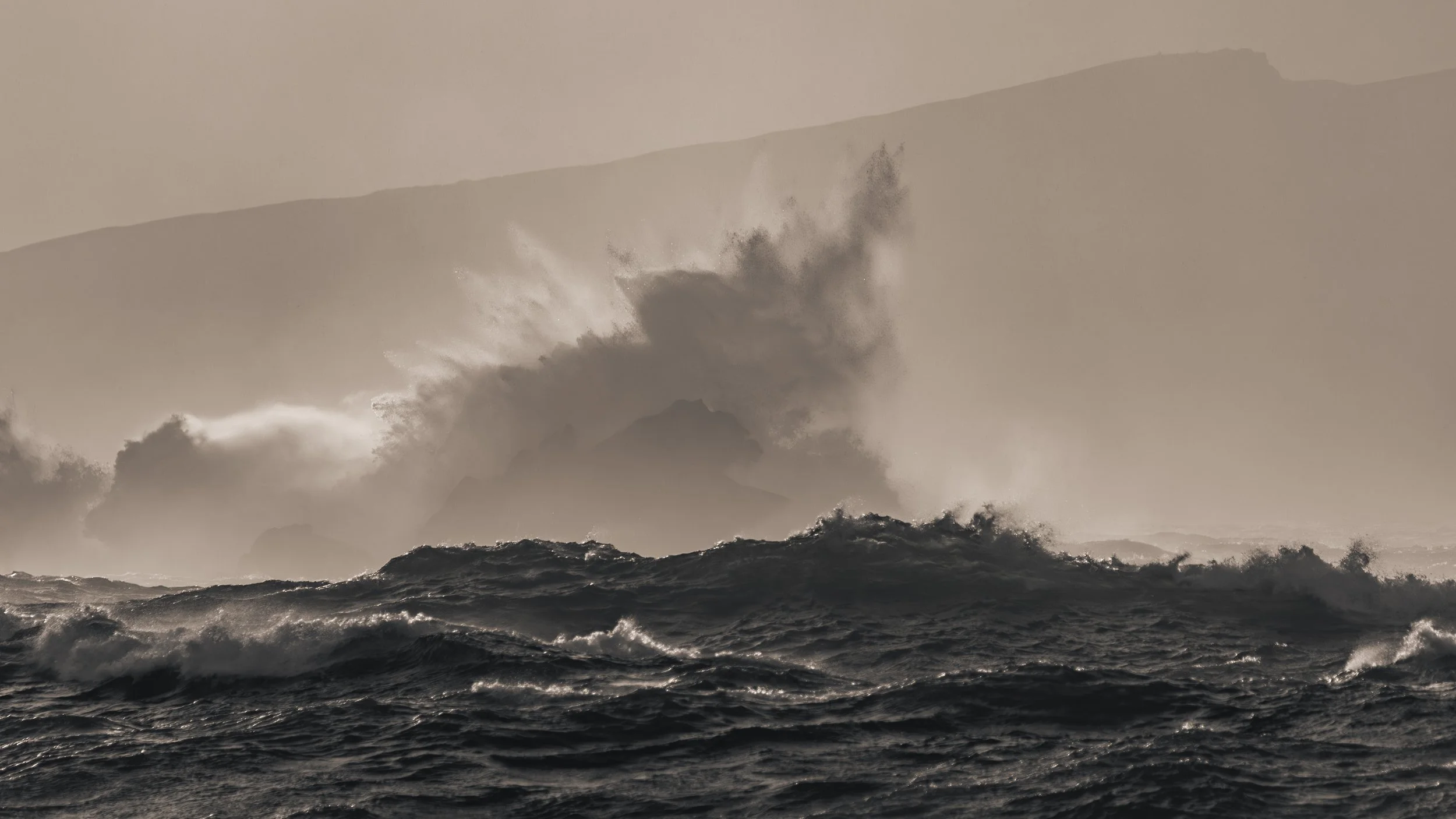
I had brought the Sigma 150–600mm lens specifically for this scenario. The intention was to isolate the wave impact and compress the scene, filling the frame with the moment of collision between water and rock. A shorter focal length, such as a 70–200mm, would not have allowed for the same level of detail or framing from a safe and practical shooting position.
This is a practical consideration that often gets overlooked. Lens choice is not just about preference; it directly influences the type of image you can produce. In this case, the longer focal length made the difference between documenting the scene and extracting a specific moment within it.
I was also joined by my friend Jaro, who lives locally. Whenever I am in the area, I make a point of reaching out to him. Having someone on location who understands the coastline and can read the conditions adds another layer to the process. It also makes the experience more productive and, at times, more efficient.
Initially, it seemed like the conditions would hold. The light that greeted us on arrival was promising, and the waves were consistent. But as quickly as it appeared, the light disappeared. The cloud cover returned, flattening the scene and removing the contrast that had made it visually strong just minutes earlier.
This is where patience becomes critical.
It is easy to leave at this point, especially after a long drive and a forecast that was never fully reliable. But the conditions were still active. The waves continued to break with force, and the structure of the scene remained intact. Even without strong light, there was still potential.
Then the rain returned, heavier than before. It would have been a reasonable moment to pack up and accept that the attempt had not worked. Instead, we stayed in position.
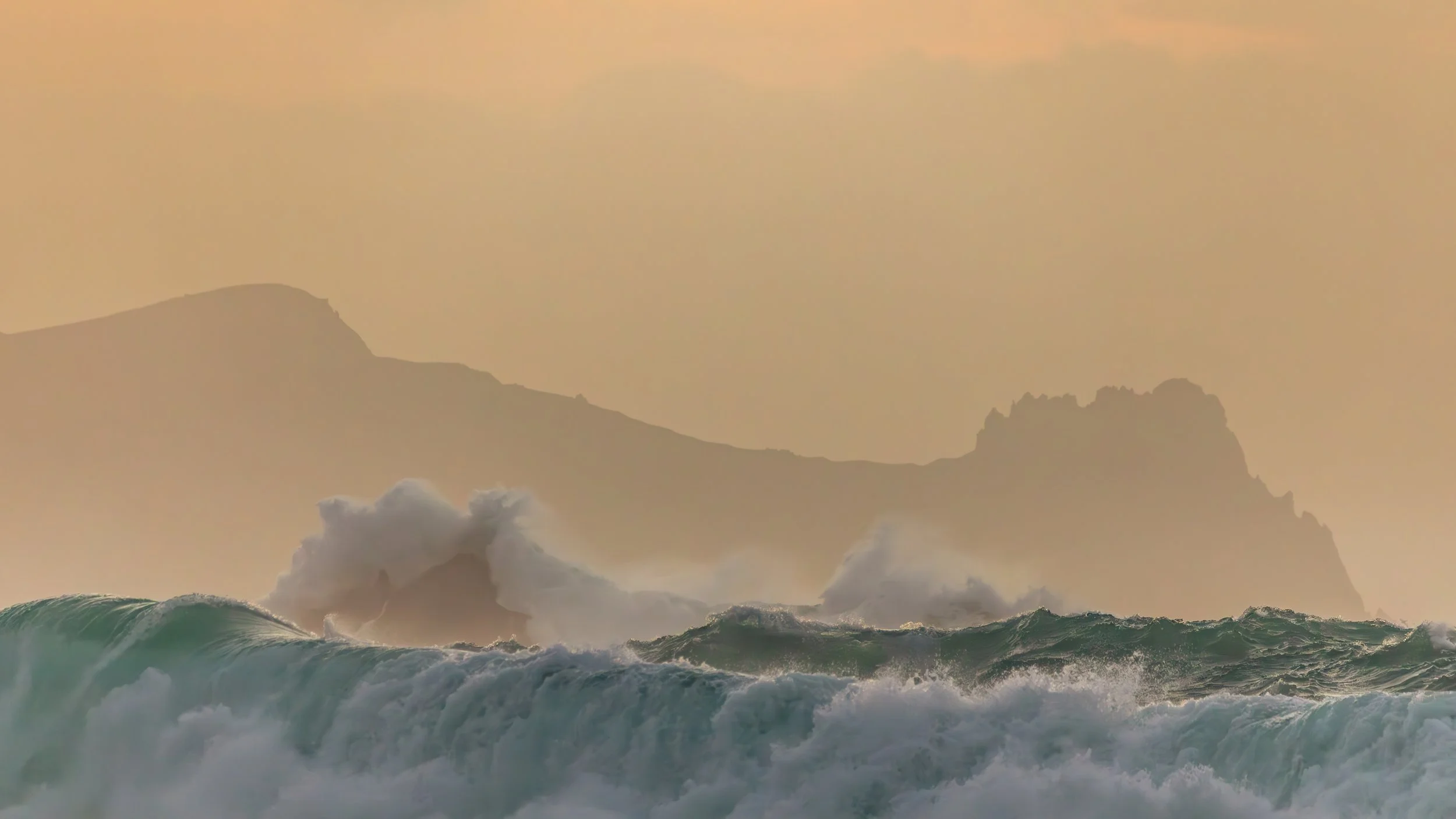
Shortly after, the conditions shifted again. The cloud began to break, but this time it opened below the main bank of cloud rather than above it. The sun dropped beneath the cloud layer as it approached the horizon, sending direct light across the water and onto the breaking waves.
The scene changed completely.
What had been flat and muted just moments earlier became defined and structured. The light added depth, contrast, and separation. The waves, already strong, now had direction and clarity. Each impact against the rock became more pronounced, creating a sequence of moments that could be captured with intent rather than reaction.
This is the type of condition that cannot be planned with precision. It can only be anticipated and responded to.
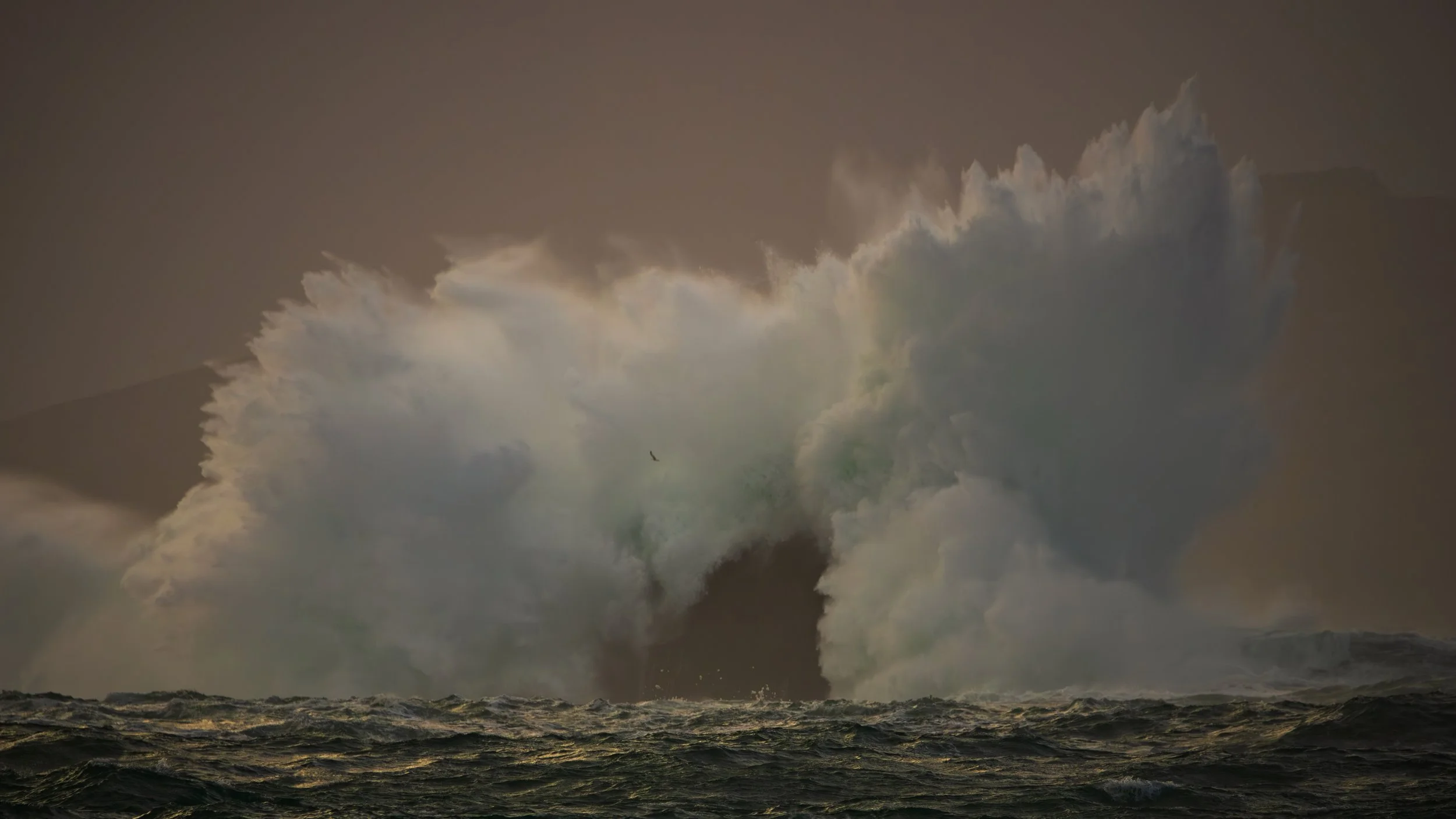
From a technical perspective, the approach was straightforward. A fast enough shutter speed to freeze the peak of the wave, balanced with an aperture that maintained sharpness across the frame. The key variable was timing—tracking the rhythm of the waves and releasing the shutter at the point of impact.
From a practical standpoint, the outcome reinforced a consistent principle: showing up matters more than certainty.
The forecast suggested a low probability of success. The journey included multiple setbacks. The conditions at the location changed several times, often in the wrong direction. But by staying in place and continuing to work the scene, the opportunity eventually presented itself.
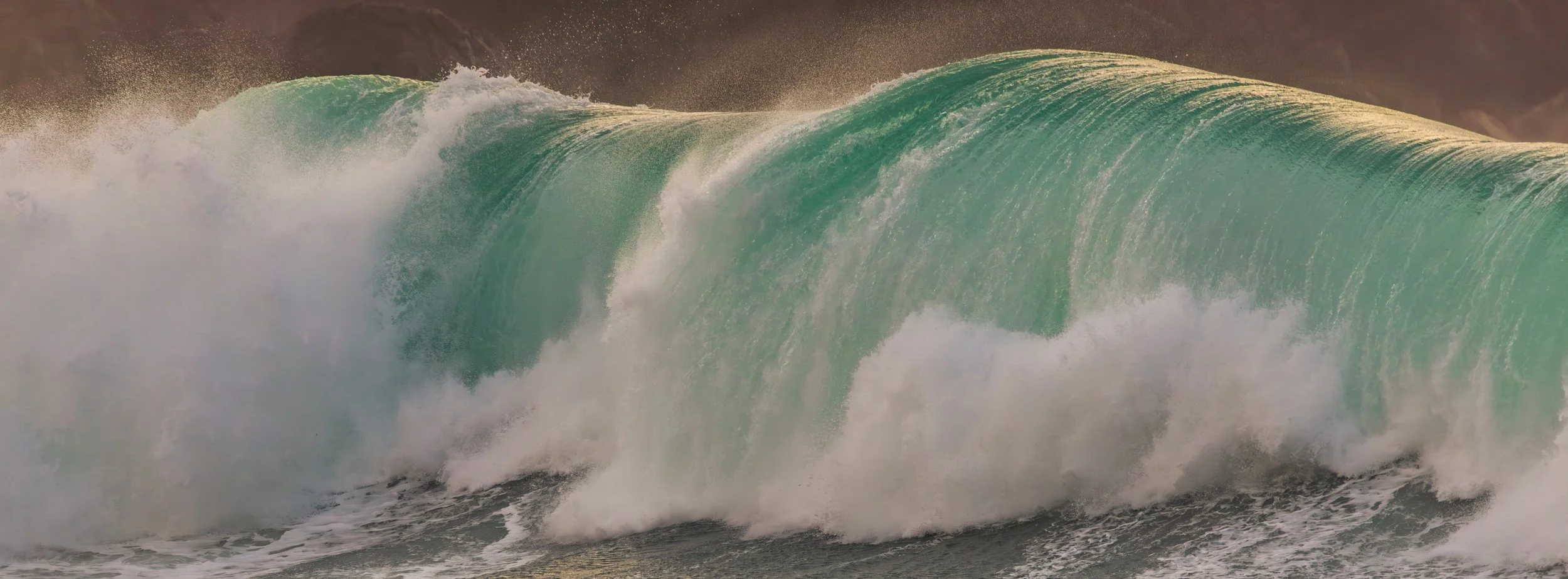
This is not an isolated experience. It is a pattern that repeats across landscape photography. The conditions that produce the strongest images are often short-lived and unpredictable. They require a willingness to commit time and effort without any guarantee of a result.
On this occasion, the decision to go was justified. The combination of light, movement, and timing aligned, and both of us left with images that reflected the conditions at their peak.
It also reinforced a belief I return to regularly: there are no bad conditions, only different ones. The challenge is to recognise what is available and adapt to it. Sometimes that means working in flat light. Other times, it means waiting through rain for a brief window that changes everything.
On the Dingle Peninsula that evening, it was the latter.