Everyone Avoids Midday Light — I Shot Anyway (Here’s What Happened)
It’s the middle of the day, and while most photographers tend to pack away their cameras during the harsh light hours, I decided to take on the challenge. Midday light can be difficult because of its intensity, creating high contrast, harsh shadows, and limited dynamic range. But I wanted to see what could be achieved by working with what most consider the least favourable time to shoot.
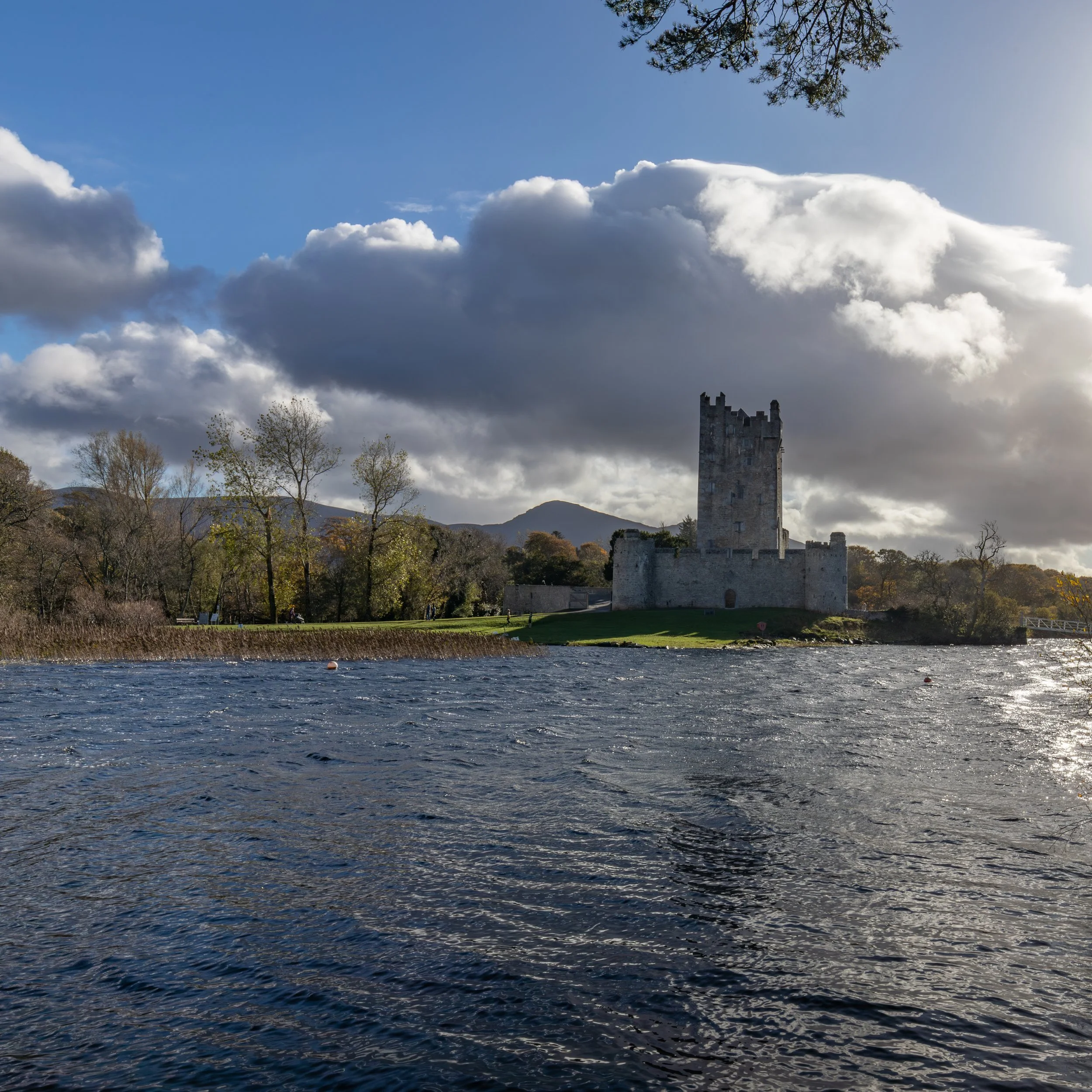
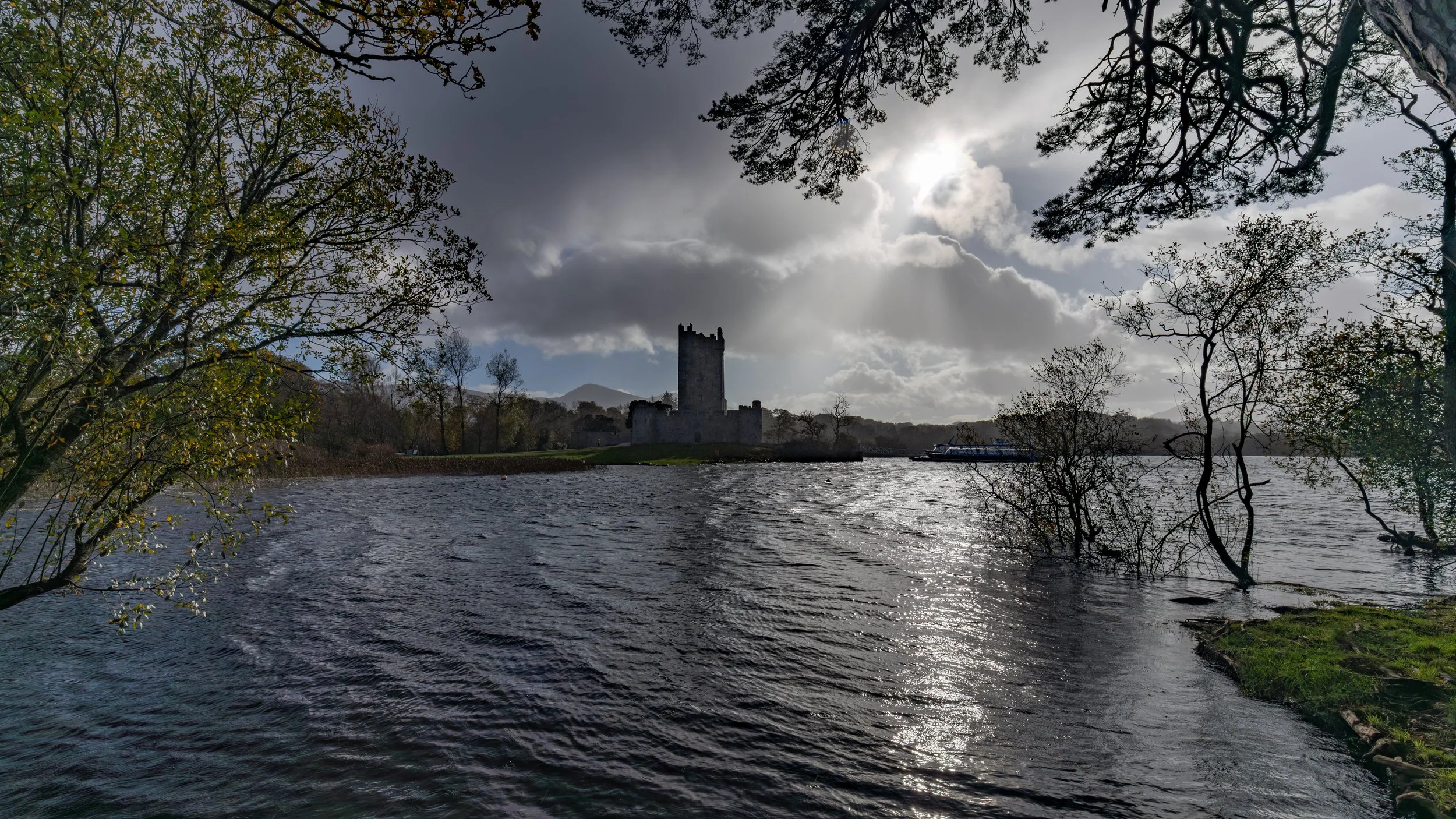
I was in Killarney National Park in County Kerry, one of Ireland’s most beautiful and diverse landscapes. It was peak autumn, and the park was alive with vibrant colour. The light was changing quickly, with brief bursts of sunshine piercing through clouds and trees, illuminating the woodland in fleeting moments. My location for the day was Ross Castle and Ross Island, an area I had photographed before but never properly explored beyond the castle itself.
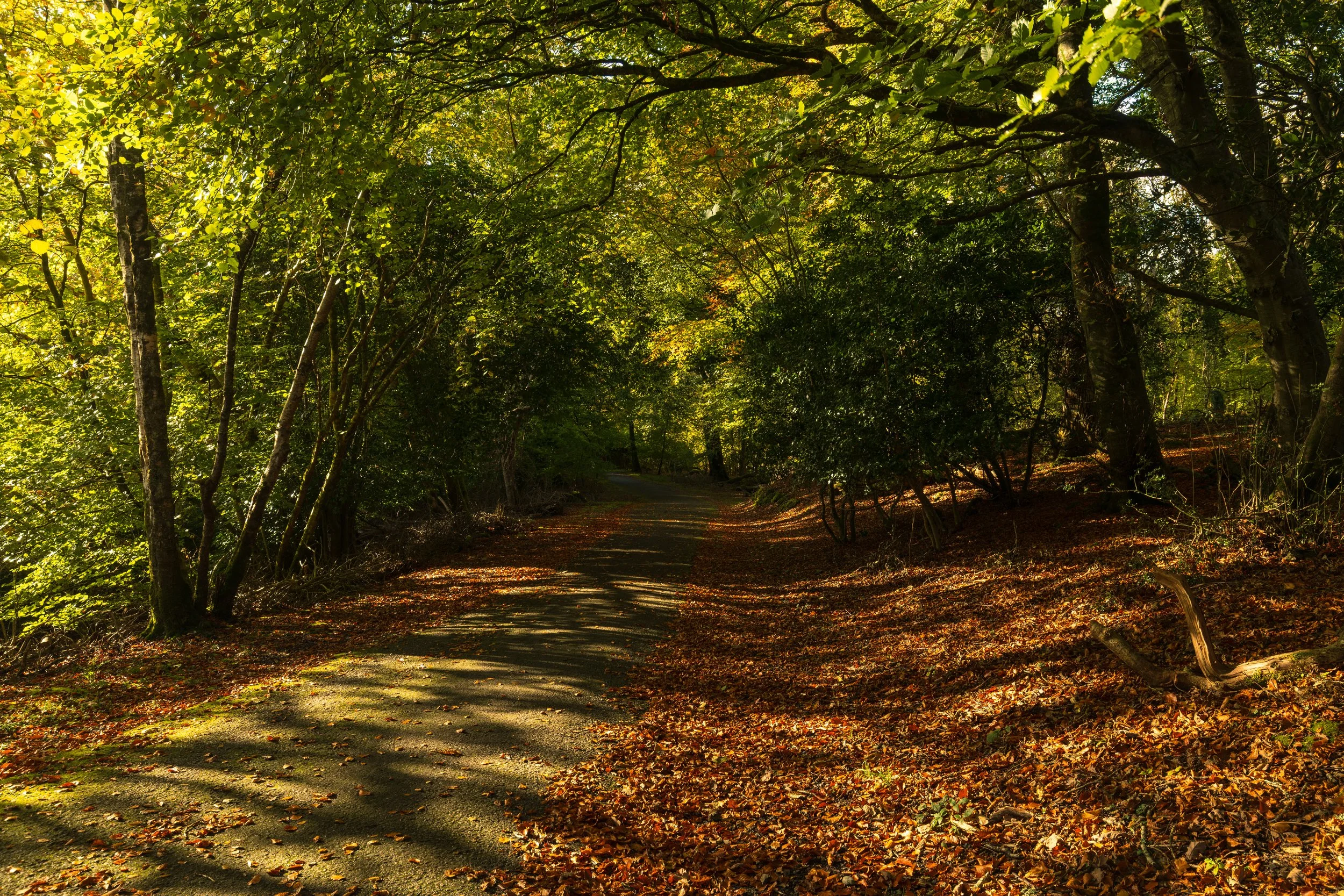
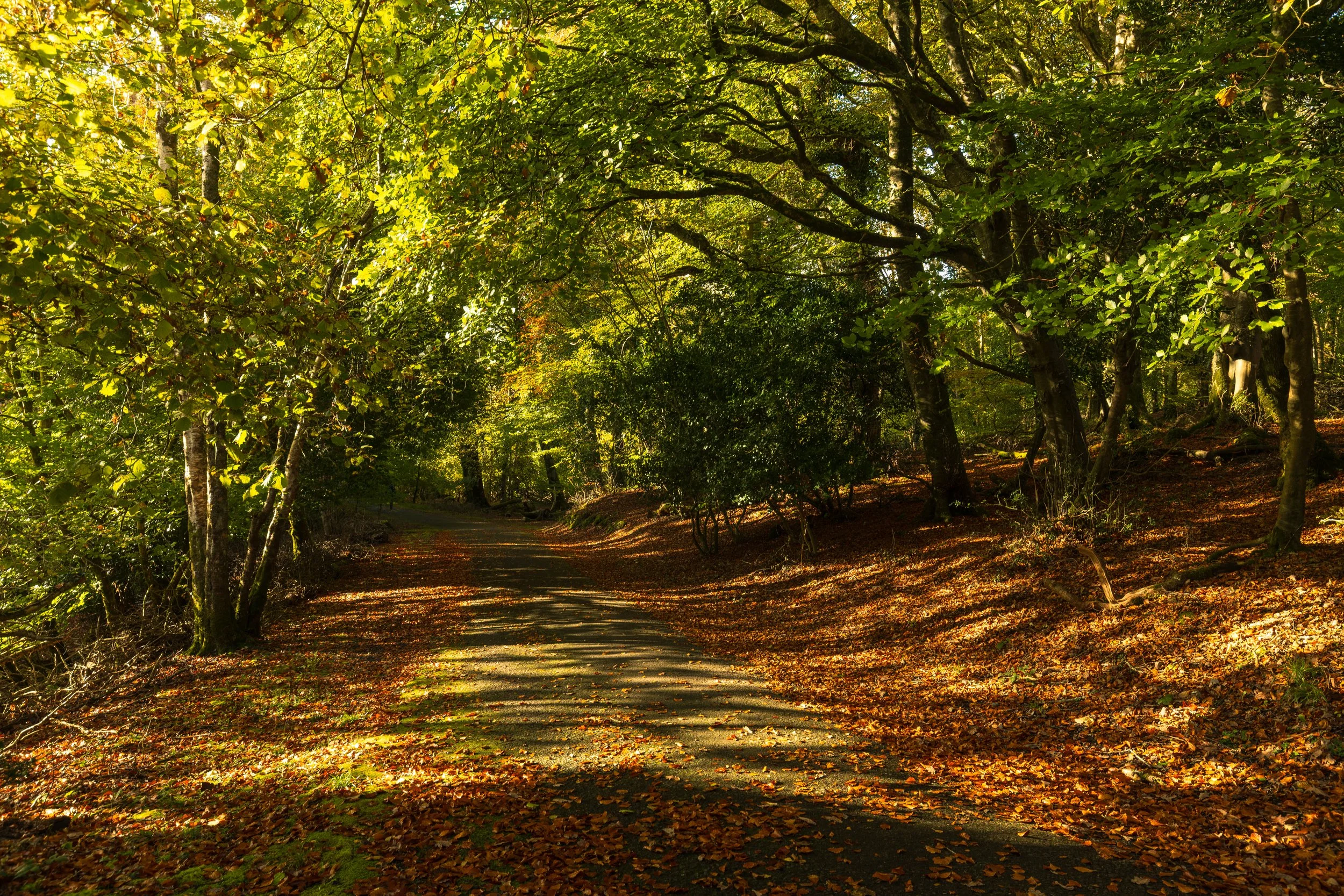
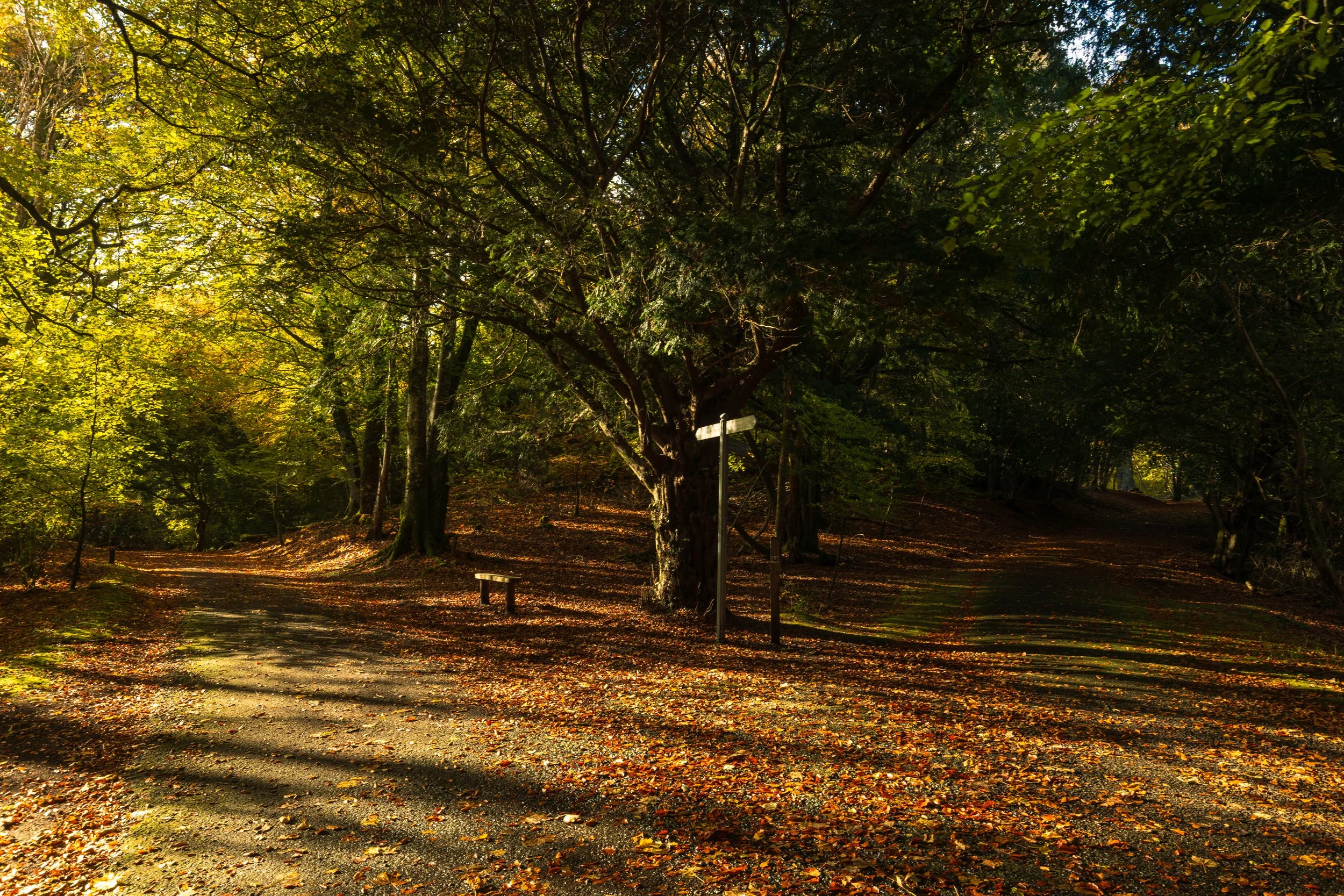
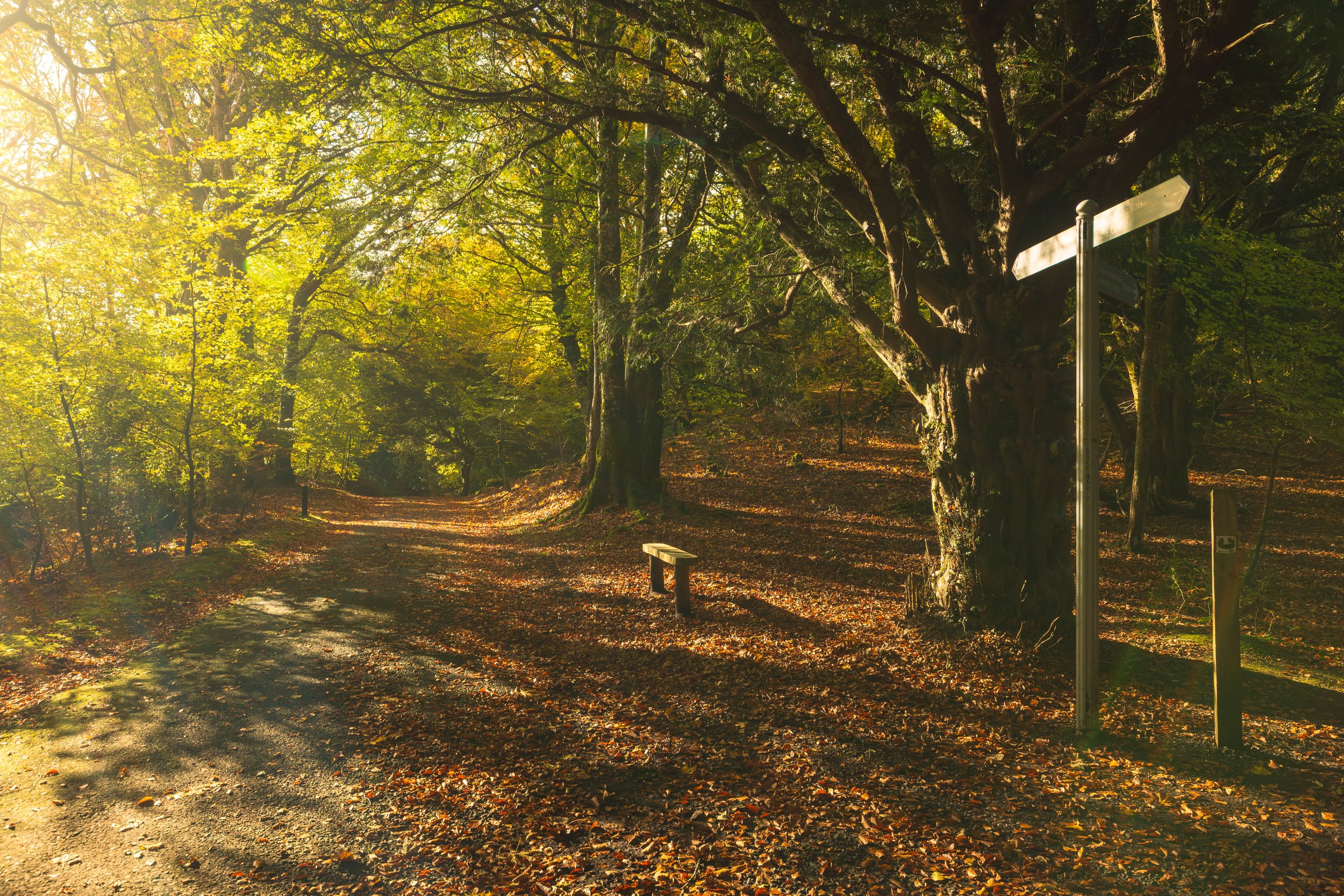
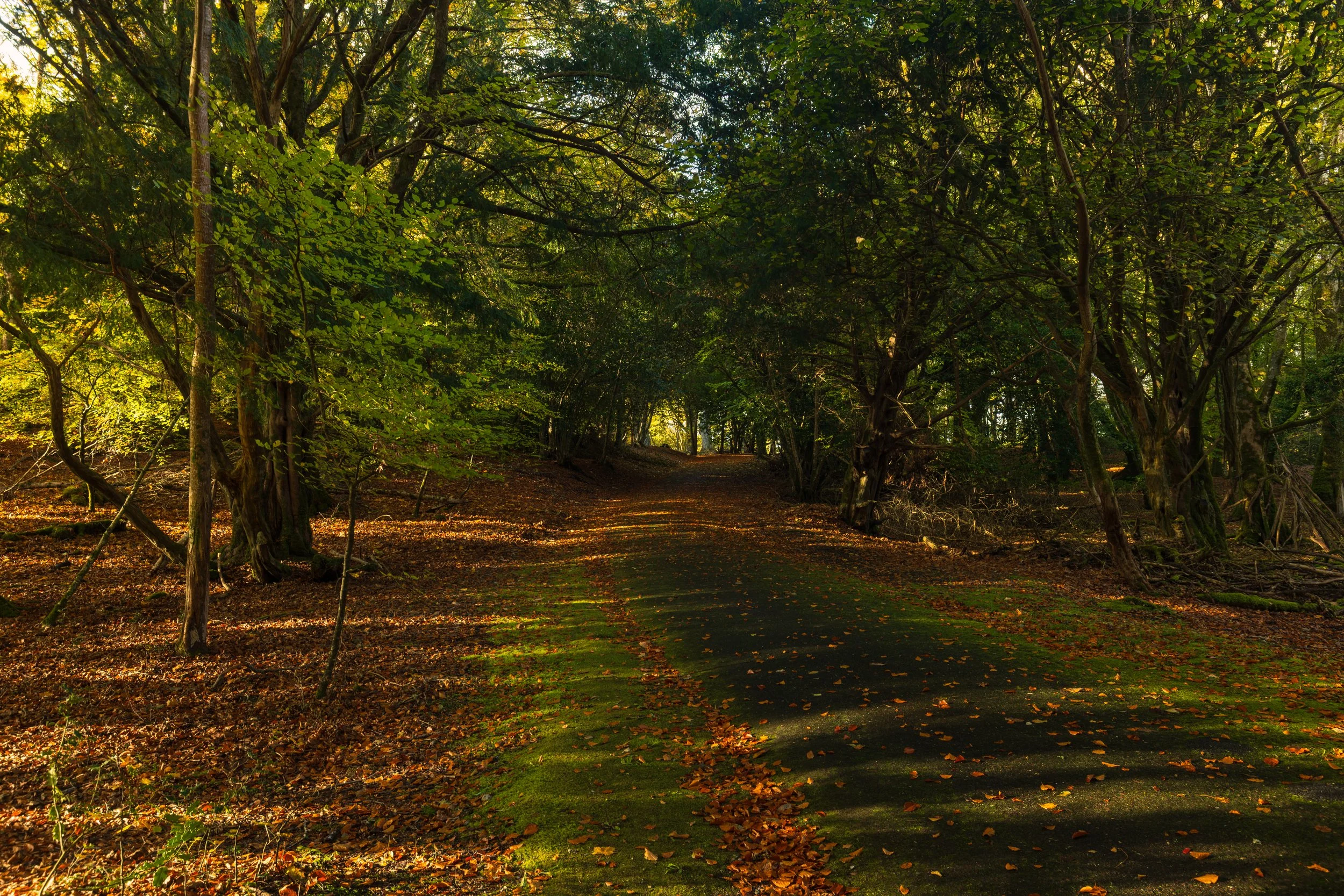
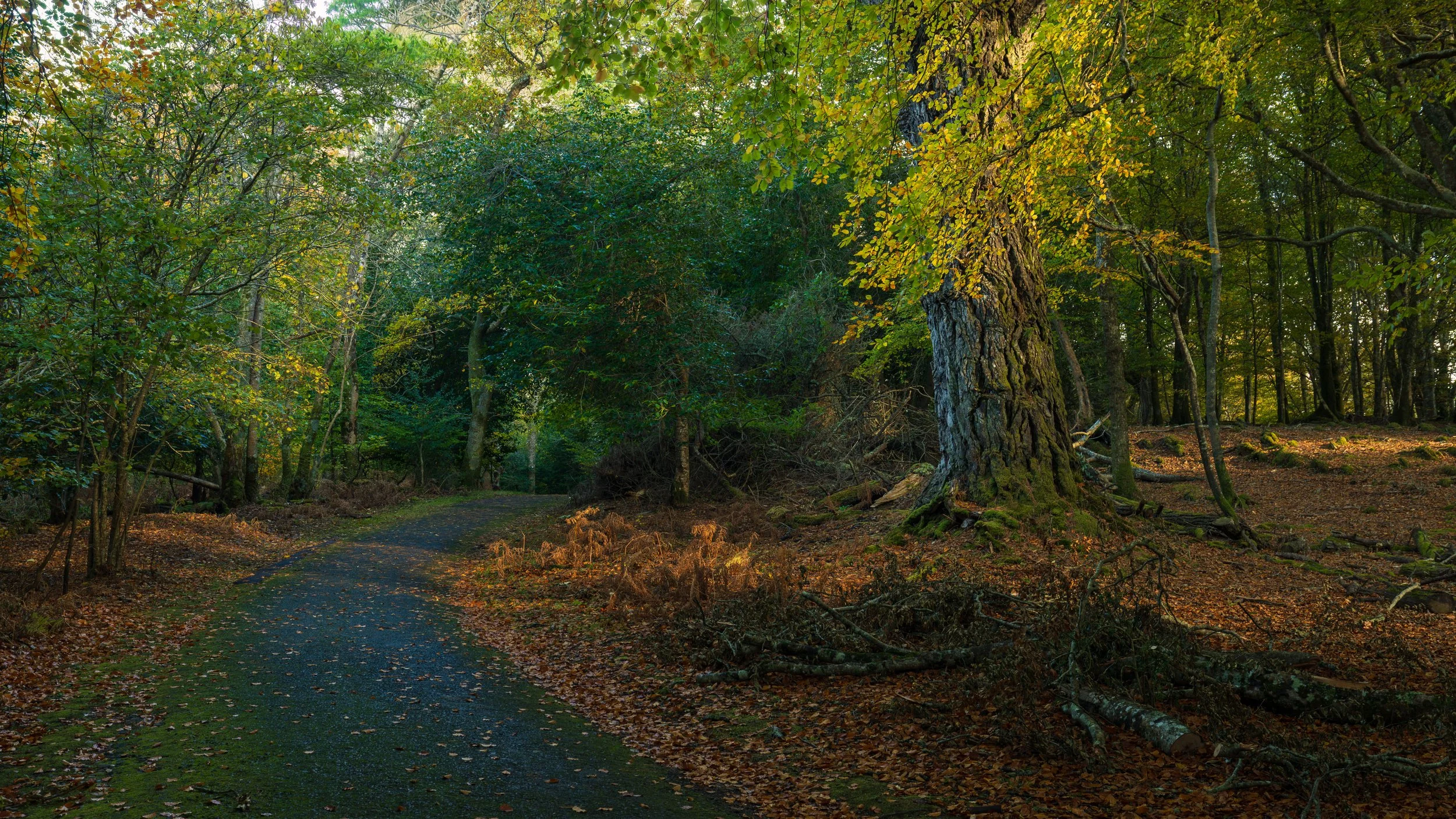
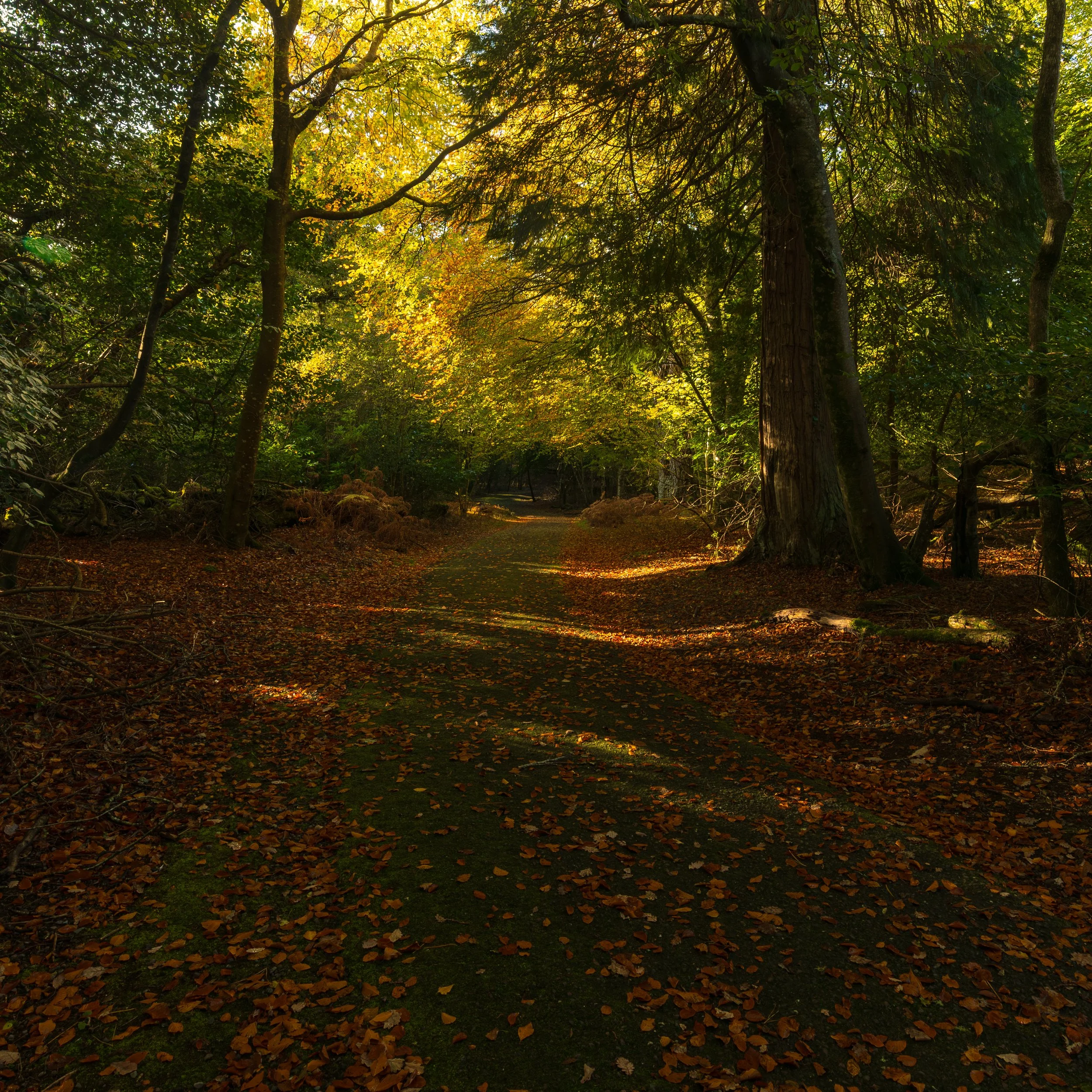
Walking the paths through the woods, I was immediately drawn to the scale and variety of trees — from the towering Scots pines to the rich yellows and reds of deciduous species. My first composition appeared quickly: an avenue of trees lining the path, illuminated by light from above. It was a challenging exposure because of the contrast between the bright spots and the darker shadows beneath the canopy.
Technical takeaway: when photographing in these conditions, it’s best to expose for the highlights to prevent overexposed patches of light. The shadows can be recovered later in post-processing, but blown highlights are rarely recoverable.
With my first shot done, I moved deeper into the woods. I didn’t know the area, so I let the light guide me — chasing patches of brightness that lit the foliage in brief, intense flashes. Often, by the time I reached a spot, the light had already shifted, leaving me waiting. That’s part of the challenge and appeal of fleeting light; patience becomes as important as composition.
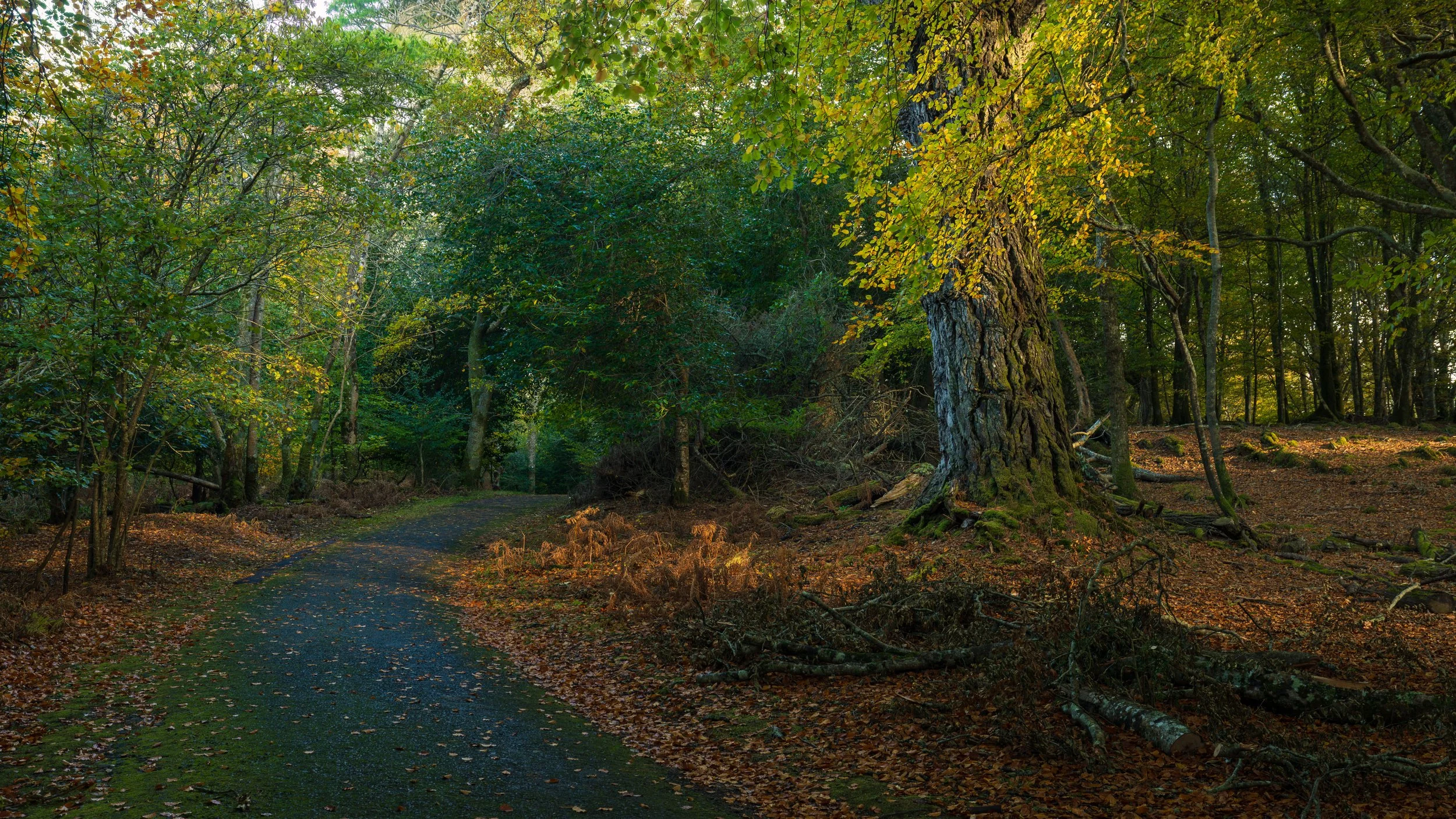
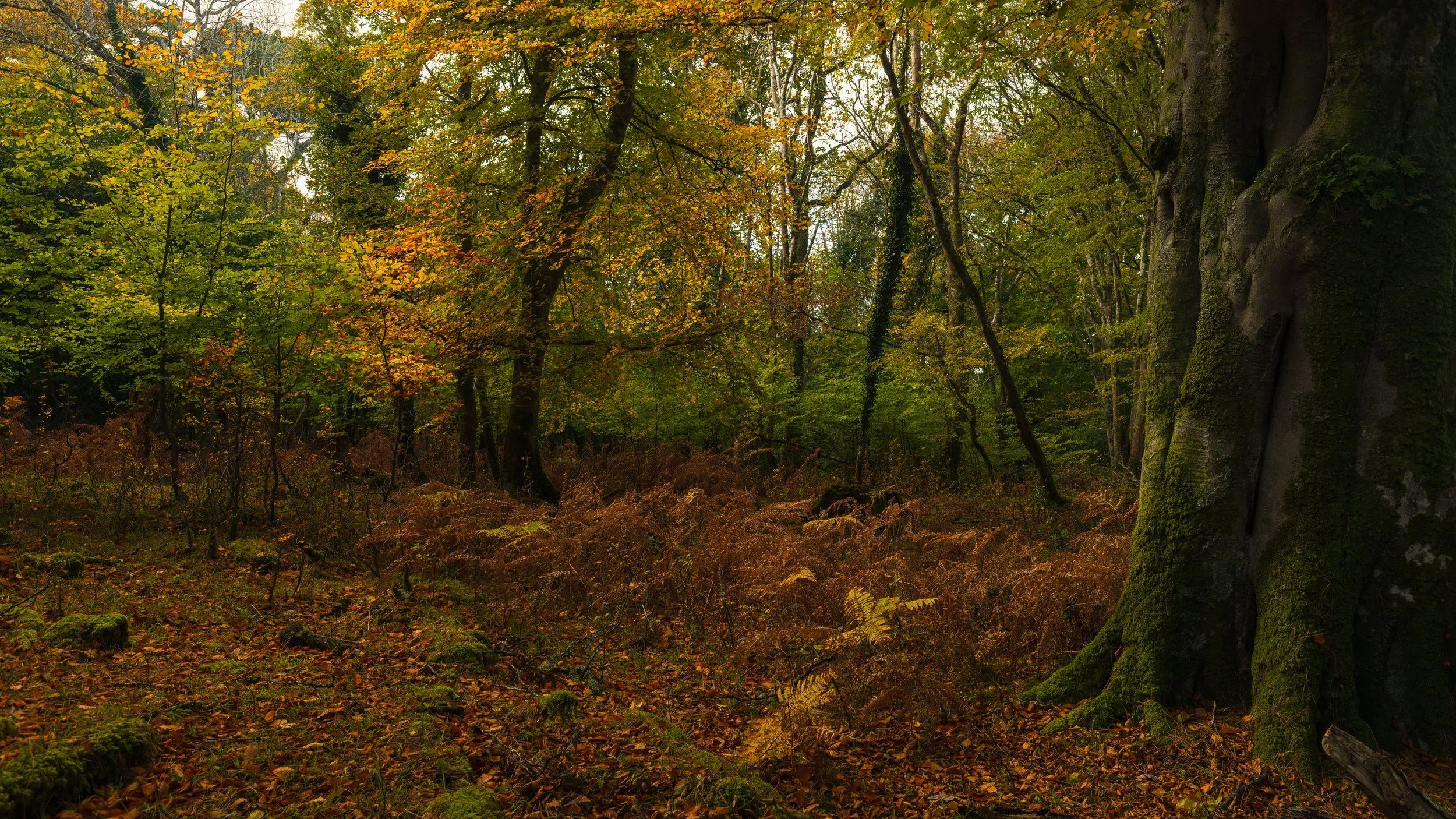
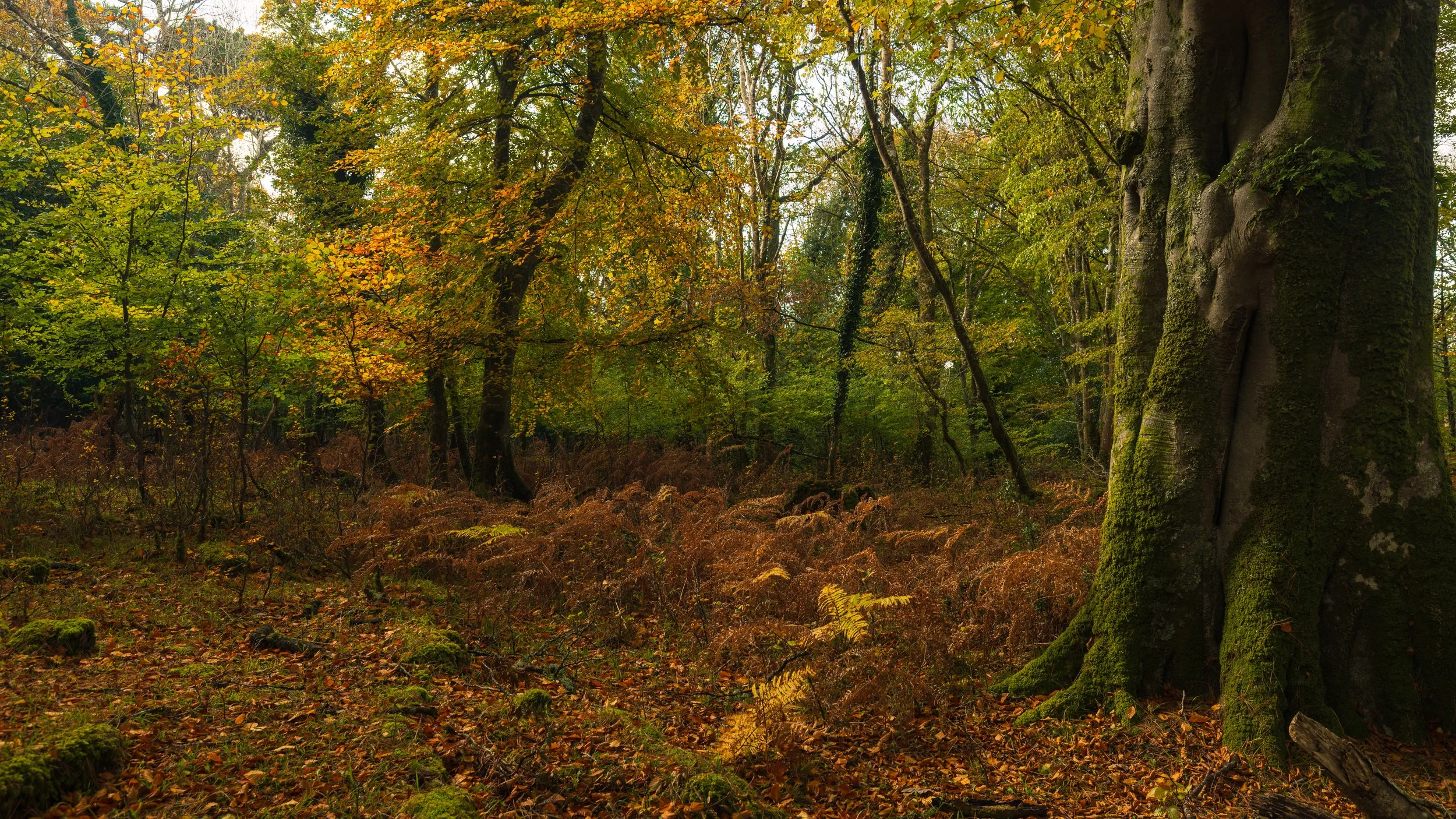
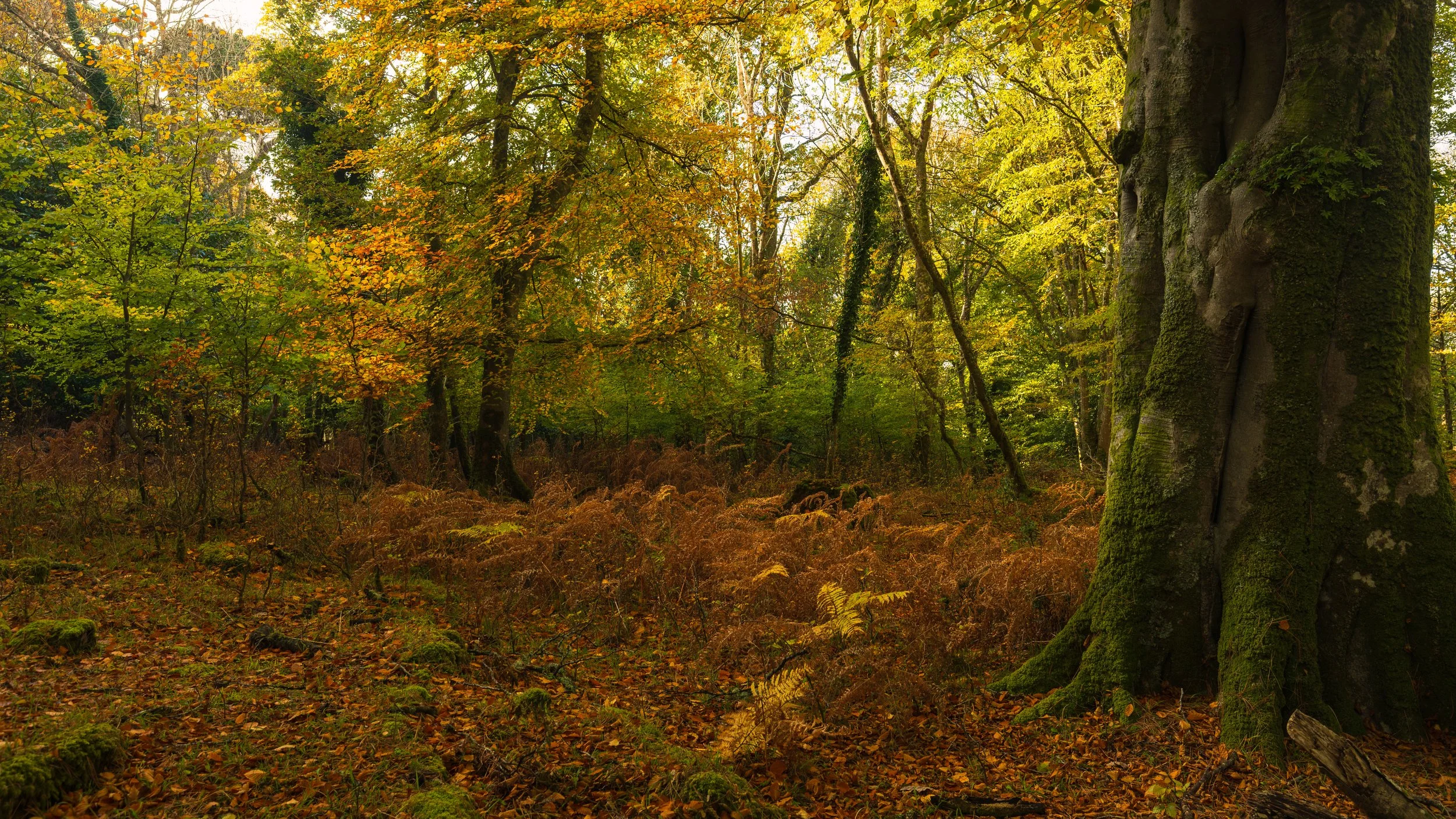
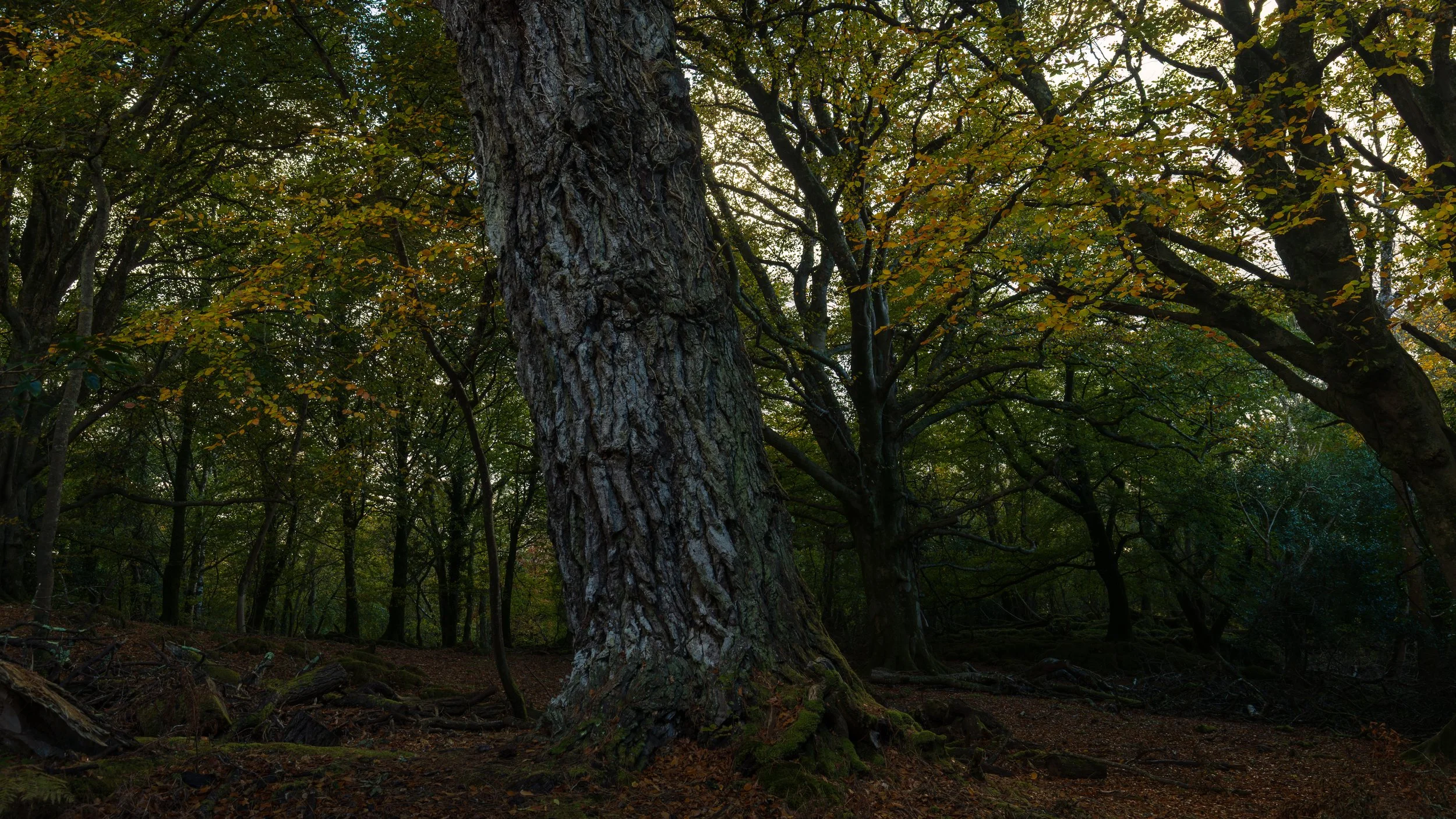
My next scene featured a striking yellow tree beside another with deep textures of bark and moss. I framed the composition with the tree trunk on the right and the yellow foliage central. I waited for light, but instead, rain arrived. I waited it out for about ten minutes. When it cleared, the diffused light gave a softer, more even illumination. It wasn’t the light I planned for, but it worked. Sometimes, overcast conditions can enhance colour saturation and reduce contrast — ideal for woodland photography.
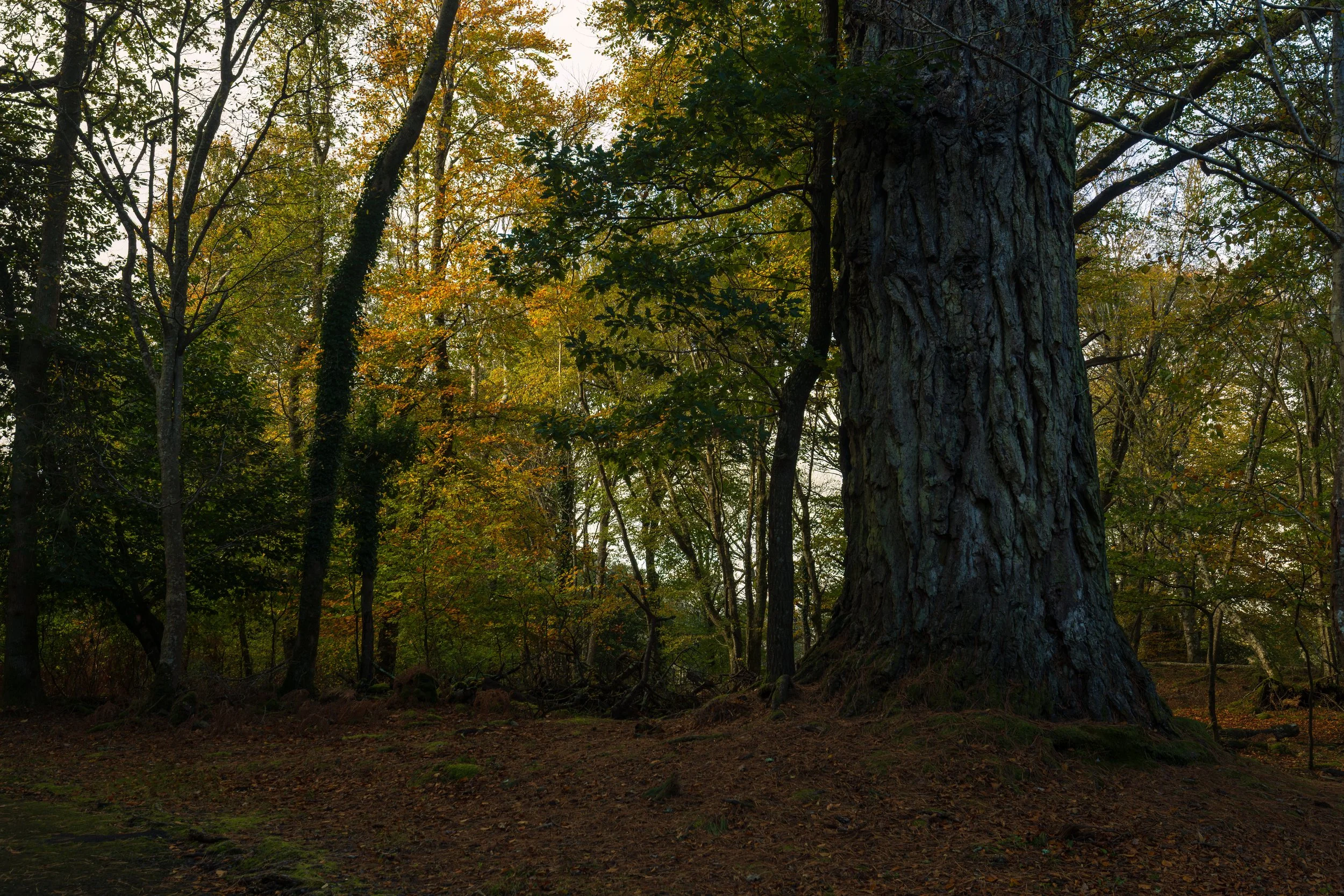
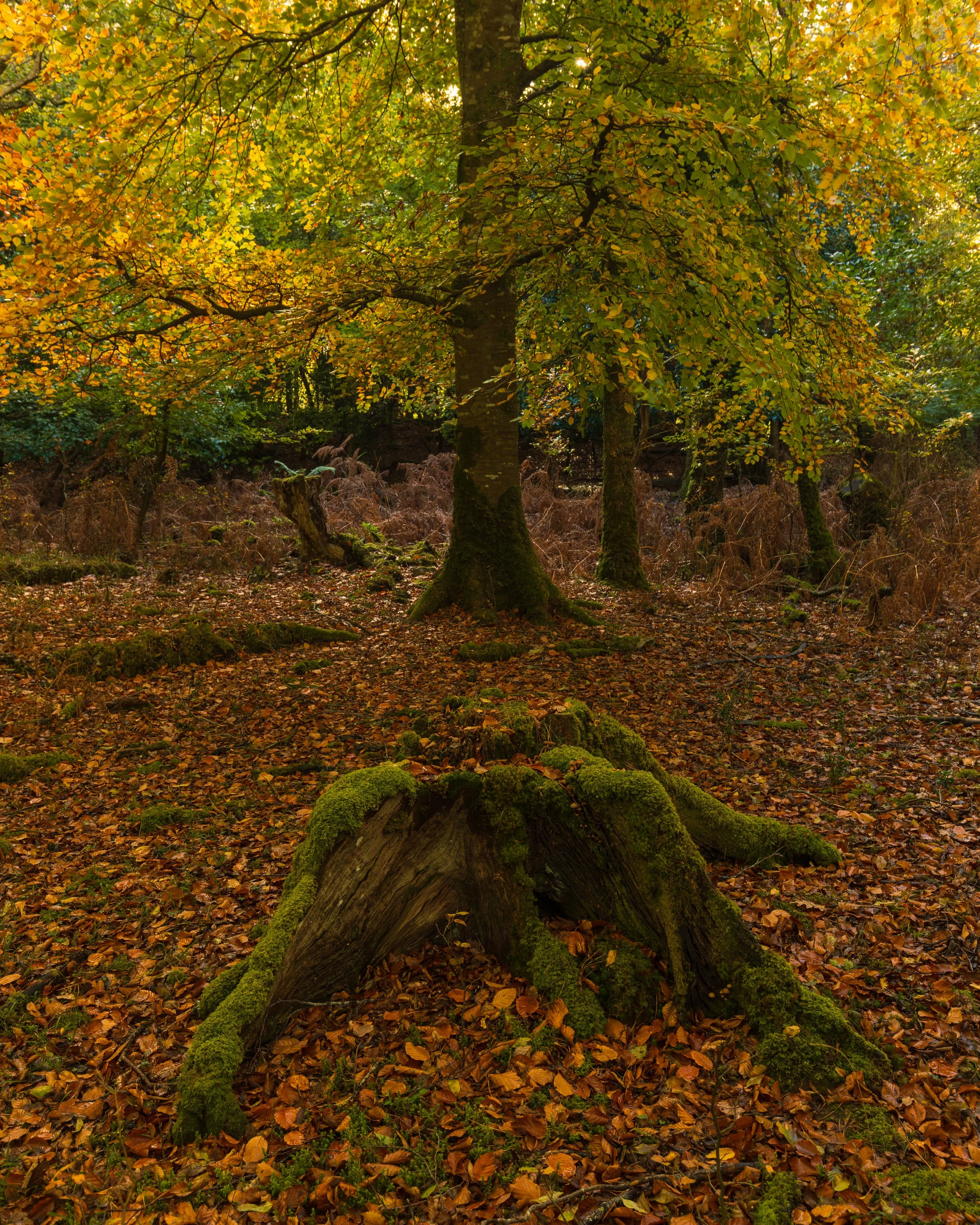
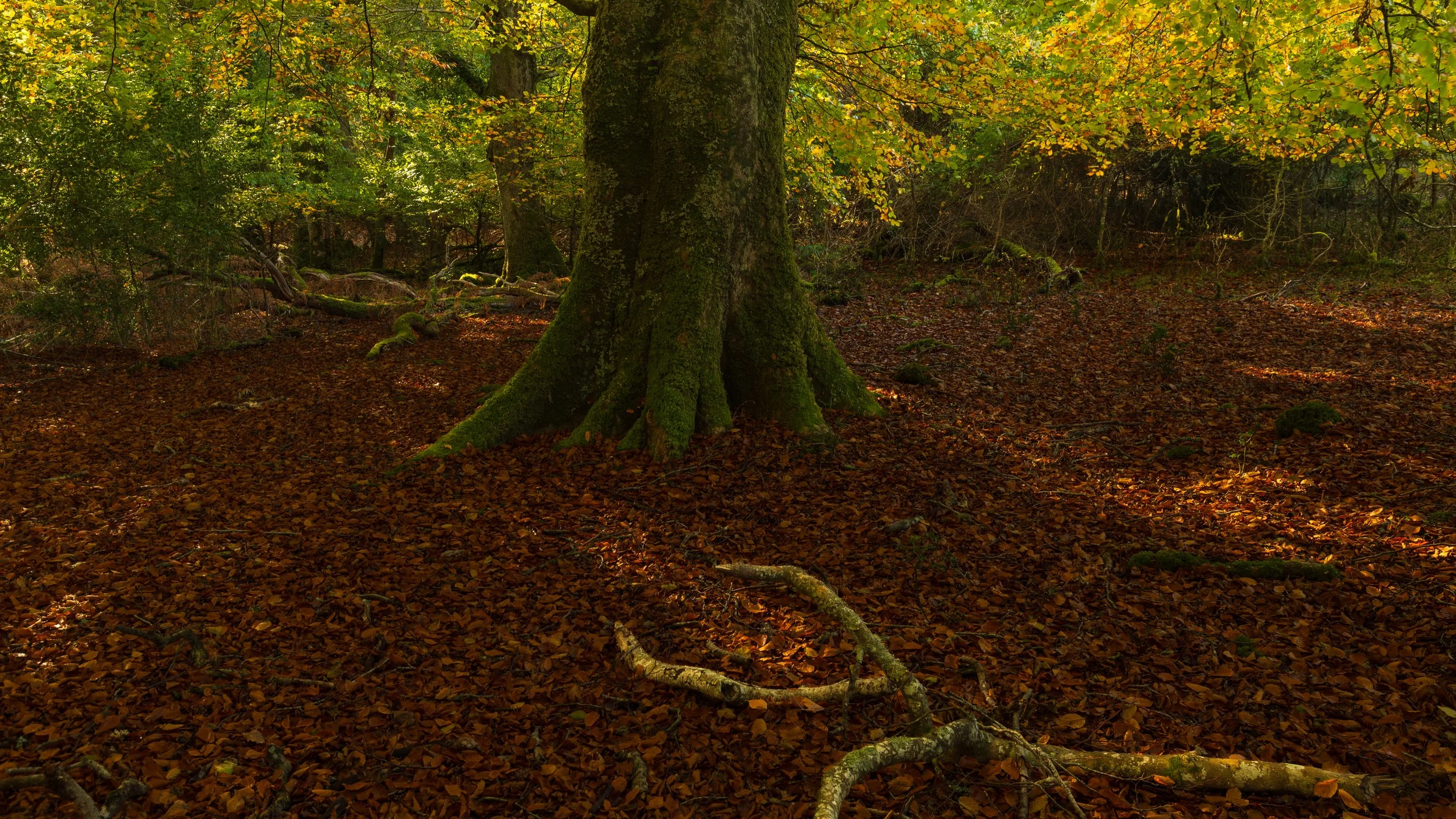
While waiting, I found my next subject: the moss-covered base of an old tree with the same yellow foliage rising above. I switched to a portrait orientation and used the mossy trunk as the foreground. Diffused light continued to work in my favour. That made shot three for the day.
The walk was busy, with plenty of locals enjoying the trails — a sign of how accessible and popular this part of Killarney is. A few hundred metres further, I came across a scene that still stands out to me. A magnificent oak tree stood in full autumn colour, its base surrounded by fallen red leaves. The structure of the branches and texture of the trunk were striking, and a fallen branch across the foreground added depth. The light had returned, creating dappled highlights across the frame.
Compositional note: In woodland photography, finding strong subjects and structure is essential. Leading lines, distinct shapes, or framing elements help bring order to the visual complexity of trees and foliage.
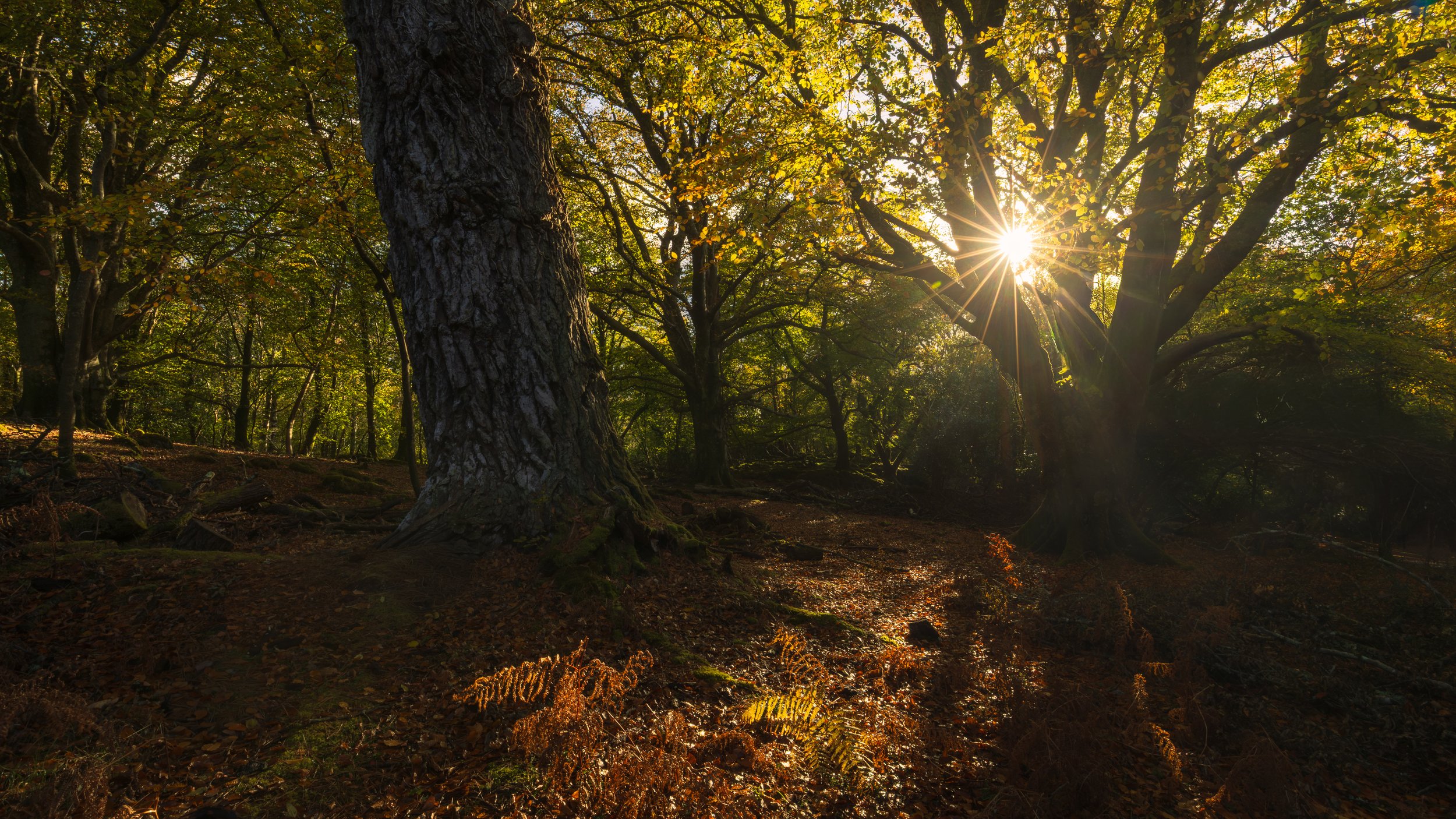
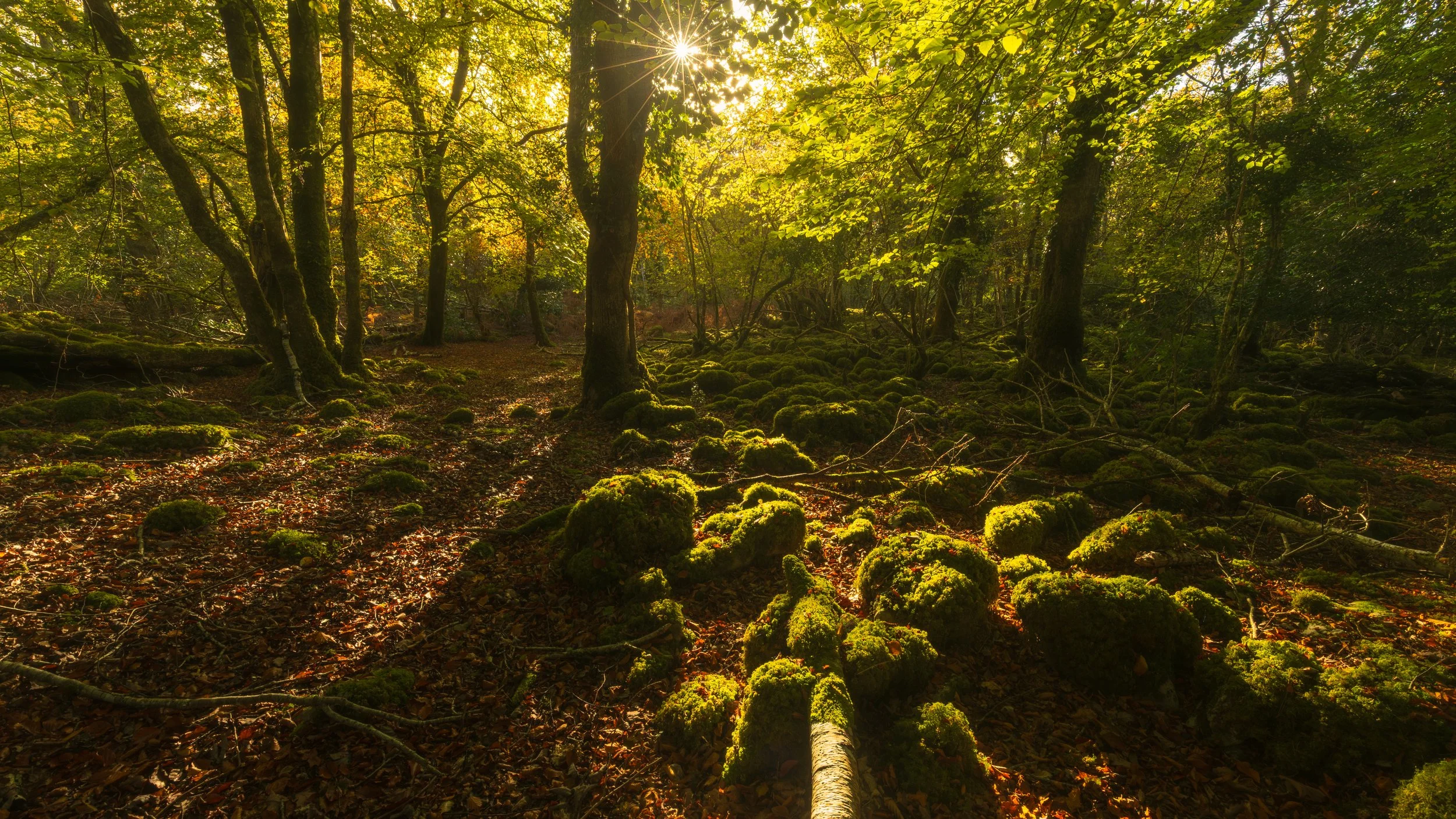
As I continued, another composition caught my attention — a tree beside the path framed by surrounding colour. Behind it, a gap in the canopy allowed direct sunlight to break through. I shot a few frames under diffused light, then repositioned when the sun emerged. By setting the aperture to f/16 and placing the sun just behind a branch, I created a defined sunburst effect. It added a sense of energy to the image, showing that midday light can be used creatively rather than avoided.
By this stage, I had several images I was happy with — all shot during what’s often dismissed as the worst time of day for photography. As someone who primarily photographs seascapes, woodlands can feel chaotic and less structured. There are no clear horizons or leading lines, so developing an eye for form and texture takes time. But on this walk, the conditions and setting encouraged experimentation and built my confidence in woodland photography.
I thought I was finished, but another scene drew me off the main path. Light filtered through the canopy and struck a group of moss-covered rocks. They had been there for centuries, and the fresh autumn colours above gave the area a timeless quality. The rocks created natural leading lines, and I was again shooting toward the sun. Using backlight effectively in woodland scenes can add depth and atmosphere, especially when combined with autumn colours.
I composed carefully, balancing exposure for the highlights while maintaining detail in the darker areas. Once again, I managed to capture a sunburst, tying the day’s images together with consistent light character.
By the end of the session, I had proved to myself that midday photography is not wasted time. With planning, patience, and an understanding of light behaviour, it’s possible to create strong, atmospheric images even under harsh sunlight.
Some Takeaways
Midday light can work if you expose for highlights and embrace contrast.
Diffused light following rain can enhance woodland colours.
Composition and structure matter more than soft light in creating strong woodland photographs.
Waiting for fleeting light rewards patience.
Don’t dismiss shooting opportunities based on time of day — adapt to what’s available.
Photographing Ross Island under midday sun was an exercise in persistence and adaptability. The results reinforced that in landscape photography, there are no bad conditions, only missed opportunities.