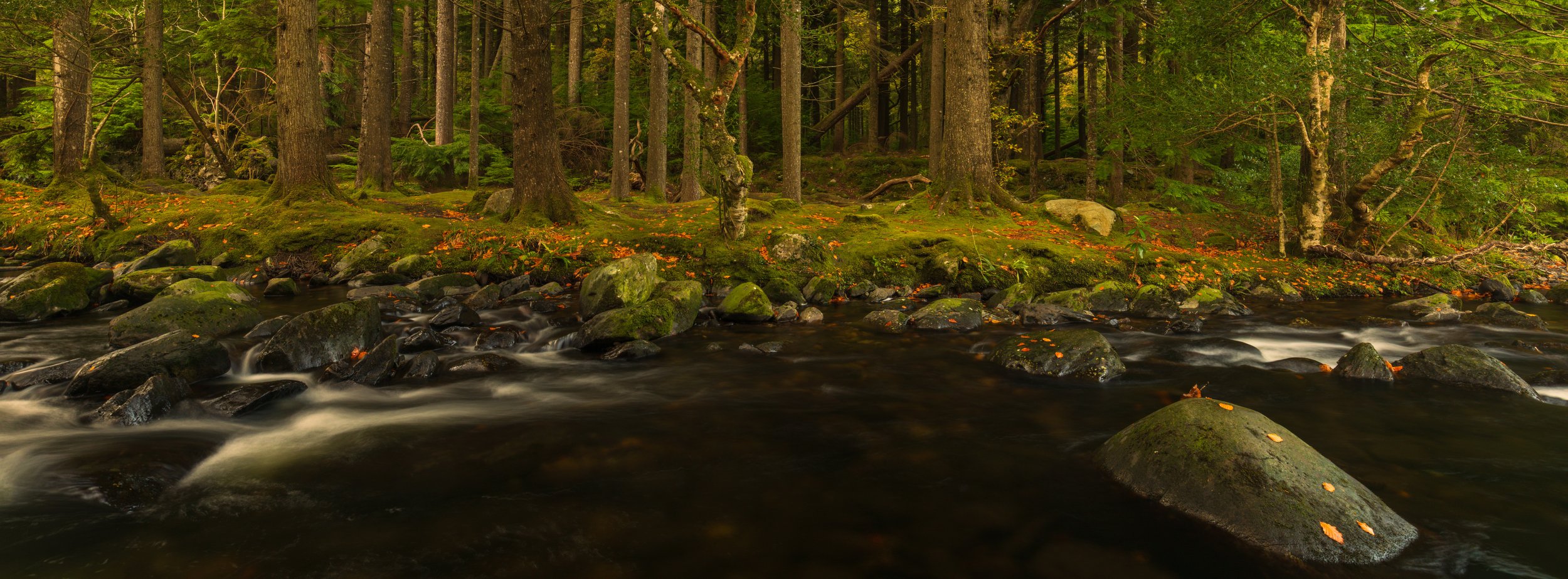
Could the XPan Crop Change How You See Landscapes?
Experimentation is often the best way to develop as a landscape photographer. I’ve photographed Killarney National Park countless times, but during a recent autumn visit, I decided to test a new idea: replicating the XPan panoramic format using my Canon EOS R with the 16–35mm f/4 IS lens.
Autumn in Ireland can be unpredictable. The colours are present one day and gone the next, often before they get a chance to show their peak. That day, the forecast predicted a brief window of clearish skies before an approaching storm. The opportunity was narrow, so I set out with one clear goal: capture autumn in Killarney, while also using the shoot to experiment with the XPan style.
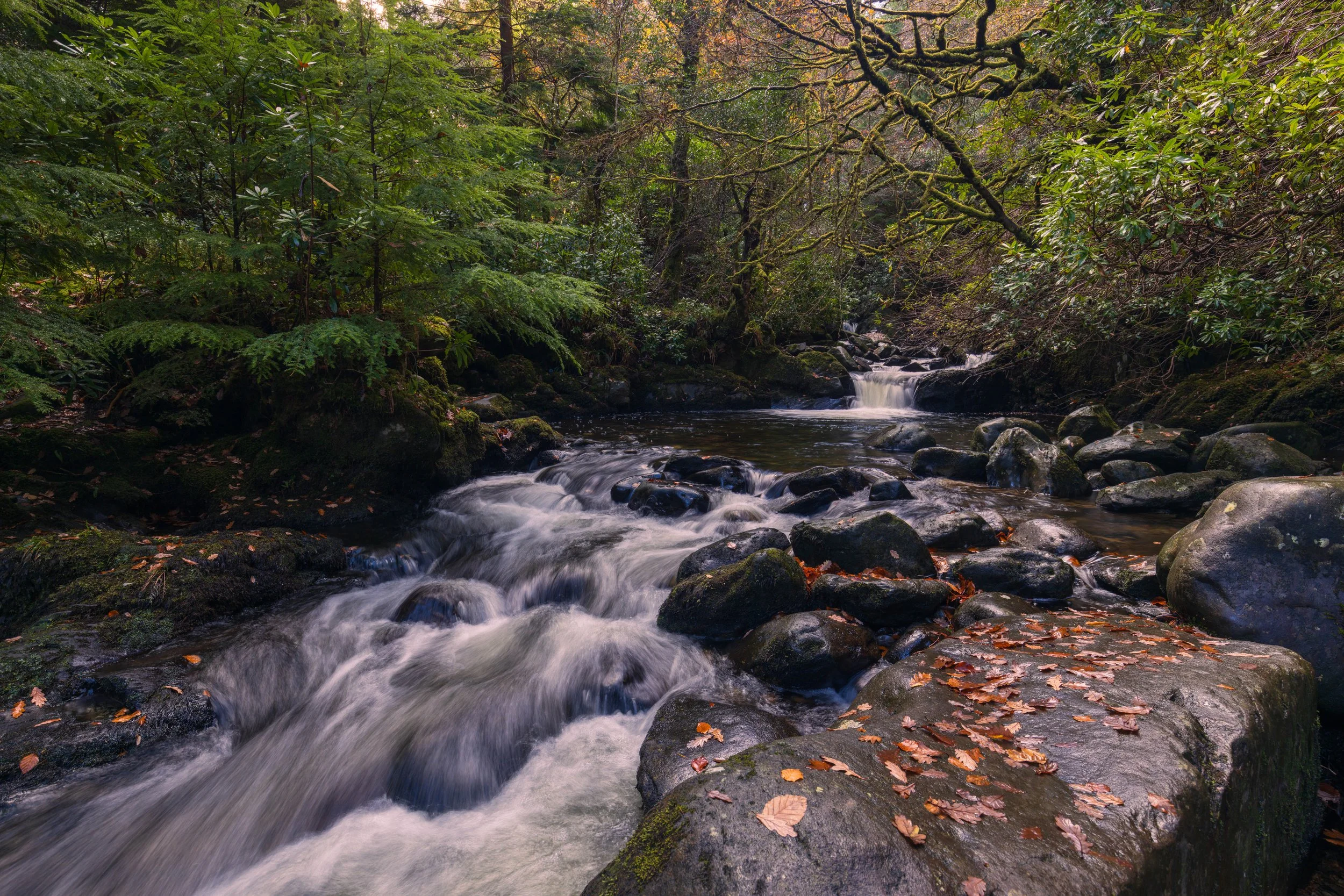
I began with a familiar location, a small waterfall I’ve photographed several times before. Previously, I captured it from underneath the bridge as part of my 32-counties project, but this time I started on top of the bridge. The flow of water was strong and consistent, and despite a mix of bare branches and partially turned leaves, I was able to take a clean first exposure. I chose a shutter speed of 1/4 second at f/11, ISO 100, which produced a smooth blur in the cascading water.
Next, I moved into the cascades themselves. Normally, I avoid this area because the water often has a yellow-brown tint that can clash with autumn foliage. However, on this day the water was clear, so I took a shot at 1/15 second, f/8, ISO 200. The image wasn’t about vibrant colours in the canopy—it was a study in texture, flow, and tonal contrast.
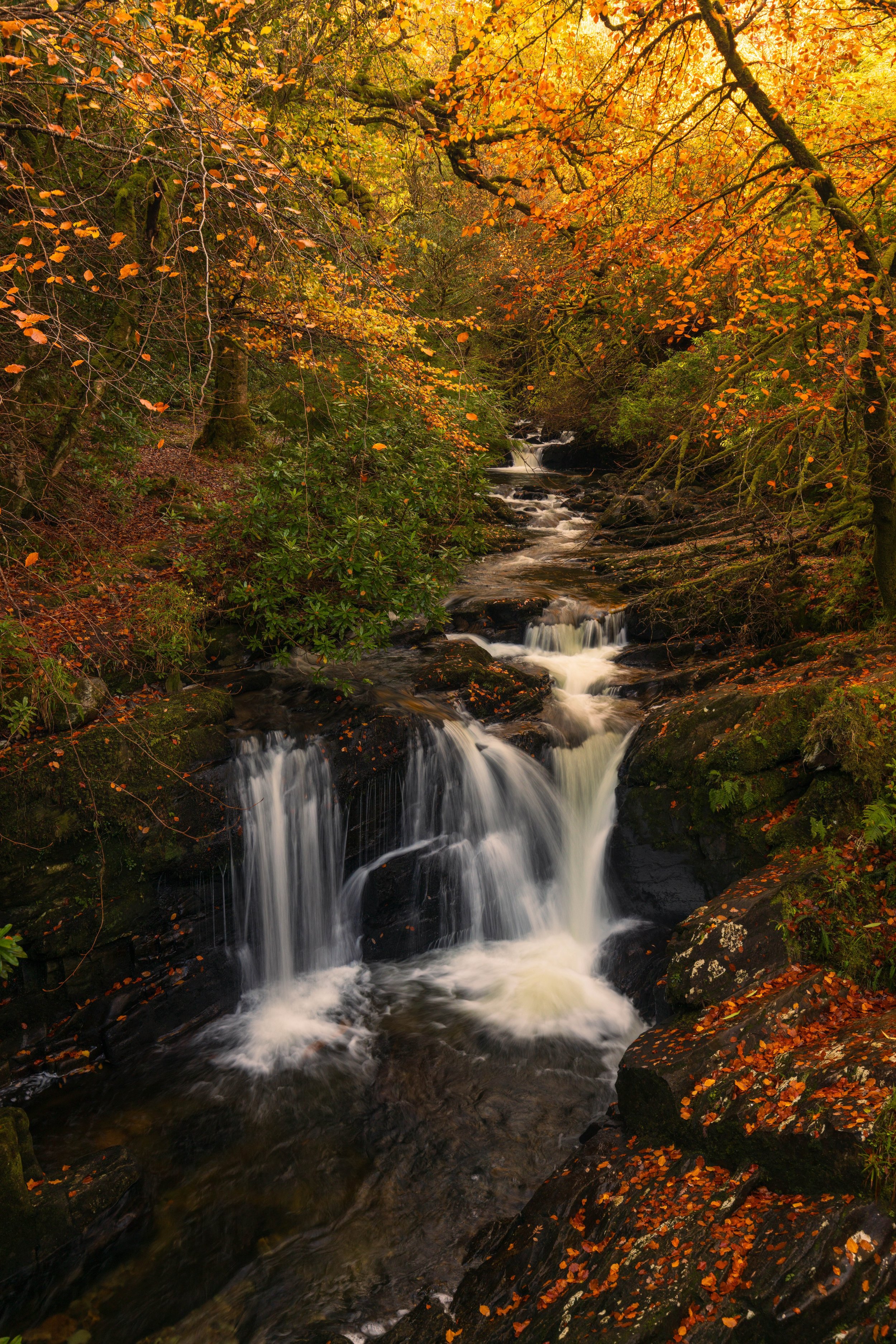
I then returned under the bridge for another shot. Even here, the autumn colours were limited, with a mix of pine, Scots pine, and rhododendron. These frames served as context and warm-up before heading into the woods, where the XPan experiment would begin.
Once in the woodland, I started noticing the patterns in the trees, the layers of leaves on the ground, and the light filtering through the canopy. This is when the idea of using a panoramic aspect ratio came to mind. I had seen photographers achieve striking results with the Hasselblad XPan, which has a 65:24 frame, but I wanted to replicate that look with my EOS R.
The challenge was that the EOS R has no built-in XPan crop. The sensor is 30MP, and replicating the format would mean mentally framing each shot and cropping later. The goal was to divide the frame into three distinct horizontal layers: the forest floor, the mid-trunks, and the upper canopy. I hoped this approach would give a sense of structure and balance similar to an XPan image, even if some fine detail would be lost.
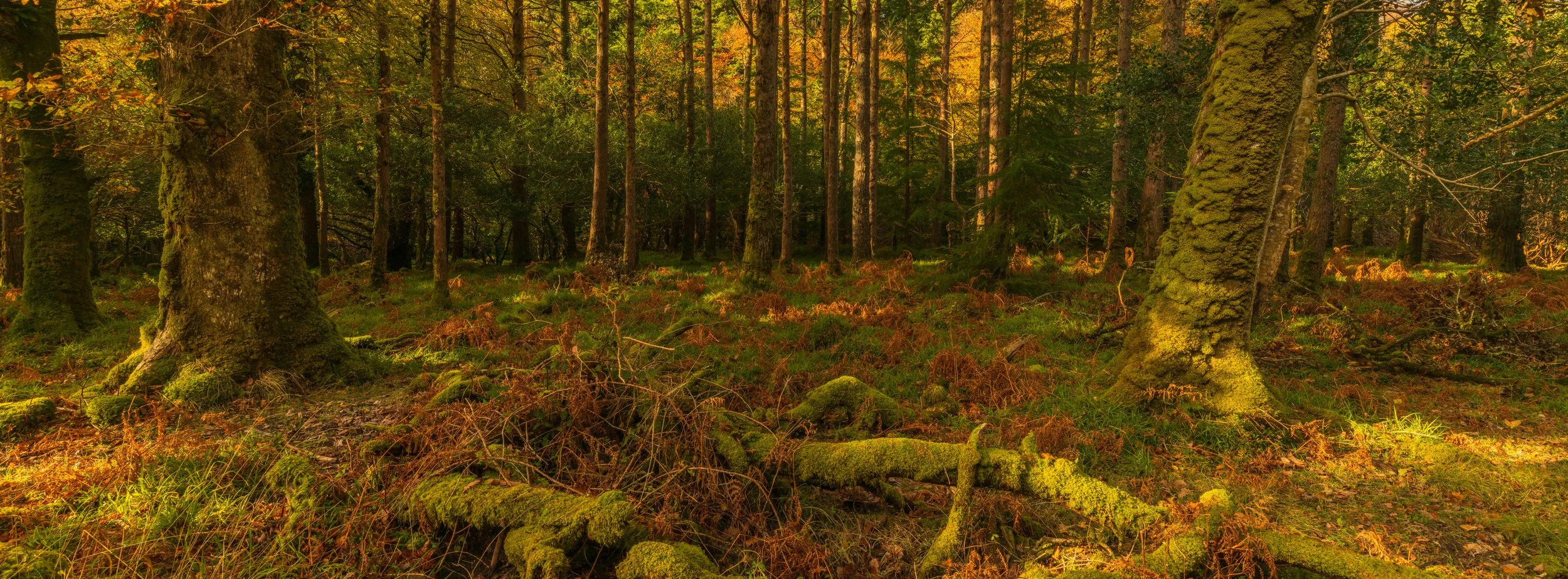
The first shot involved a scene with fallen leaves covering the forest floor, tree trunks forming vertical lines in the middle, and partially yellow canopy above. I took the shot at 24mm, f/8, 1/60s, ISO 200. Composing purely by eye, I couldn’t preview the final crop, but I ensured the horizontal layers were distinct.
The next composition was under a tree with fully yellow leaves. Here, the canopy formed the top layer, the trunks the middle, and the forest floor the bottom. Adjusting the angle slightly allowed me to include more horizontal rhythm across the frame. This shot was captured at 16mm, f/5.6, 1/80s, ISO 400.
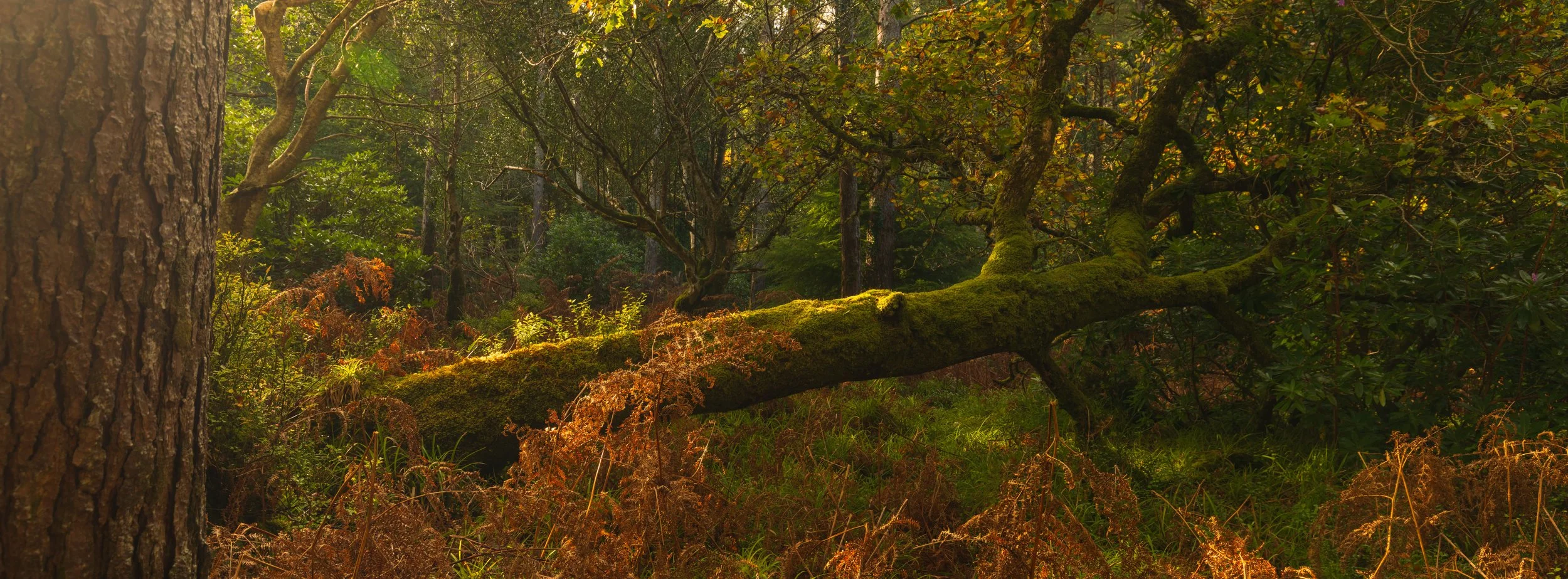
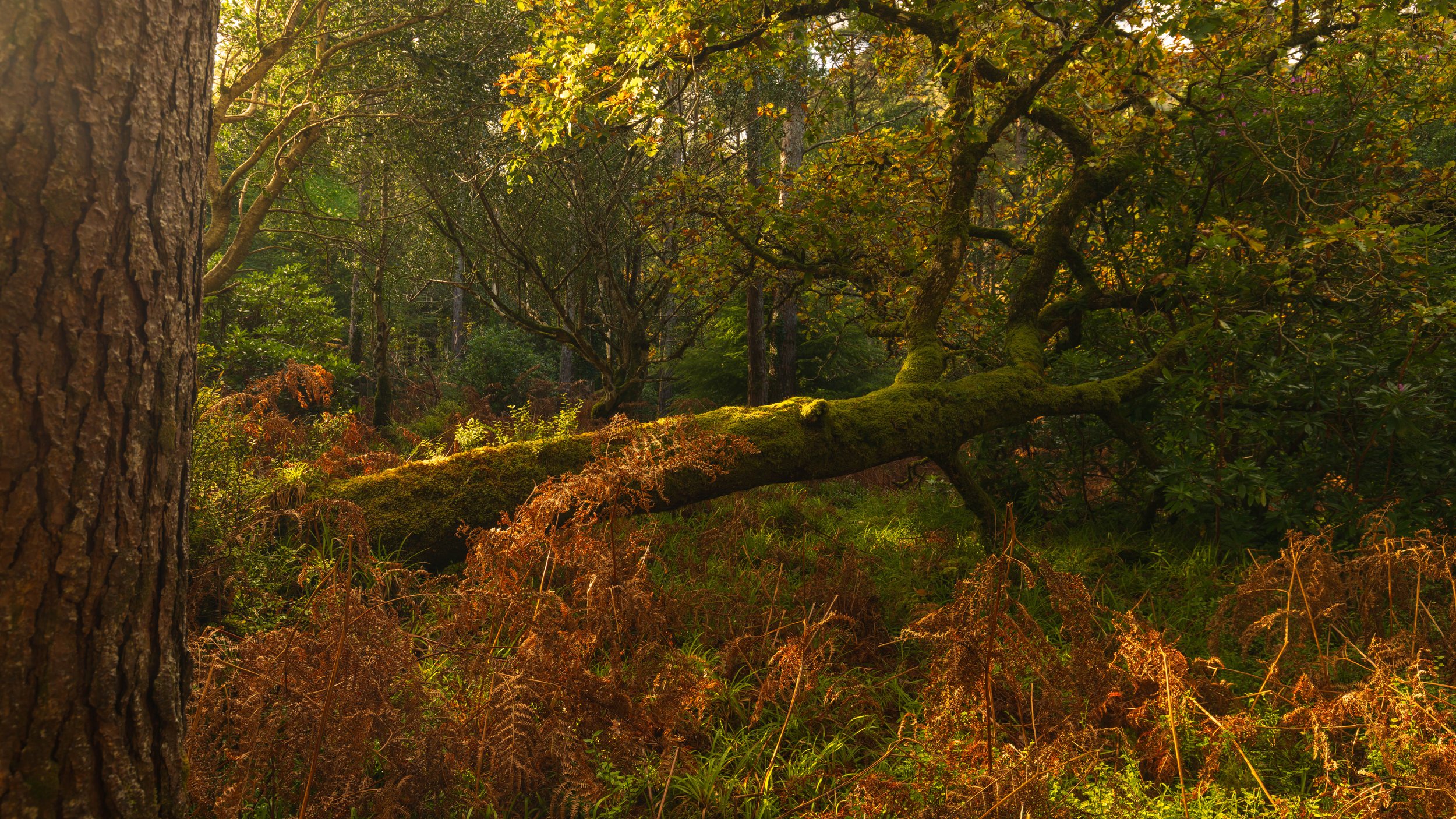
Further along, I found a fallen trunk coated in green moss. The low-angle light highlighted its texture, and in the standard frame it seemed compressed. When visualised as an XPan crop, it became a leading line stretching across the image. I captured several frames here at varying shutter speeds from 1/60s to 1/125s, keeping ISO under 400 to retain detail.
My final test involved a small babbling brook, the continuation of the river above the earlier waterfall. Sunlight broke through the canopy, creating natural highlights across the water and tree trunks. I composed a scene that included a subtle sunstar at 16mm, f/11, 1/30s, ISO 100. Visualising the XPan crop made me focus on lateral flow, ensuring the sunstar became a point of interest without overpowering the frame.
Back at my desk, I applied the 65:24 crop to each frame. The results confirmed the experiment’s value. Images that had felt ordinary in the standard 3:2 frame suddenly gained structure. Cropping removed visual distractions, pushed leading lines to the forefront, and emphasised rhythm across the scene. Scenes that seemed flat in-camera came alive, and the exercise also reinforced how deliberate framing can improve every shot.

The key takeaway is that aspect ratio is more than a technical detail. It shapes the way you compose and perceive a scene. Even without dedicated hardware, XPan-style framing can be a practical tool for refining composition, improving horizontal balance, and thinking differently about landscape photography.
I also learned that limitation fosters creativity. Without a live crop guide, I had to slow down, study patterns, and commit to each composition. Working under this constraint made me more aware of how elements interacted across the frame.
The XPan experiment reinforced my approach to photography: familiar locations can yield new perspectives if you challenge your assumptions, try a new method, and give yourself a rule to follow. The woods in Killarney that day provided the perfect setting for this exploration, combining subtle autumn colours with clear water, soft light, and strong natural lines.
So, did it work? I’ve shared the results in the images, but I’d like to hear what you think. Let me know in the comments below.