I Didn’t Know Ireland Had a View Like This
It was the final adventure of our trip to the west of Ireland. After days of cloud and shifting weather, the forecast finally suggested we might see the sun. I was with Diarmuid, and Jaro had now joined us. The plan was simple: a short but steep hike to a viewpoint I had never visited before, positioned high above the well-known Kerry Cliffs on the edge of the Iveragh Peninsula.
We parked the vans and began preparing for the climb. I decided to bring my walking poles. They live permanently in the van but rarely get used. This time I made a conscious decision to take them, and it proved worthwhile. The hike itself was not difficult, perhaps 30 to 40 minutes in total, but it involved crossing uneven ground, climbing over field ditches, and navigating boggy patches typical of exposed coastal farmland in Ireland. The poles provided stability, particularly when stepping down into soft ground or balancing while climbing over fencing.
One of the first lessons from the afternoon was simple: do not underestimate minor terrain. Even on a short walk, small practical decisions can make a significant difference to your energy levels and focus once you reach the shooting location. Arriving tired or frustrated rarely improves decision-making behind the camera.
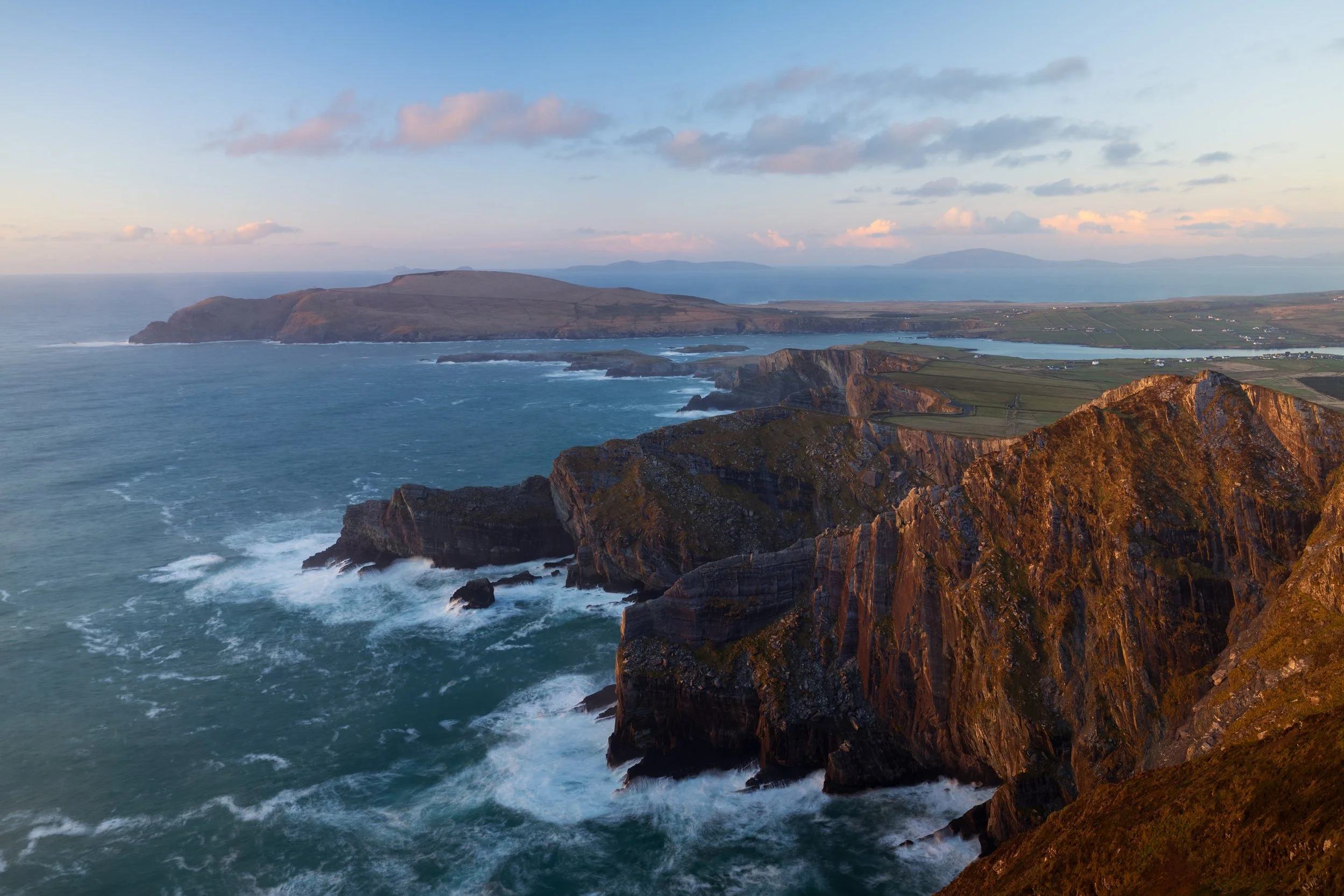
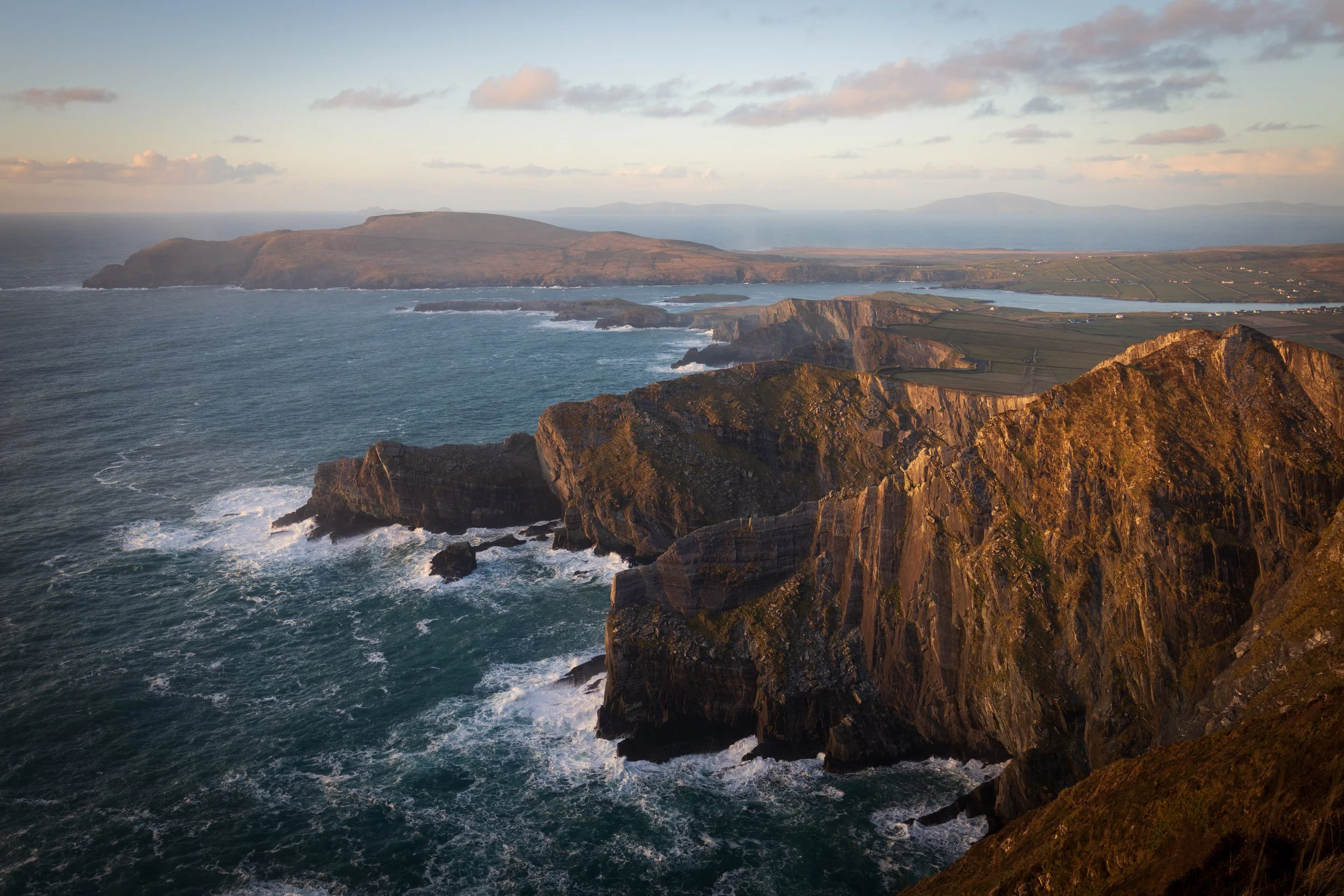
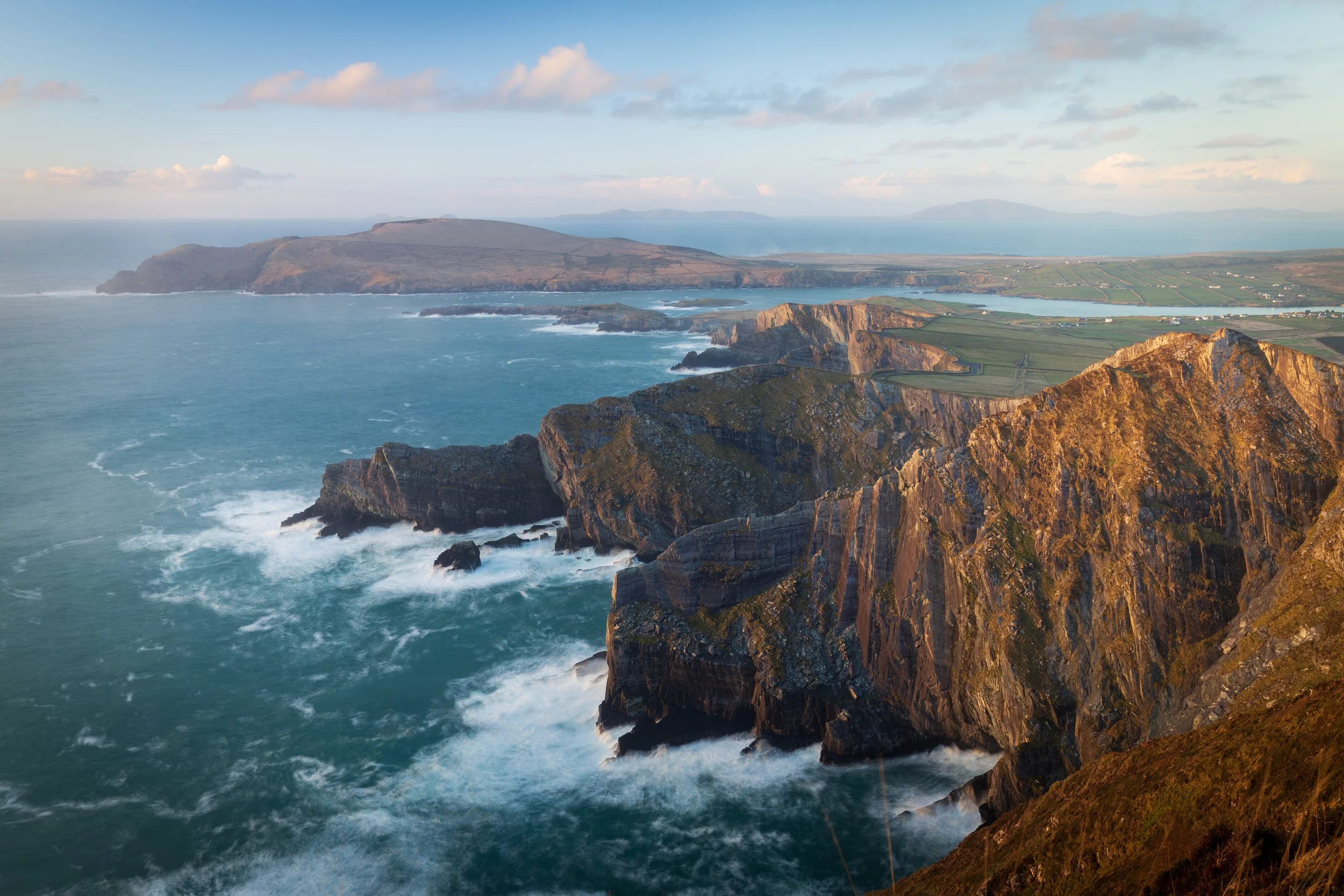
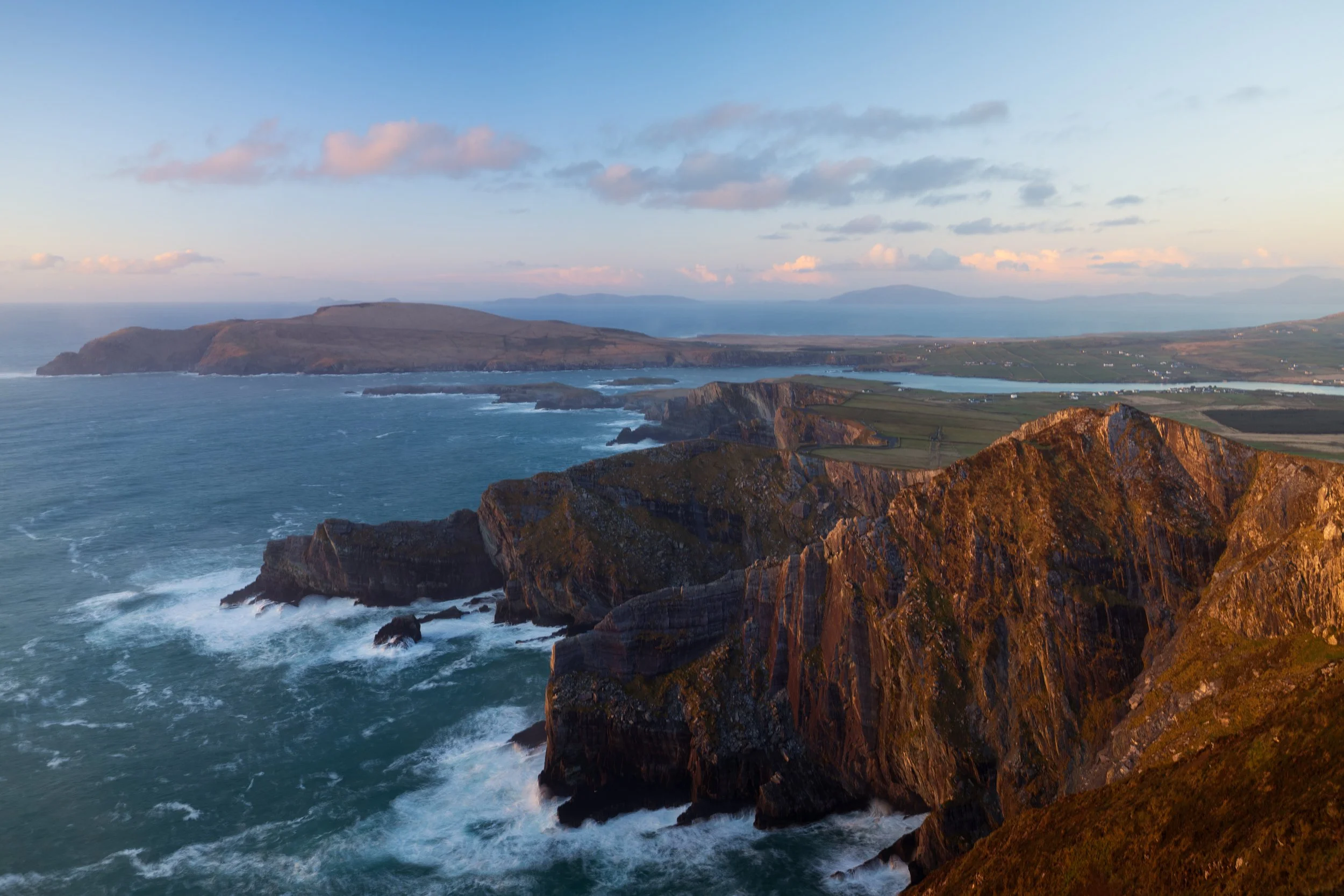
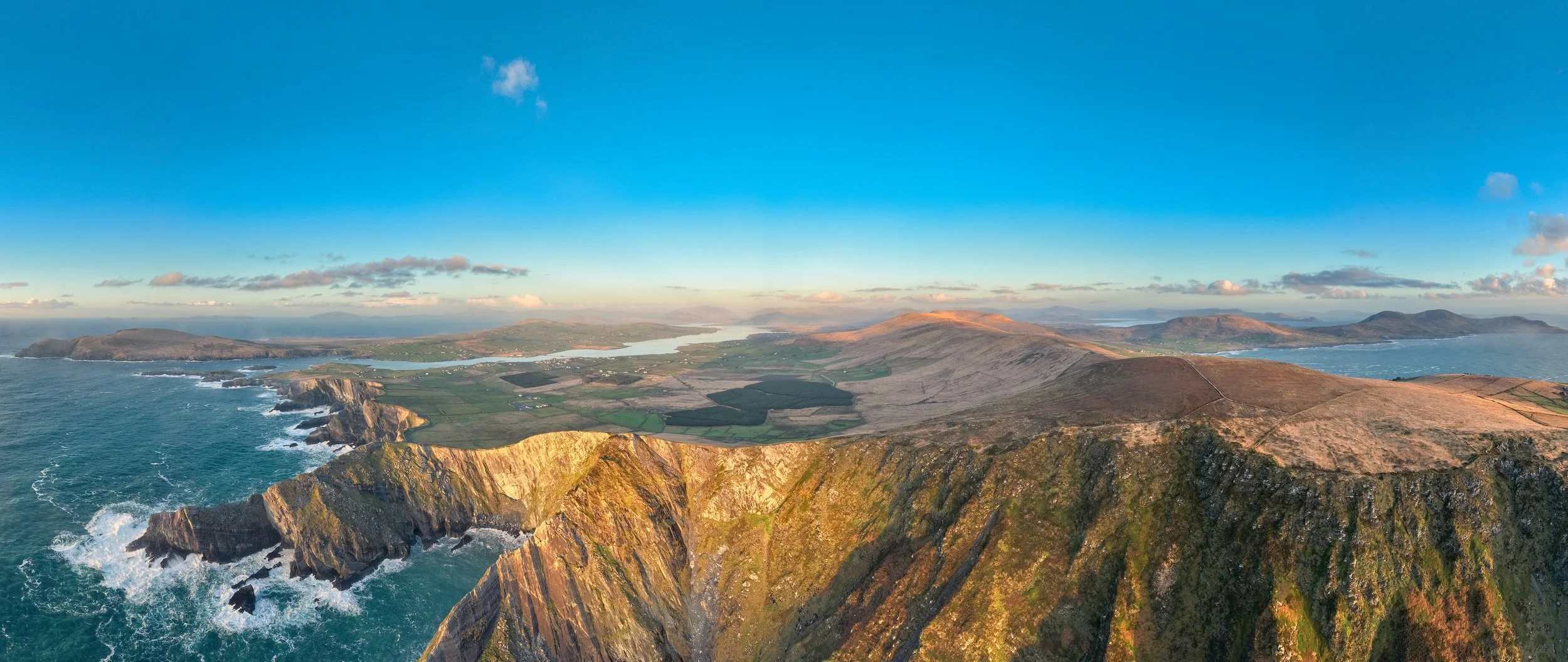
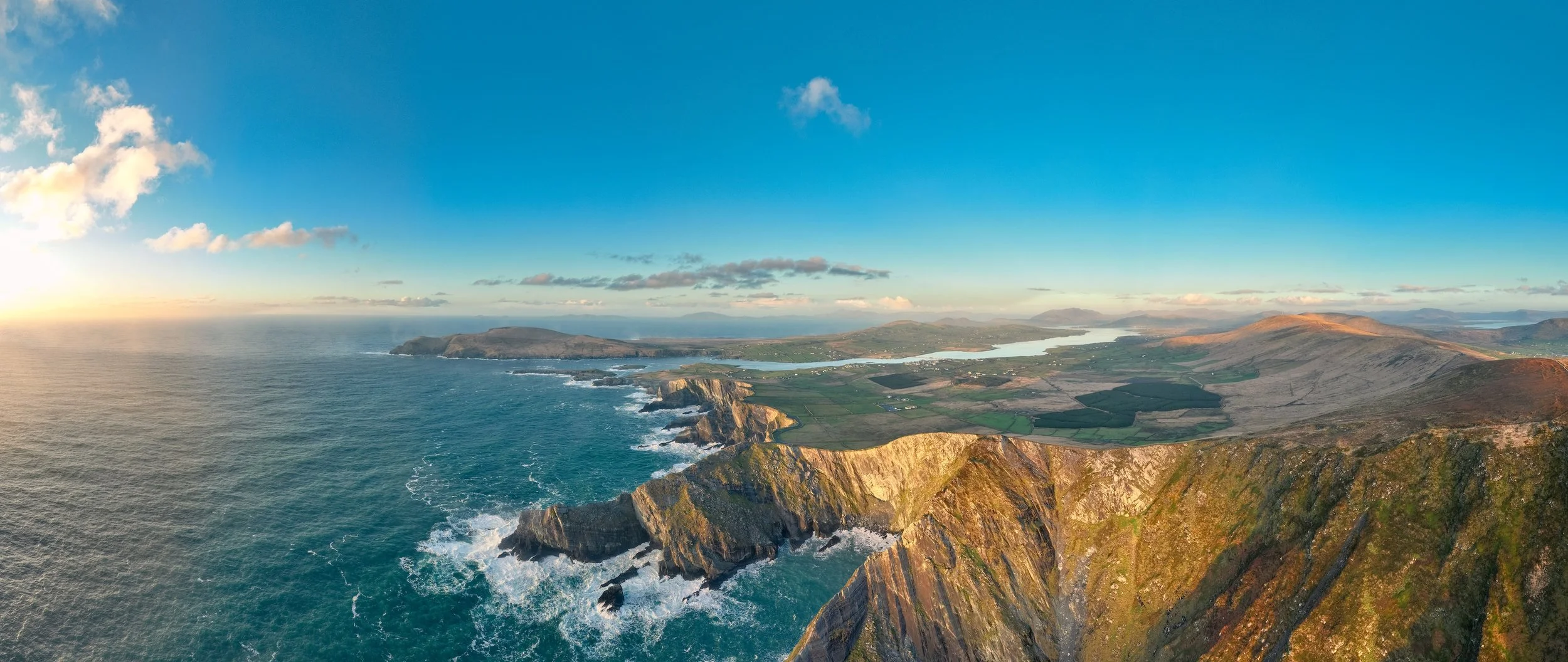
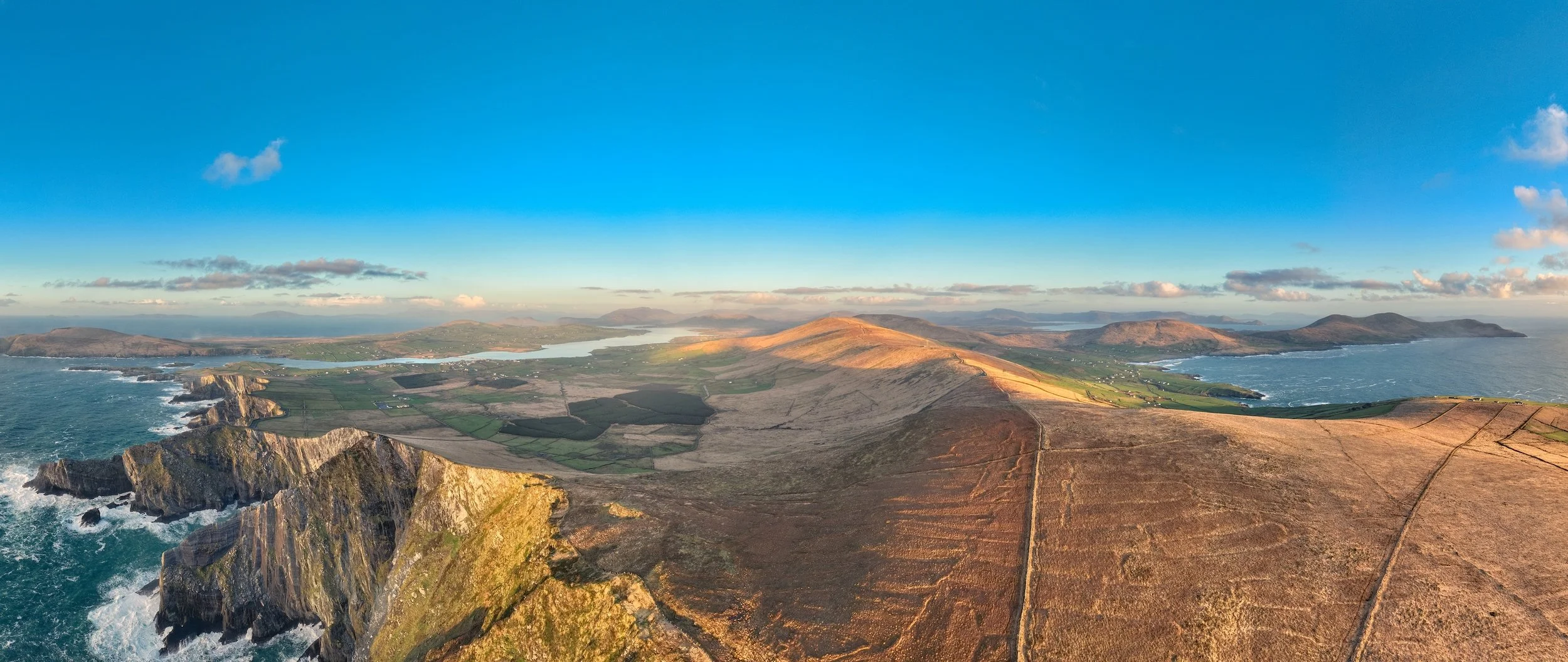
The view revealed itself gradually as we gained height. Within minutes of reaching the ridge, the landscape opened up in front of us. Below lay dramatic sea cliffs and offshore outcrops. In the distance, I could clearly see the official visitor area of the Kerry Cliffs, a location that has become increasingly popular over the years after a local farmer opened access to the land for a modest fee and later invested in parking and pathways. We, however, had positioned ourselves approximately 1.5 kilometres away along the same stretch of coastline, but at a higher elevation and with a more expansive perspective.
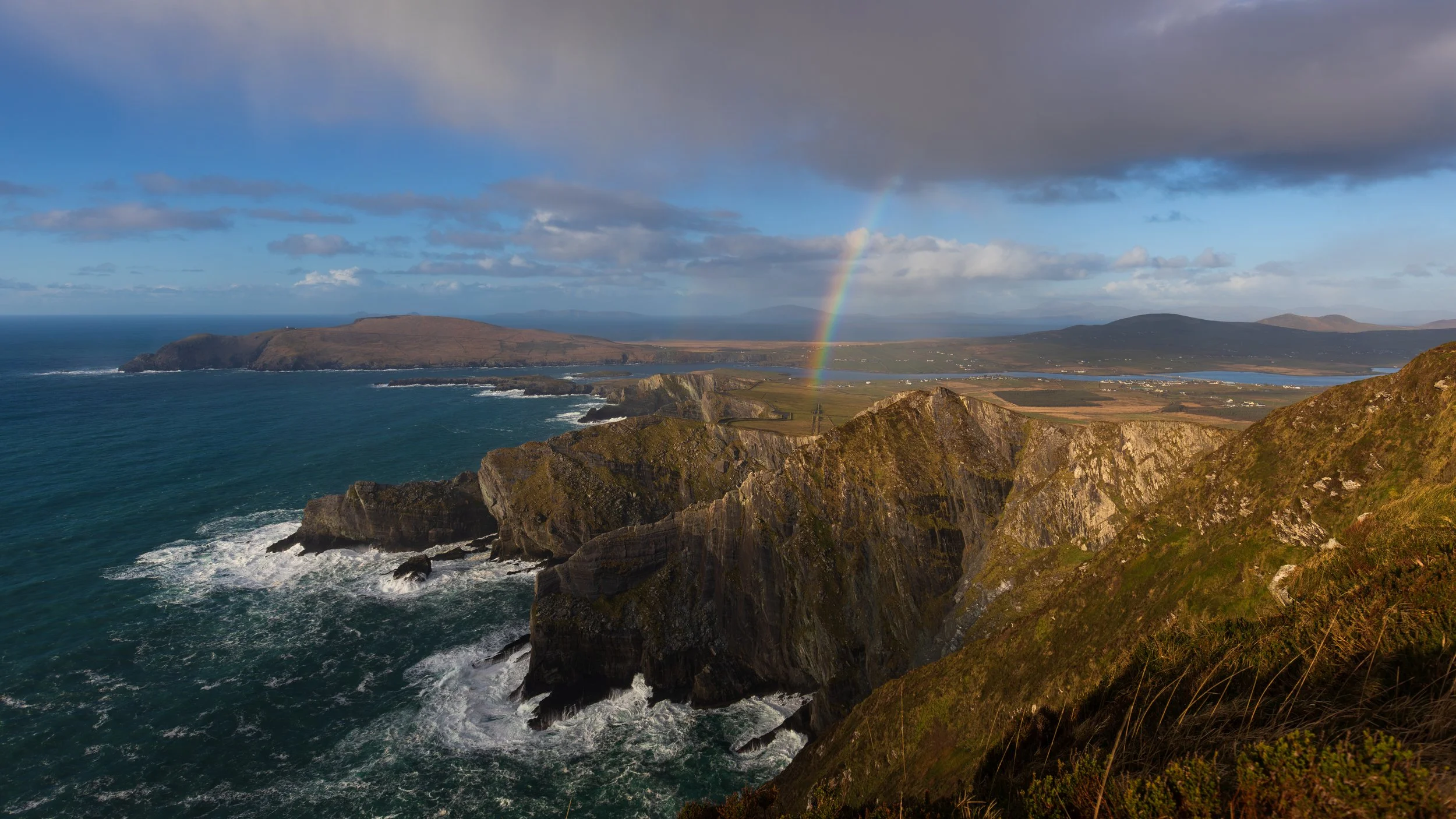
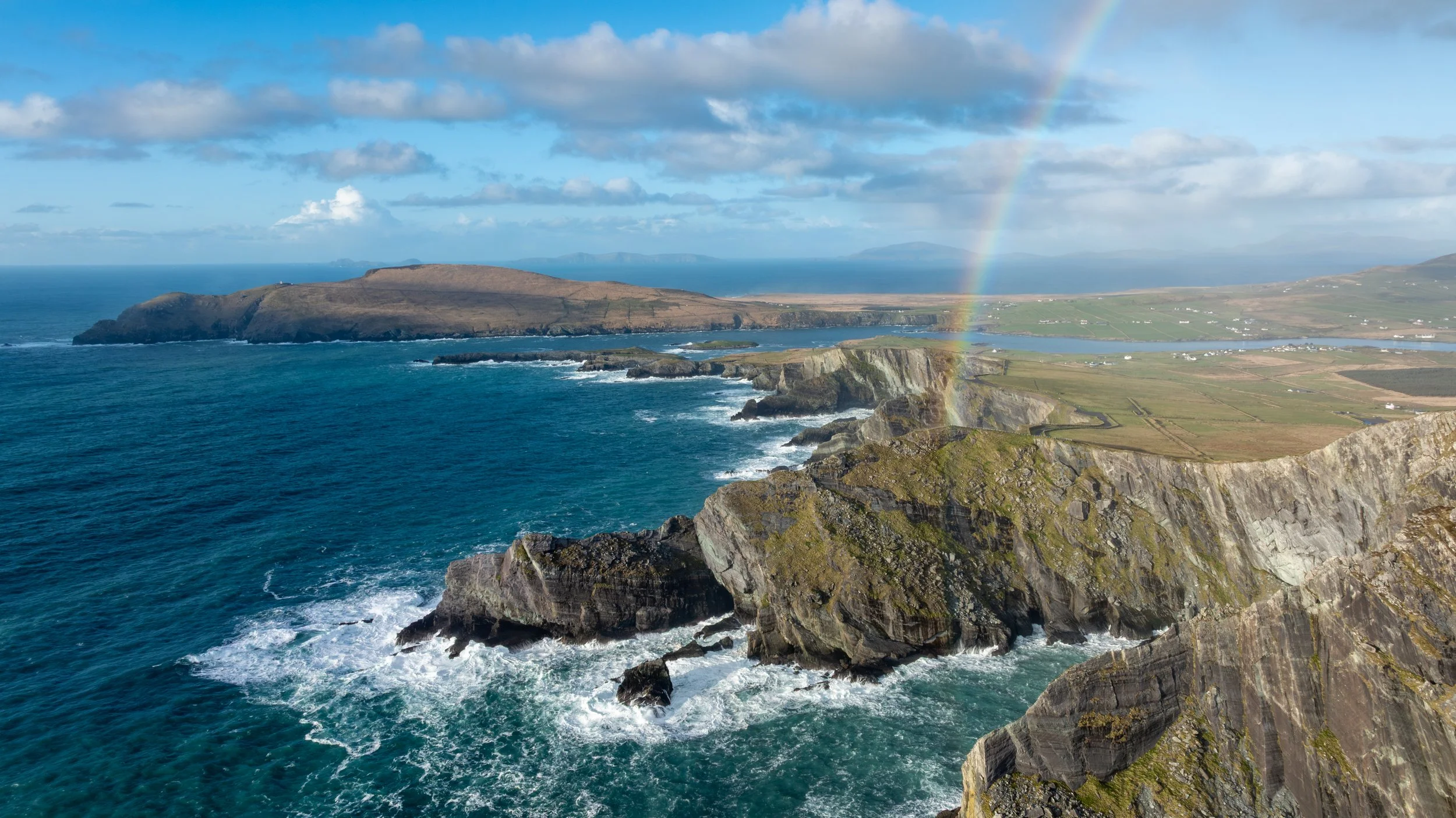
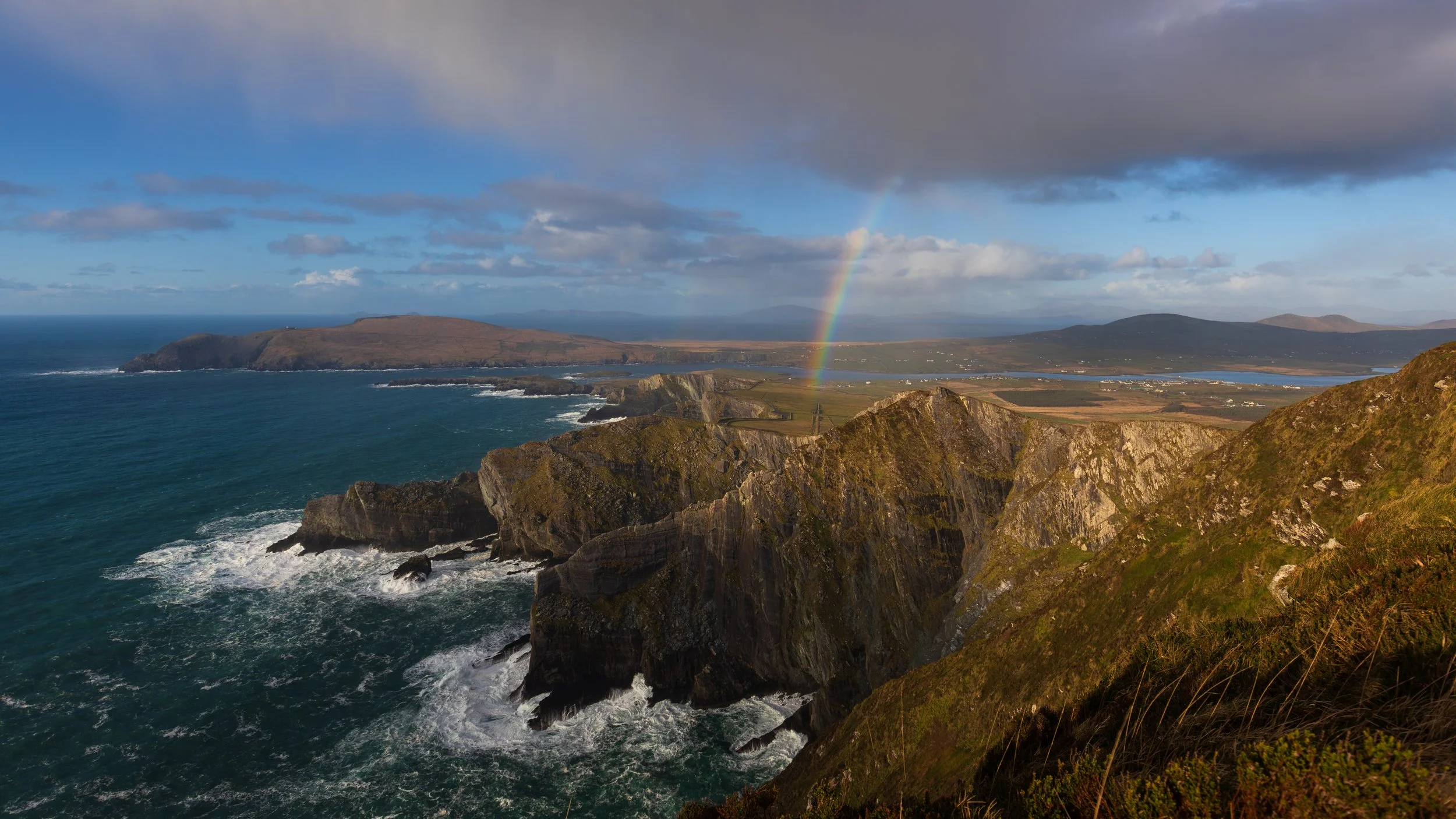
Almost immediately, a rainbow formed in the centre of the scene.
There was no hesitation. I dropped my bag, grabbed the camera, and began shooting within seconds. Rainbows are transient. They depend on a specific combination of sun angle, moisture in the air, and the viewer’s position relative to the light source. When they appear, speed matters. I worked quickly with a wide lens to capture the arc and ensure I included sufficient foreground for scale. Exposure required care; the dynamic range between the bright sky and darker cliffs needed balancing to avoid losing detail.
The rainbow began to fade within minutes, reinforcing another lesson in these circumstances: react first, refine later. Securing a technically solid frame is the priority in fleeting conditions. Once that is achieved, you can evaluate composition and experiment.
With the rainbow documented, I had space to observe more deliberately. I launched the drone to gain an aerial perspective. From above, the coastline revealed further structure, and the arc of the rainbow remained faintly visible over the cliffs. The elevated angle also provided a better sense of how the cliffs related spatially to the mainland behind us. In the far distance, I could see Valentia Island and the contours of the peninsula stretching inland.
Drone work in coastal wind demands caution. I monitored wind speed, battery life, and line of sight carefully. The benefit, however, was clear: an aerial view offered compositions that were not possible from our fixed position on the ridge.
Diarmuid, who had earlier crashed his own drone, asked to use mine. I handed over the controller. Collaboration on location often leads to better outcomes. Photography can be solitary, but shared perspectives frequently result in stronger visual ideas.
As the afternoon progressed, the scene itself did not change dramatically in terms of physical position. Our standing area offered limited variation in angle without significant movement along the ridge. Jaro and Diarmuid chose to hike further and head down along the cliffs to search for a viewpoint toward Skellig Michael and Little Skellig. I decided to remain where I was.
This decision was based on two factors. First, I had not brought a long lens, which would have been more suitable for isolating the Skelligs in the distance. Second, I believed the evolving light over the cliffs in front of me held more potential. Cloud movement suggested that intermittent sunlight could create selective illumination across the rock faces.
This highlights a broader principle: commit to a composition when you believe it has potential. Constant movement in search of alternatives can cause you to miss the best version of the scene already in front of you.
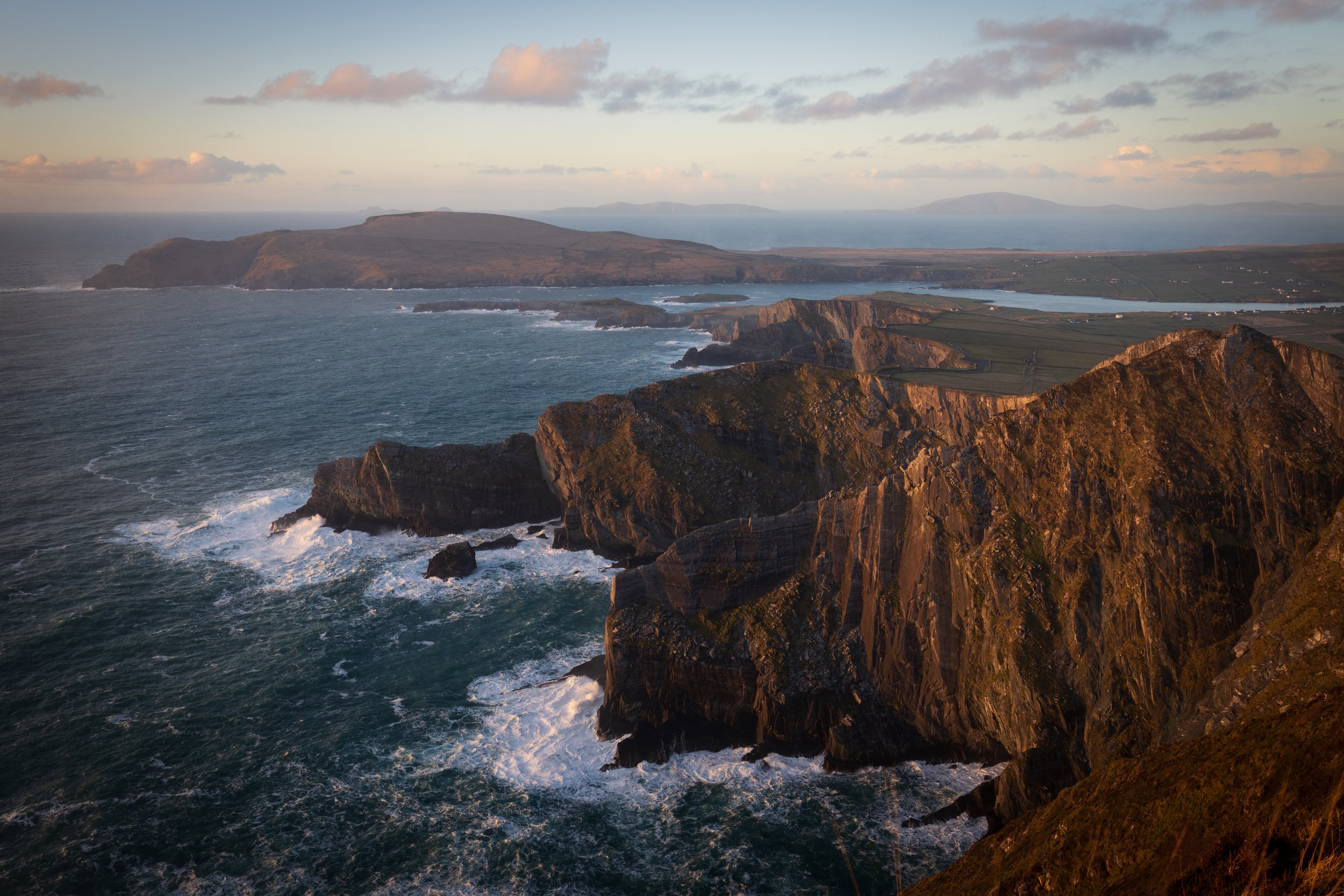
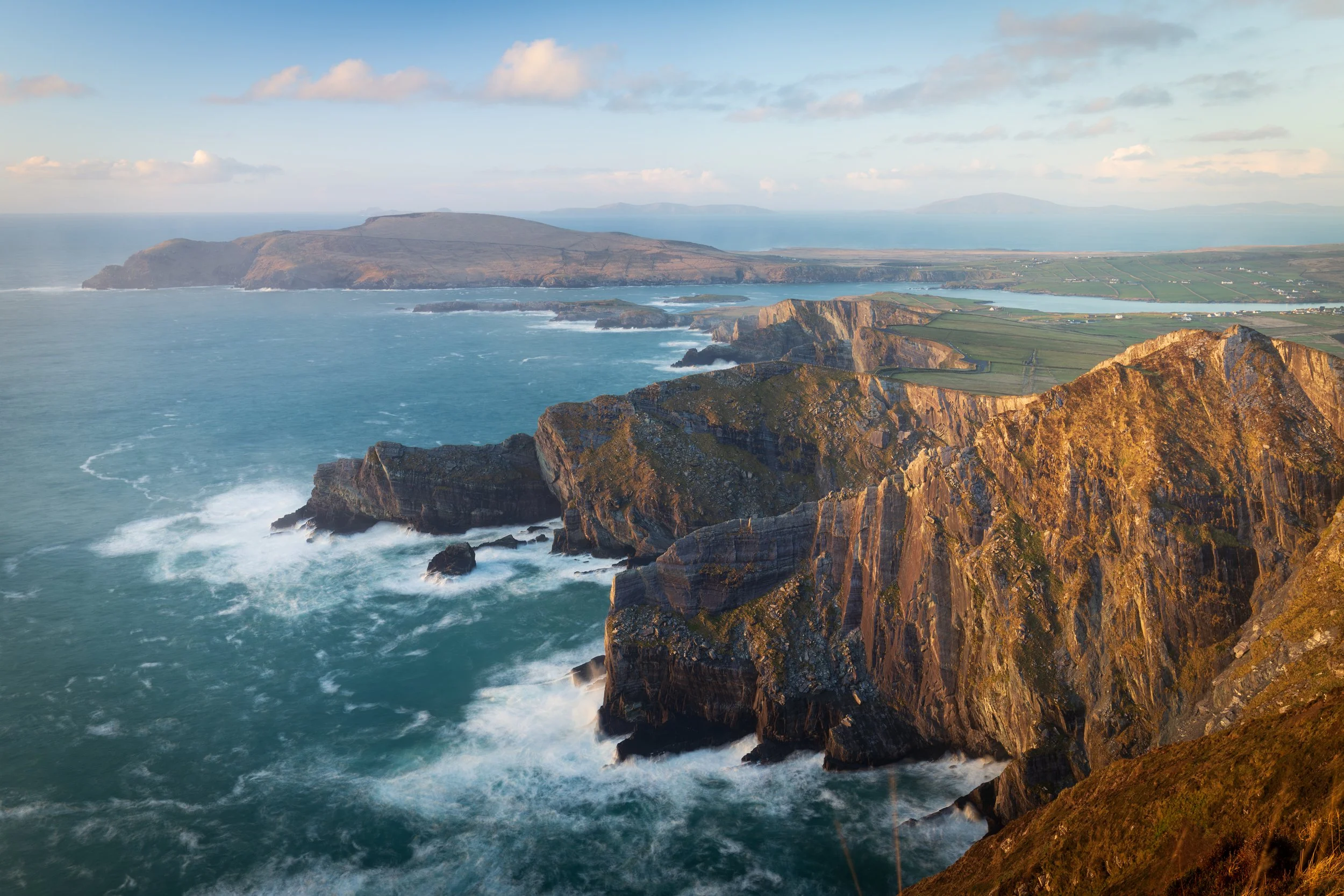
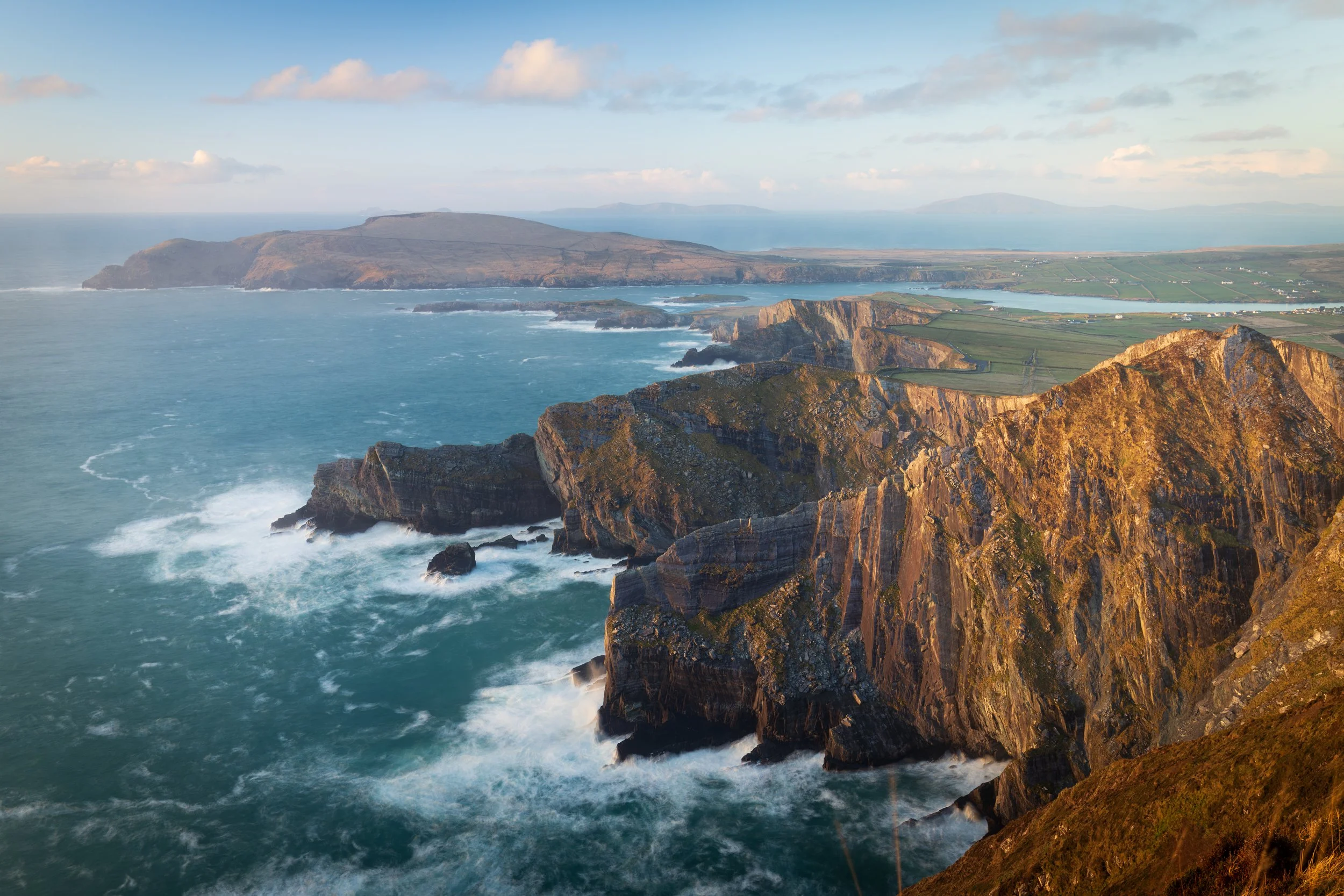
I worked through multiple exposure strategies. Faster shutter speeds captured the texture of the waves breaking against offshore stacks. Longer exposures softened the water and emphasised the solidity of the cliffs. The wide lens allowed me to include both the foreground edge of the ridge and the distant headlands, creating depth through layered elements.
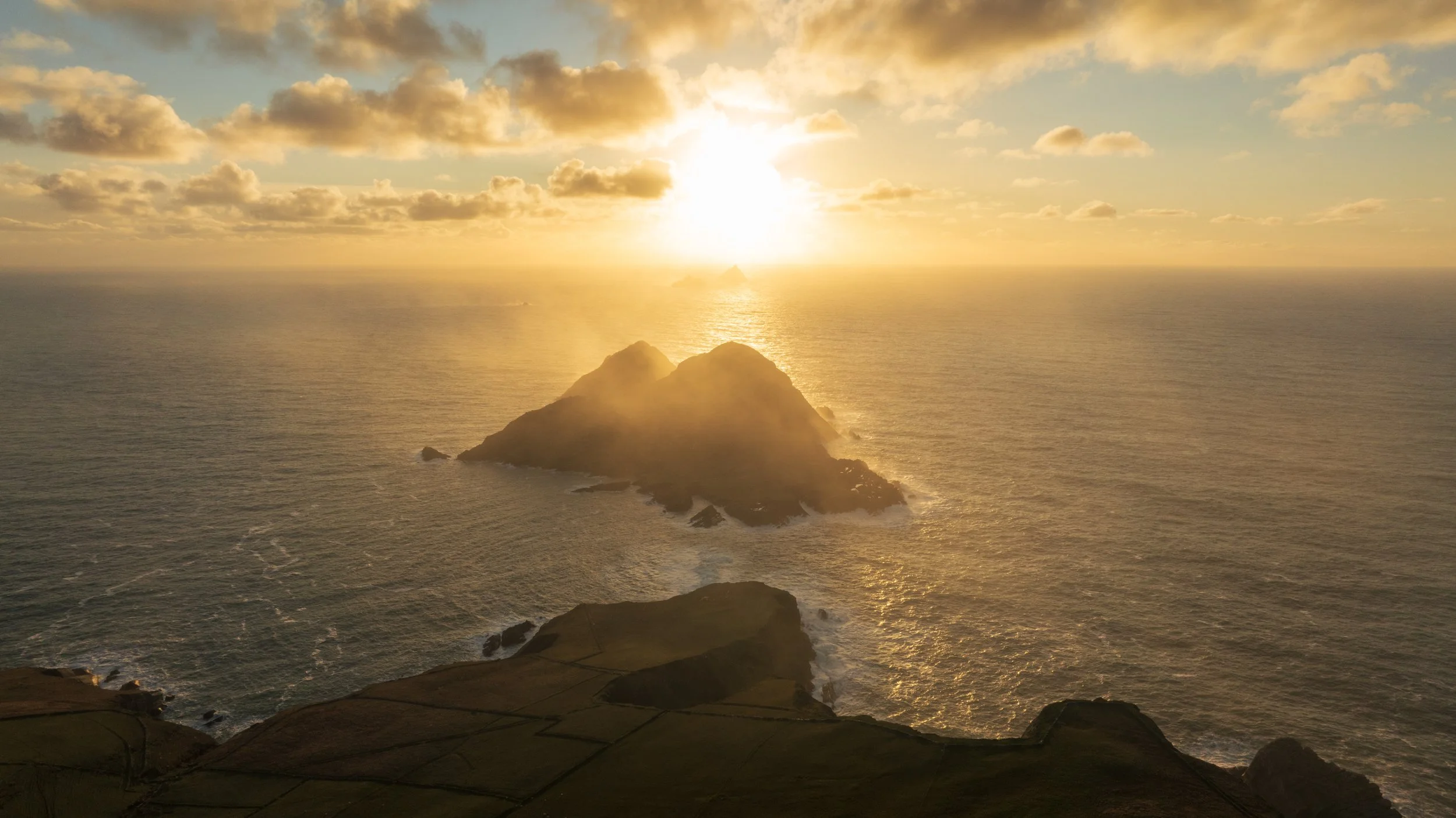
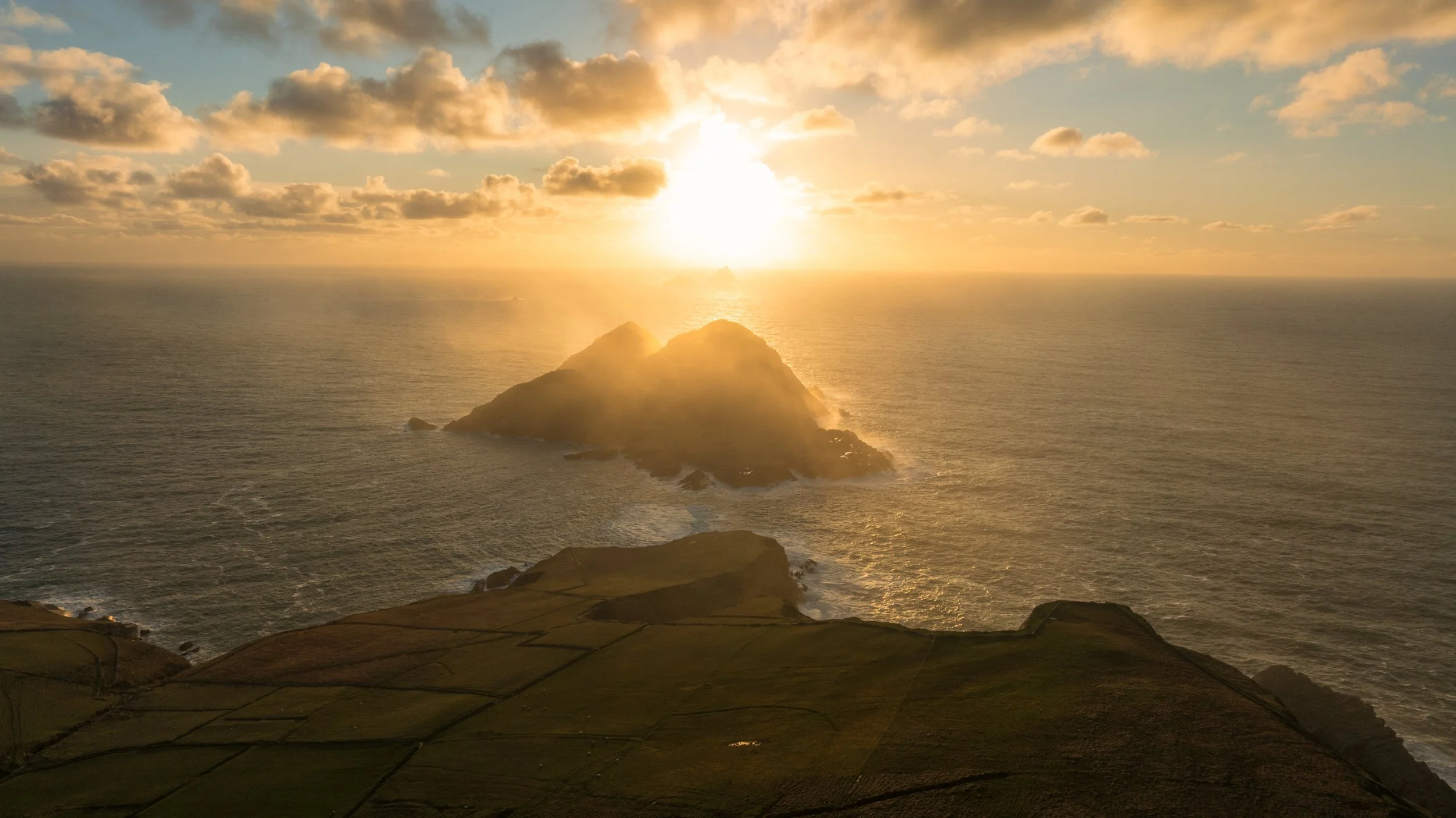
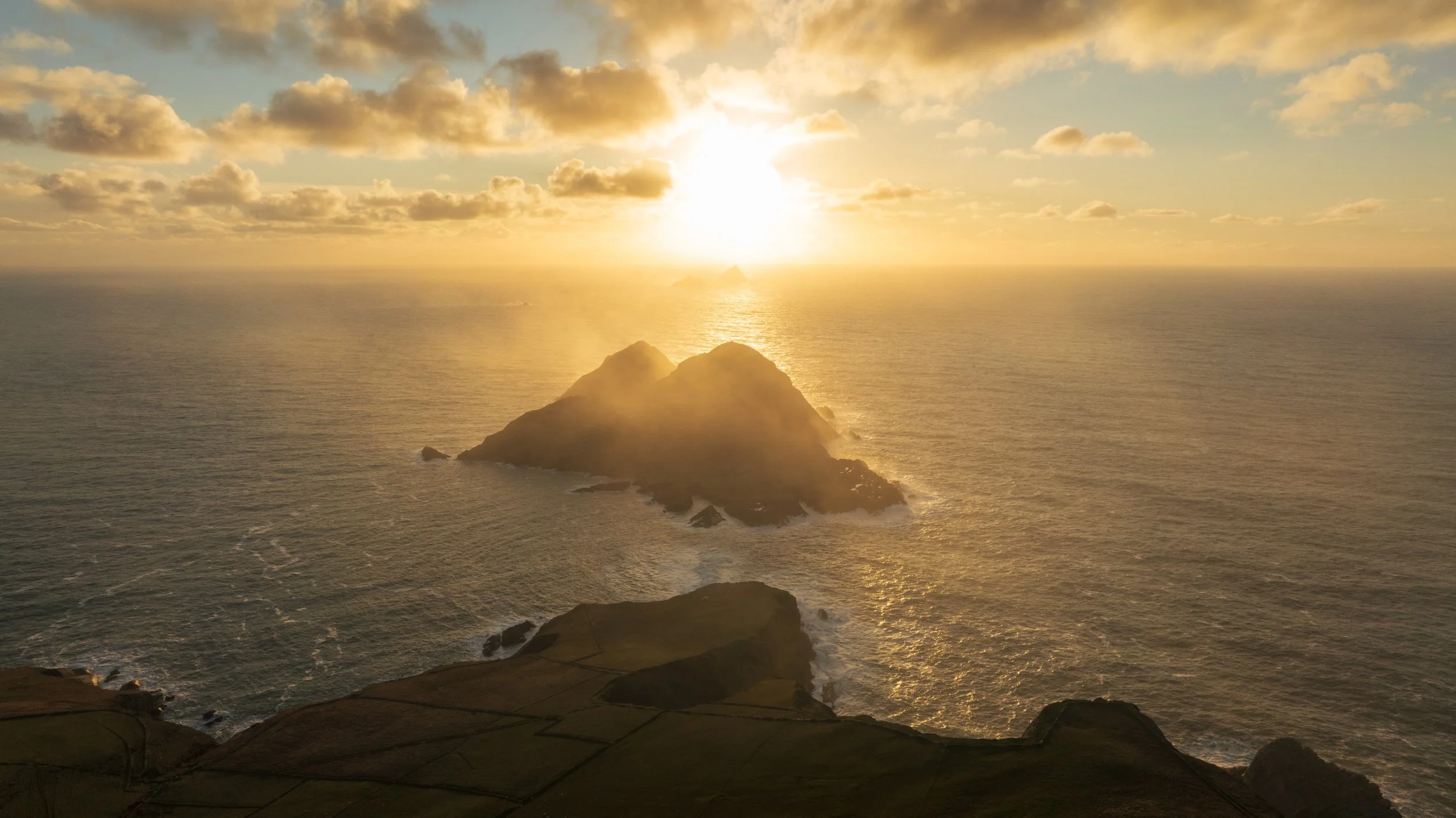
Eventually, the sun dropped lower. A break appeared in the western cloud bank. Light reached across the cliffs, casting a warm glow along the rock faces. The contrast between illuminated stone and shadowed recesses increased depth and structure within the frame. Even with minimal cloud overhead, the colour shift in the remaining formations added tonal variation to the sky.
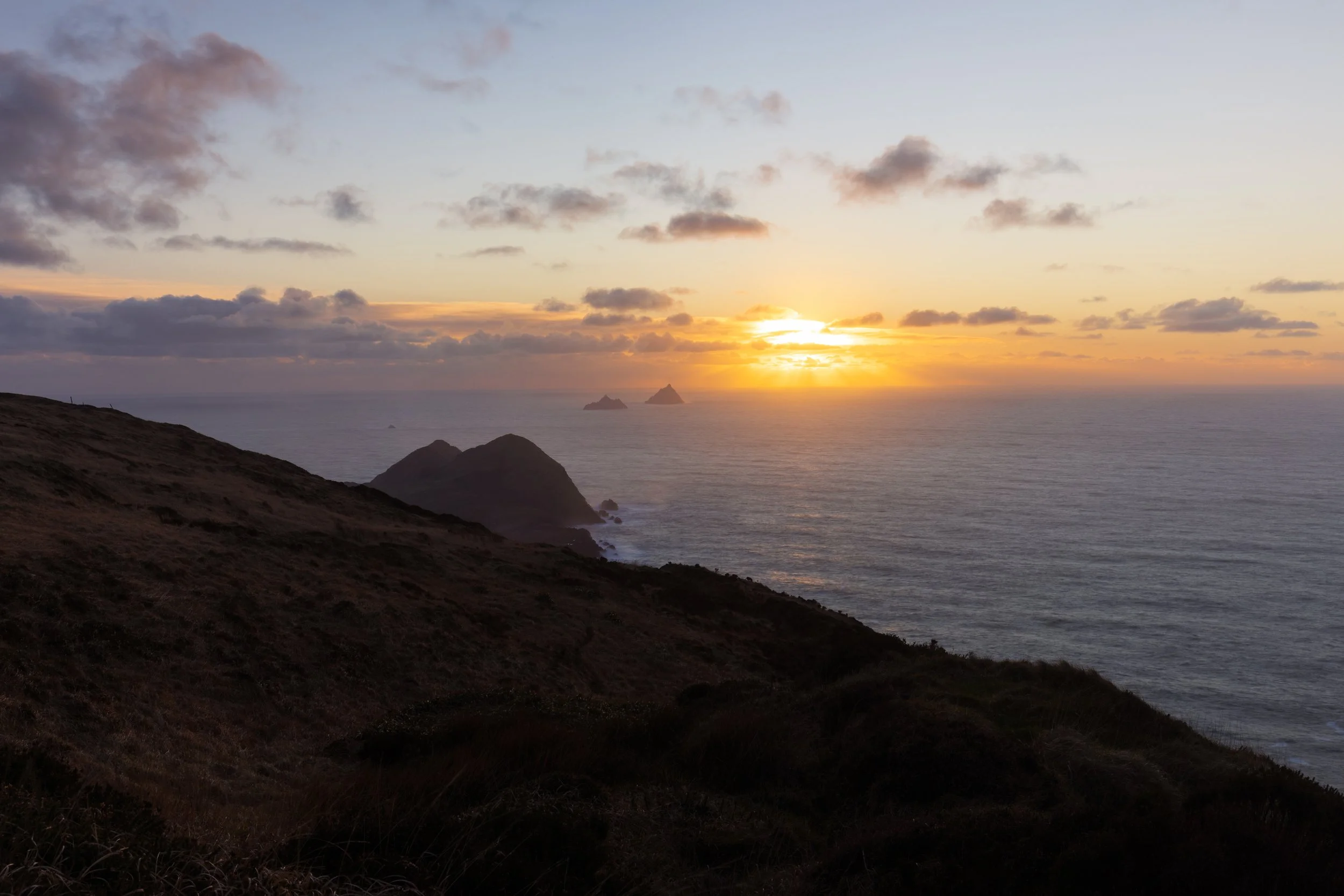
I was aware of a persistent bank of cloud on the western horizon, something that frequently limits sunset colour along this coastline. From ground level, the brightness of the sun made it difficult to assess the cloud structure accurately. I launched the drone again to gain clarity. From altitude, I could see the gap in the cloud more clearly, and it confirmed what I hoped: there was a narrow opening through which the sun would drop.
As it descended into that gap, the scene changed once more. Orange and red tones spread across the cliffs and reflected subtly in the water below. Offshore, near Puffin Island, sea spray caught the light from waves striking the rock. The mist added atmosphere without obscuring detail.
Timing was critical. The strongest colour lasted only a few minutes. I adjusted exposure incrementally, ensuring highlights remained controlled while retaining detail in the darker cliff sections. Shooting in rapid succession allowed me to capture subtle changes in intensity as the sun lowered.
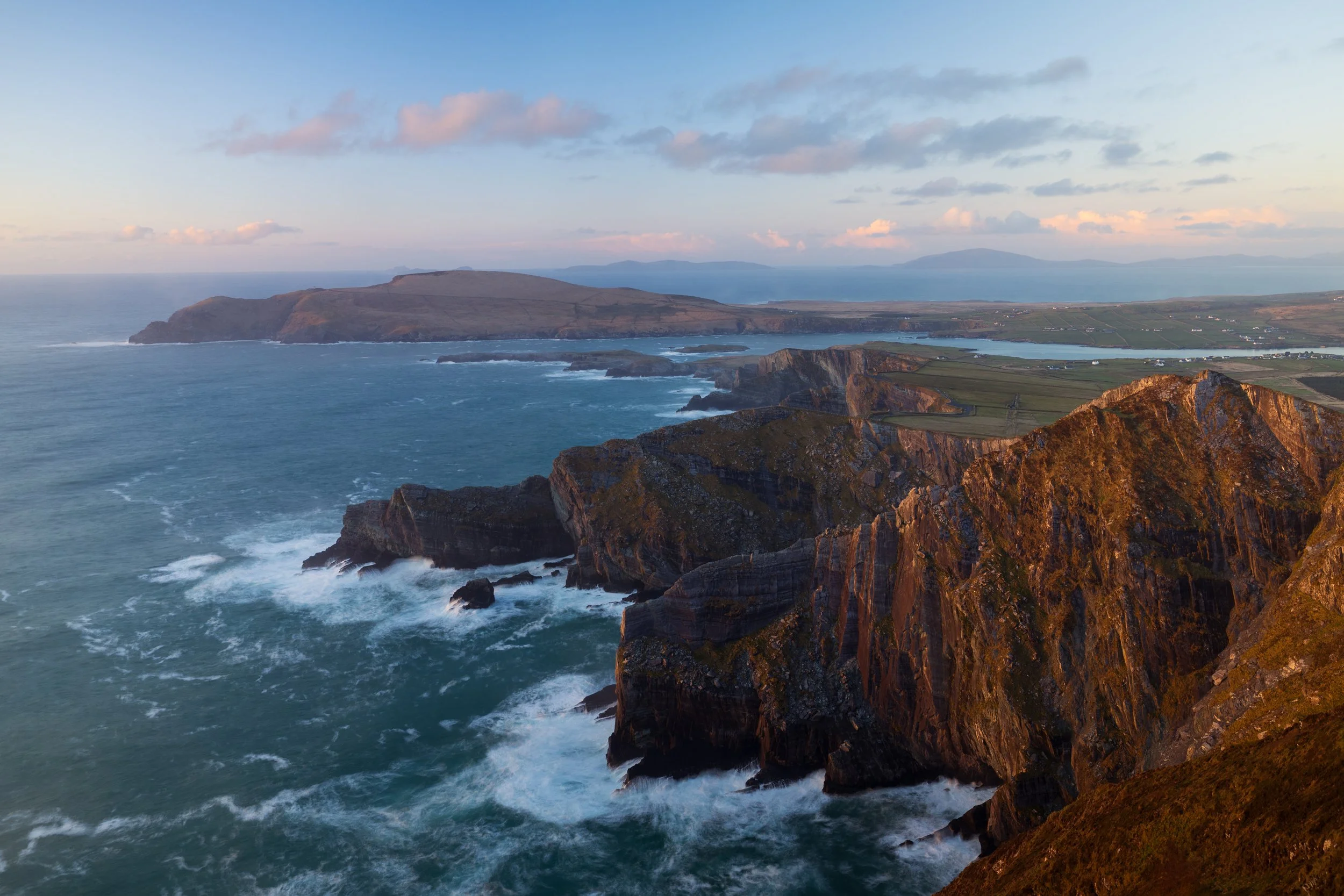
When the light finally faded, I reviewed the sequence. What had begun as a straightforward hike to a new viewpoint had delivered layered opportunities: a rainbow, evolving cloud patterns, aerial perspectives, and a brief but effective sunset break.
The final lesson of the day was not technical. It was about persistence. After several overcast days, it would have been easy to lower expectations. Instead, we committed to one last outing. Preparation, patience, and attention to small details — from walking poles to lens choice — combined to make the difference.
It was a new location for me, but the principles applied were familiar: arrive prepared, react quickly to transient light, commit to a composition, and adapt as conditions shift. The landscape above the Kerry Cliffs delivered, but only because we were ready when it did.
You can watch the full adventure unfold below.